


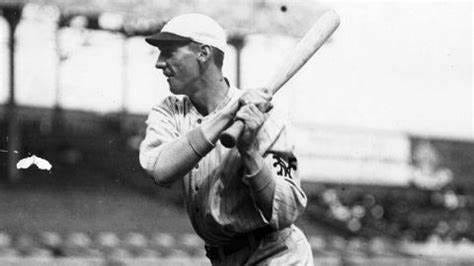
Let me tell you about a name that often slips through the cracks: George "High Pockets" Kelly. His selection to the Hall of Fame is one of the most debated, not because of scandal or personality but because of just how forgotten he seems in the lore of baseball.
Kelly played during the 1920s, a first baseman for the New York Giants and Cincinnati Reds, known for his height (hence the nickname) and solid hitting. He had two seasons where he drove in over 100 runs, and he was a key piece in the Giants' back-to-back World Series championships in 1921 and 1922. But unlike his more famous teammates, his name doesn't resonate through baseball history like others from his era.
The interesting thing? When the Veterans Committee inducted Kelly in 1973, it was highly contested. Even Kelly himself was surprised by the honor, and even now, many fans and writers look at his .297 career average and 148 career home runs and wonder how he made it. I can't help but think that his strong connections to influential baseball figures like Frankie Frisch played a huge part in his induction, raising questions about the integrity of the selection process. Did some eras have more integrity than others, or was favoritism always a part of the game? Kelly's story makes it pretty clear that personal connections sometimes overshadowed objective merit, particularly during his era.
This isn't to say Kelly wasn't a good player—he was—but rather that his induction speaks to a different era of Hall of Fame voting, one where connections, respect among peers, and intangibles often outweighed raw statistics. Selections like this make people think the Hall of Fame is bullshit because of it. Was it really about the merits of his on-field performance, or about who he knew?
High Pockets Kelly serves as a reminder that the Hall of Fame isn't just about greatness in the traditional sense but sometimes about being in the right place, knowing the right people, and leaving an impression on those who vote—even if that impression fades in the public's collective memory. His story adds a wrinkle to how I understand the concept of integrity in baseball, showing that even at the highest levels, subjective human factors can shape who gets immortalized and who doesn't. Gary your thoughts? I know what you are going to say... :)