


As we’ve previously explored, the path to the Baseball Hall of Fame is a journey defined by strict eligibility criteria and voting processes. But what happens when a player passes away before their moment of recognition? Today, we dive into the rare occurrences of posthumous inductions and what they signify about integrity, character, and the legacy left behind by baseball’s greats.
While the Hall of Fame does occasionally choose to induct a player posthumously, it is not a practice done lightly or automatically. These decisions are often driven by exceptional circumstances and the player's profound impact on the game.
A new installment of Cooperstown Credentials comes out every Wednesday!
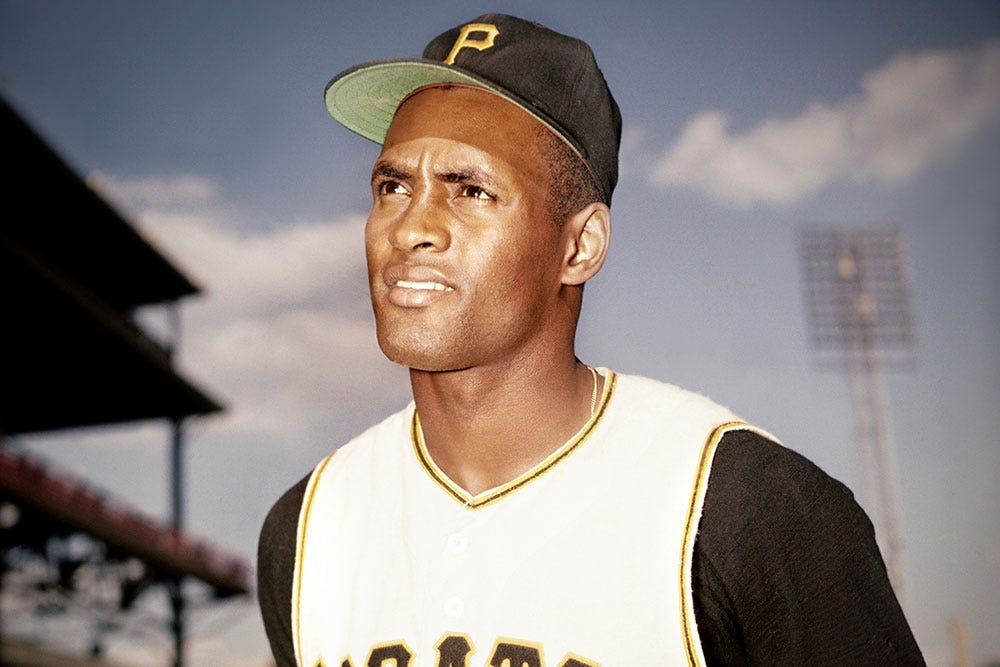
One of the most notable examples is Roberto Clemente. After his tragic death in a plane crash on December 31, 1972, the Hall of Fame waived the standard five-year waiting period and inducted Clemente in 1973. Clemente’s contributions on and off the field, his humanitarian efforts, and his exceptional skill as a player made this an extraordinary case. His induction was not just about his baseball statistics but also a recognition of his character and the legacy he left behind.
Born on August 18, 1934, in Carolina, Puerto Rico, Roberto Clemente's passion for baseball was evident from a young age. He quickly rose through the ranks of Puerto Rican baseball and caught the attention of Major League scouts. Clemente made his Major League debut with the Pittsburgh Pirates on April 17, 1955, beginning an illustrious 18-year career.
Clemente's baseball statistics are extraordinary. He was a 12-time Gold Glove Award winner, recognized for his exceptional defensive skills in right field. Clemente was a four-time National League batting champion, achieving a career batting average of .317. He also amassed exactly 3,000 hits, a milestone he reached in his final regular-season at-bat in 1972.
Clemente was selected for 15 All-Star Games and played a crucial role in leading the Pirates to two World Series championships in 1960 and 1971. In the 1971 World Series, he was named the Most Valuable Player, further cementing his legacy as one of the greatest players of his era.
Beyond his on-field accomplishments, Clemente was deeply committed to humanitarian causes. He used his platform to advocate for civil rights and support underserved communities. Clemente's compassion and generosity were well-known, and he often delivered aid and support personally.
His humanitarian spirit ultimately led to his tragic death. On December 31, 1972, Clemente boarded a plane to deliver aid to earthquake victims in Nicaragua. The plane crashed shortly after takeoff, and Clemente's body was never recovered. His selfless act of service in his final moments speaks volumes about his character.
In recognition of his extraordinary contributions, the Baseball Hall of Fame waived the standard five-year waiting period and inducted Clemente posthumously in 1973. He became the first Latin American and Caribbean player to be enshrined in Cooperstown, paving the way for future generations of players from these regions.
Clemente's legacy continues to inspire. Major League Baseball presents the Roberto Clemente Award annually to the player who best exemplifies Clemente's humanitarian efforts and sportsmanship. His life and career remain a beacon of excellence, integrity, and the enduring power of giving back to others.
Roberto Clemente's quote, "Any time you have an opportunity to make a difference in this world and you don't, then you are wasting your time on Earth," encapsulates his philosophy and serves as a guiding principle for all who seek to make a positive impact. His story reminds us that greatness is not just measured by accolades and achievements but by the difference one makes in the lives of others.
The Hall of Fame’s emphasis on integrity, sportsmanship, and character in addition to statistical achievements aligns perfectly with the values I explore here at Baseball Buddha.