


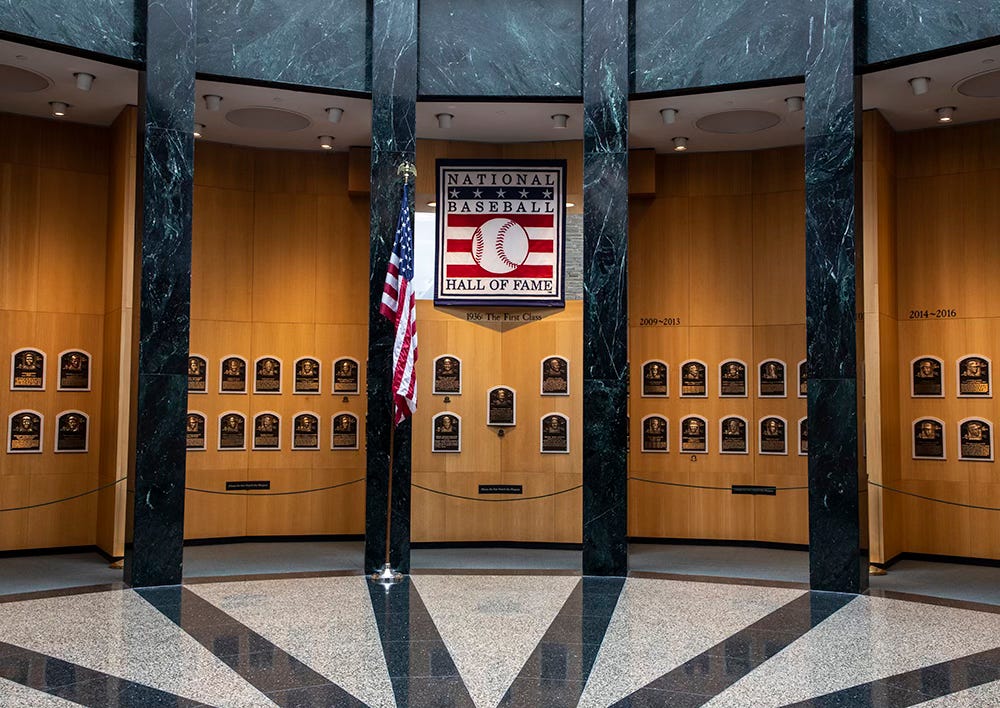
The Baseball Hall of Fame has several special considerations and exceptions to ensure that deserving individuals are honored appropriately. These provisions allow for flexibility in recognizing outstanding contributions to the game, even when they fall outside the standard induction processes.
Welcome to Ballpark Confidential: Baseball’s Backstory on Culture, Society, & History. Whether you’re a die-hard fan, a newcomer to the game, or just someone who enjoys a good baseball story, we’re set to dive deep into the essence of baseball, uncovering pivotal moments and key figures. This is more than a history lesson; it’s a judgment of how baseball reflects and influences our culture and society.
In this series, "Cooperstown Credentials: A History of Changing Standards," we'll dive into the history and details of what it takes to be inducted into the Hall of Fame.
A new installment of Cooperstown Credentials comes out every Wednesday!
While it is rare, the Hall of Fame can choose to induct a player immediately after their death if they were eligible but had not yet been inducted. This special consideration is a way to honor a player's legacy promptly.
This measure is typically reserved for players who had a significant impact on the game and were widely expected to be inducted eventually. The goal is to recognize their contributions and celebrate their legacy without delay, especially when the player’s death has brought their career and impact into the spotlight.
After Roberto Clemente's tragic death in a plane crash while on a humanitarian mission, the Hall of Fame waived the standard five-year waiting period, and he was inducted the following year. This exception was made in recognition of his outstanding career and humanitarian efforts.
"It's a beautiful day for a ballgame... Let's play two!" Ernie Banks
The player must meet the usual eligibility criteria, such as having been retired for a specified period (typically five years) and having made significant contributions to the game. However, the immediate induction bypasses the standard waiting period or voting process to honor the player’s memory promptly.
Special committees are occasionally formed to address specific categories of players or contributors who may not be adequately recognized through the regular voting processes. These committees ensure that all deserving individuals have a chance to be honored, regardless of their role in baseball.
Pioneers of the Game: Focus on early figures in baseball who played a crucial role in establishing and developing the sport. These individuals might include players, managers, and executives from the 19th and early 20th centuries who laid the foundation for modern baseball.
Example: The special committee that inducted pioneers like Candy Cummings, credited with inventing the curveball, and Henry Chadwick, a key figure in the development of baseball journalism and statistics.
Significant Non-Playing Contributors: Recognizes individuals who have made substantial contributions to the game off the field. This includes umpires, broadcasters, executives, and others who have had a significant impact on baseball's development and popularity.
Example: The Ford C. Frick Award, presented annually to a broadcaster for major contributions to baseball. While this award does not confer Hall of Fame membership, it highlights the importance of non-playing contributors.
Negro Leagues and Other Special Categories:
These committees address historical injustices and recognize outstanding players from leagues that were not integrated into Major League Baseball, such as the Negro Leagues.
Example: In 2006, a special committee on Negro Leagues and African-American Baseball selected 17 individuals, including Buck O'Neil and Effa Manley, for induction. This effort aimed to honor those who excelled in segregated leagues and made significant contributions to the sport.
Special committees are typically composed of historians, former players, executives, and other experts with deep knowledge of the specific category or era under consideration. They conduct thorough research and evaluations, often reviewing detailed records, personal stories, and historical contexts to make informed decisions.
The committees meet periodically, depending on the focus area, and follow a similar voting process to other Hall of Fame committees, requiring a majority or supermajority for induction.
These provisions ensure that the Hall of Fame remains inclusive and fair, recognizing the full spectrum of contributions to baseball. By considering exceptional cases and forming special committees, the Hall of Fame acknowledges the diverse ways individuals can impact the game.
Special committees and considerations help address historical oversights and recognize those who played crucial roles in the development and growth of baseball, especially during periods or in contexts where their contributions may not have been fully appreciated at the time.
The Hall of Fame’s flexibility in honoring deserving individuals, whether through immediate induction after death or the establishment of special committees, helps build a comprehensive and representative legacy of baseball’s history and culture.
The Baseball Hall of Fame’s special considerations and exceptions, such as automatic induction for deceased players and the formation of special committees, play a crucial role in ensuring that all deserving contributors to the game are appropriately recognized. These measures reflect the Hall of Fame’s commitment to inclusivity, fairness, and historical accuracy, celebrating the diverse and rich legacy of baseball.
Special Inductees via Special Considerations (by Year)
These inductees were recognized through special considerations, such as immediate posthumous induction or other exceptional circumstances, rather than the standard voting processes or Veterans/Era Committees.
1930s
1938: Henry Chadwick, Alexander Cartwright
1939: Candy Cummings
1940s
1945: Roger Bresnahan, Fred Clarke, Jimmy Collins, Ed Delahanty, Hugh Duffy, Hughie Jennings, King Kelly, Jim O'Rourke, Wilbert Robinson
1946: Jesse Burkett, Frank Chance, Jack Chesbro, Johnny Evers, Clark Griffith, Tommy McCarthy, Joe McGinnity, Eddie Plank, Joe Tinker, Rube Waddell
1949: Mordecai Brown, Kid Nichols, Charlie Comiskey
1950s
1953: Bill Klem
1970s
1971: Satchel Paige
2000s
2006: Effa Manley
2009: Joe Gordon
2010s
2010: Doug Harvey
2012: Ron Santo
2020s
2020: Marvin Miller
2021: Bud Fowler
2021: Buck O’Neil