


The Mills Commission, officially known as the "Special Base Ball Commission," was established in 1905 by Albert Goodwill Spalding, a former baseball player, manager, and influential sporting goods entrepreneur. Spalding was a prominent figure in the baseball world and had a vested interest in the cultural and commercial aspects of the sport. The primary purpose of the commission was to settle the contentious debate regarding the origins of baseball and establish a clear narrative about its inception.
The commission was chaired by Abraham G. Mills, a former National League president and Civil War veteran. The other members were prominent figures in baseball, including:
Morgan G. Bulkeley, former National League president and U.S. Senator
Arthur P. Gorman, former player and U.S. Senator
Nicholas E. Young, former National League president
Alfred J. Reach, baseball pioneer and sporting goods manufacturer
George Wright, legendary player and pioneer
James E. Sullivan, athletic administrator and official
The commission's investigation relied heavily on testimonies and letters from individuals who claimed knowledge of baseball's origins. The most influential testimony came from Abner Graves, a mining engineer, who asserted that Abner Doubleday, a Civil War hero, had invented baseball in Cooperstown, New York, in 1839. Despite the lack of verifiable evidence and numerous contradictions, the commission accepted Graves' account.
In 1908, the Mills Commission concluded that Doubleday had indeed invented baseball, primarily based on Graves' letter. This conclusion provided a compelling, albeit mythical, narrative that positioned baseball as a purely American invention, free from European influences.
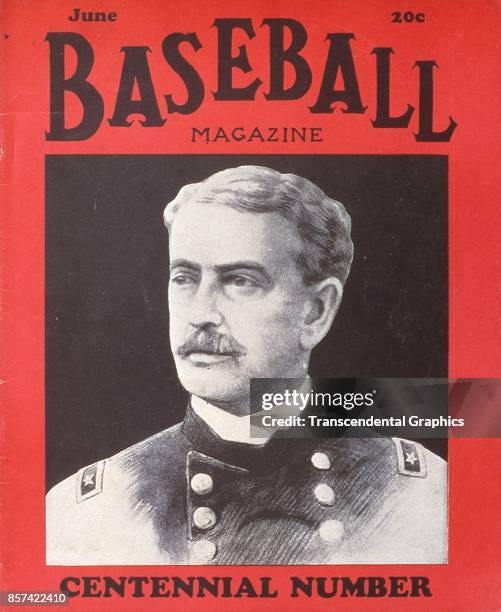
The claim that Abner Doubleday invented baseball in Cooperstown in 1839 has been debunked by modern historians and researchers. There is no credible evidence linking Doubleday to the creation of baseball, and the game is now understood to have evolved from various bat-and-ball games played in England and America. Key figures like Alexander Cartwright and the Knickerbocker Base Ball Club are recognized for formalizing the modern rules of baseball in the mid-19th century.
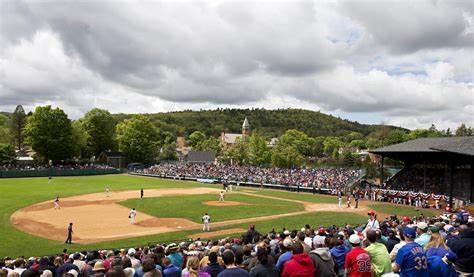
Despite the mythical nature of the story, Cooperstown was embraced as the symbolic birthplace of baseball. Stephen Carlton Clark, a wealthy philanthropist and owner of a hotel in Cooperstown, leveraged this myth to promote the idea of a Baseball Hall of Fame in the town. His efforts culminated in the establishment of the National Baseball Hall of Fame and Museum, which opened on June 12, 1939, coinciding with the supposed centennial of baseball's invention.
For A.G. Spalding, the establishment of baseball's American origins was crucial. During the early 20th century, nationalism was a powerful force in the United States. By promoting baseball as a purely American invention, Spalding aimed to elevate the sport as a symbol of American ingenuity and cultural identity. This narrative helped distinguish baseball from other sports like cricket and rounders, which had British origins.
Spalding had substantial commercial interests in baseball. As a co-founder of the Spalding sporting goods company, he stood to benefit from the growth and popularity of the sport. By solidifying baseball's American roots, Spalding could market his products more effectively to a patriotic audience. The myth of baseball's origin in Cooperstown added an element of romance and nostalgia, further enhancing the sport's appeal.
The Mills Commission's findings and the promotion of Cooperstown as the birthplace of baseball had a lasting impact on the cultural and historical narrative of the sport. While modern scholarship has debunked the Doubleday myth, Cooperstown remains a revered site for baseball fans. The National Baseball Hall of Fame and Museum continues to attract visitors from around the world, celebrating the history and legends of America's pastime.