


This week, I want to take you back a few decades to a name that might stir memories, especially for fans of the ‘80s and early ‘90s: Mel Hall.
Mel Hall was a left-handed outfielder who played for the Cubs, Indians, Yankees, and briefly the Giants. His career in Major League Baseball spanned over a decade, debuting in 1981 and ending in 1992. He was one of those players you remembered, not because he was a superstar, but because he had flair. He played with flash. He smiled a lot. He was quotable. His eccentric personality made him a clubhouse character. Hall was the kind of guy who made reporters laugh, brought a boa constrictor into the locker room, and seemed like the life of the party everywhere he went.
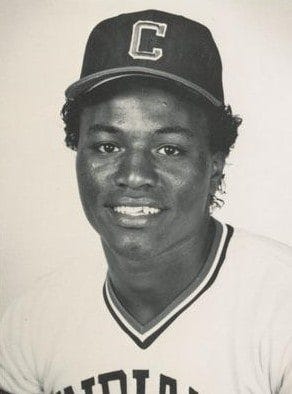
He once boasted to a reporter, “The pitcher ain’t throwing nothing I can’t hit. I’m Mel Hall.” That quote, cocky, theatrical, dripping with bravado was pure Hall. But it also reveals something deeper; he lived like he was untouchable, both at the plate and off the field.
But behind that charm, there was something far more troubling. And the culture around him from teammates to coaches to the league itself either didn’t notice, didn’t want to notice, or didn’t care enough to say anything.
After his playing career ended, Hall didn’t disappear. He reinvented himself as a youth coach in Texas, getting involved with basketball and mentoring kids. It was during this period, long after he’d left MLB behind, that the truth began to surface. In 2007, Mel Hall was arrested and charged with multiple counts of sexual assault involving underage girls he had been coaching. In 2009, he was convicted on three counts of aggravated sexual assault of a child and two counts of indecency with a child. His victims were girls as young as 12 and 13 years old.
He was sentenced to 45 years in prison. As of today, he remains incarcerated in Texas, and his earliest possible parole date is 2031.

That, in itself, is horrifying. But what makes Hall’s story more disturbing is that his behavior didn’t start after baseball. It wasn’t a sudden fall from grace. There were warning signs. During his time with the Yankees, he was known to bring teenage girls around the clubhouse. They weren’t hiding. He wasn’t hiding. He joked about it. People talked about it. But no one stopped it.
Back then, Major League Baseball had no code of conduct related to sexual misconduct. No background checks. No systems in place to investigate or monitor player behavior off the field. There wasn’t even a whisper of concern from the league office, even as stories about Hall’s odd relationships with young girls floated around the locker room like background noise.
This wasn’t just a blind spot. It was a conscious choice not to look too closely.
Now, to be fair, the league has evolved. In recent years, MLB has implemented domestic violence and sexual assault policies that allow for player suspensions even without criminal convictions. Players like Trevor Bauer, Roberto Osuna, and Aroldis Chapman have all faced disciplinary action under this system. It’s not perfect, but it’s a step in the right direction. There is, at the very least, a framework now, a public acknowledgment that character matters, not just performance.
But that doesn’t erase the past. It doesn’t excuse the silence that let players like Mel Hall operate unchecked. It doesn’t make up for the victims who were failed by an industry that cared more about entertainment value than the safety of children.
And here’s where I need to explain something about me, something about why this series even exists.
Baseball isn’t just a sport to me. It’s more than a game. It’s not just nostalgia or habit, it’s a sanctuary. It’s the place I’ve always gone to forget the noise of the world. It’s been the background music of my life since I was a kid. Baseball was there during hard days, long nights, and times when nothing else made sense. It’s my escape. My childhood.
That’s why I hold it to a higher standard than the rest of society. Because it has always represented something purer, something sacred. There’s something about the rhythm of the game, unhurried and unchanging, that makes me forget about corruption, politics, or crime. I’m remembering summer afternoons with nothing to worry about but a game. I’m remembering being a kid who believed in heroes in cleats.
So, when that sanctuary is corrupted, when the very game that gave me peace fails to protect the innocent, it cuts deeper. It’s not just a moral failure. It’s a betrayal.
Here’s where I draw the line. I believe in second chances for a lot of things. I believe people can grow. I believe we are all capable of making mistakes, learning, and becoming better. But I do not believe in second chances for child molesters. Not in life, not in sports, not in legacy.
Once you violate that boundary, once you abuse a child, there is no coming back. No stat line, no walk-off homer, no postseason moment can erase what you’ve done. You lose your right to nostalgia. You lose your right to be remembered as anything other than what you are, a fucking predator.
And I have a problem with how easily we seem to forget. How Mel Hall still shows up in highlight reels, in trading card collections, in casual “Remember that guy?” conversations. I have a problem with how MLB never said a word; not when he was arrested, not when he was convicted, not once since. There was no statement. No condemnation. No outreach to victims. No admission of failure.
They just quietly scrubbed his name and moved on.
And that silence, that quiet refusal to even acknowledge the wreckage, told its own story.
When Mel Hall was sentenced to 45 years in prison, the Yankees said nothing. MLB issued no statement. His former teammates didn’t speak out. The silence was deafening.
But that’s not enough. We have to be willing to look back and ask hard questions. We have to be honest about how these men were protected by a culture of silence, both inside the clubhouse and outside of it. We have to recognize that part of loving this game means holding it accountable for the times it let people get hurt.
Mel Hall’s story is a reminder that charisma is not character. That a big smile and a funny quote mean nothing if, behind closed doors, a man is causing irreparable harm to young people who trusted him. It’s a reminder that silence isn’t neutral, it’s fucking complicity.
If we’re going to talk about the greats of the game, if we’re going to celebrate the legacy of baseball, then we also have to talk about the men who used that legacy as a shield. We have to talk about the failures, the cover-ups, and the cracks in the foundation.
I didn’t start Dark Side of the Diamond to dig up dirt for shock value. I started it because I believe that baseball can be better. That it has to be better. And part of getting there means refusing to forget stories like Mel Hall’s. Refusing to let these names disappear quietly into the past without acknowledging the damage they did.
Baseball is a beautiful game. It’s full of wonder, history, drama, and joy. But it also has shadows and if we’re going to keep calling it America’s pastime, we’d better start shining a light into those dark corners.
Because some sins don’t get a second act.
And they shouldn’t. As this series evolves, I will not keep reenforcing the themes, I am sure you get the point.
> "Because some sins don’t get a second act."
I agree completely. And about the importance of values in baseball. I played softball and sandlot ball as a kid but wasn't a dedicated fan until 2010 when I was in a high-stress life situation. Channel surfing, I found myself watching baseball games because, exactly as you say, I found escape there from all that plagued me in life. That's when I fell in love with the game, became a serious fan, and started studying the game. And I still love it, though, per this series, it is not without flaws.
I even wrote a large suite of Python code to pull the XML files from the MLB site and process them into some very detailed stats. I did that from 2010 to 2019 when MLB started making noises about restricting access to those XML files or changing to some other system. I have no idea what the status is of that, but lately I've been thinking of looking back into it. I really did enjoy generating all those reports. Fascinating.
If you're bored enough, FWIW, here's my website: https://sonnack.com/pub/bb/
Some how, I hear the voice to these words.