


We got rid of dead time, added tech, and made smarter decisions. But somewhere in the progress, baseball forgot how to breathe. (I know, I know, this is a big theme for me… and I will be hammering this home all season.)
They said they were saving baseball. And in a lot of ways, they were right.
The pitch clock trimmed the fat. Batters stepped in, pitchers sped up, and suddenly nine innings stopped feeling like a hostage situation. You could watch a full game without wondering if your grandkids would be born by the bottom of the seventh. It was smart. Necessary even.
And I’ll be honest, I like it. Mostly.
I like that there’s movement. I like that a routine Tuesday night Dodger game doesn’t drag past midnight for me, like we’re all in on some endurance test. I like that young fans can sit through a game without needing a fifth snack and a TikTok break. I like that the stolen base is back. That pitchers can’t game the clock. That hitters can’t step out for a full existential crisis after every foul ball.
Baseball, finally, stopped apologizing for being slow and just got better at being itself.
And the tech? We can’t ignore that either. Statcast changed how we understand the game. Pitchers are nastier. Fielders play like chess masters. Teams make decisions with data that would make Alan Turing blush. A catcher has a wrist full of buttons that sends signs like a Nintendo controller. The strike zone has never been more precisely measured. The information age came for the game, and the game said: “Fine. Let’s go.”
This is baseball today. And in a lot of ways… it works.
But still.
Still.
There’s something that doesn’t show up in the new metrics. Something we can’t quite chart.
In cleaning up the game, did we sterilize it?
I miss the moments between moments. The pitcher walking around the mound, shaking his head, talking to nobody but the baseball gods. The batter stepping out, adjusting gloves, digging in. Not stalling. Preparing. It was theater. It was tension. It was drama building, pitch by pitch.
Now? The next pitch is coming whether your heart’s ready or not.
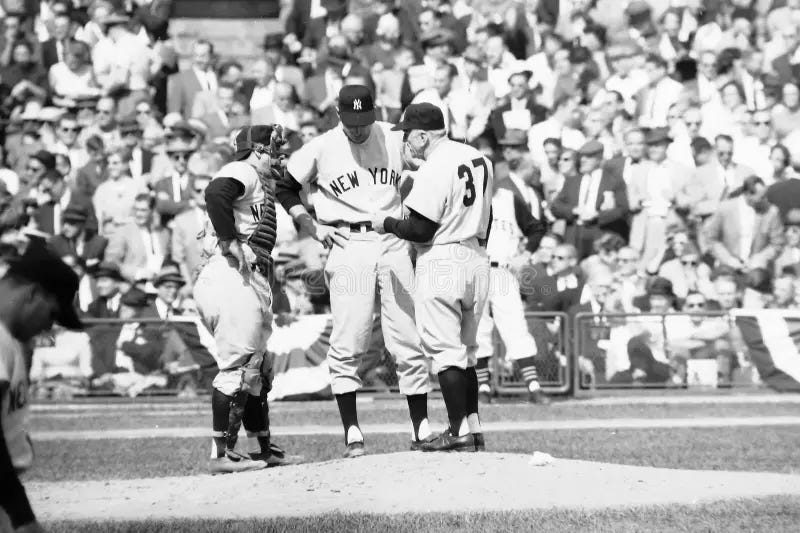
I miss the mound visits that weren’t just strategy, but stories. The catcher sauntering out, sharing a joke, breaking the rhythm. Now the rules are tight. No nonsense. No pauses. But weren’t those pauses part of the rhythm?
And in chasing efficiency, we leaned hard into analytics. I get it. I respect it. But I miss the weird, messy instincts. The gut calls. The managers who trusted feel over formula. The guys who didn’t have Ivy League degrees but knew the game in their bones. Baseball’s front offices now feel like hedge funds. The margins are smarter, but the margins are colder.
We don't just lose old habits; we lose old voices. The veteran scout with a notepad instead of an iPad. The hitting coach who fixed your swing by watching you for five minutes, not by showing you biomechanical readouts.
And I worry that the human part of baseball, the part that doesn’t fit in a spreadsheet, is getting edged out.
Let me be clear: I’m not anti-progress. I’m not yelling at clouds in the shape of box scores.
But baseball used to breathe. It used to sigh between innings. It used to give you time to look around, to soak in the stadium, to feel the sun shift and the crowd settle. It used to be one of the only things in American life that moved slow on purpose. And in a world addicted to speed and alerts and feeds, that slowness was revolutionary.
We made the game better in so many ways.
But sometimes I wonder, were we fixing baseball… or making it fit into a world that no longer knows how to sit still?
The answer, like the game itself, doesn’t come fast. It arrives one pitch at a time.
I still love the game. I just hope we remember that what made baseball magical wasn’t just the hits and the wins. It was the waiting. The wondering. The space between.
One thing I’ve noticed is that during the broadcasts, the increased efficiency has diminished some of the great booth moments, the extra stories and history viewers can learn while there are some down moments. Some games are so quick that there’s only time for the play by play and a few extra notes, but stories are left half finished or rushed as they need to cut to commercial. Younger viewers may not mind, and social media will fill in those stories of great hitters vs pitchers (I love reading about Greg Maddux’s otherworldly stats), but we used to get that during the games themselves. I am not ranting against the much-needed progress, but it’s a change I’ve noticed lately.
Listening to baseball still feels the same, no doubt. You can be doing other things and a great commentator on the radio can put you in the moment. It's the only sport I enjoy listening to because of the slower pace. It gives you a chance to picture the plays taking place unlike any other game I know.