


I have hesitated to write about this but here goes… on April 15th, Major League Baseball honors Jackie Robinson, and this year, like every year, I thought about what Robinson accomplished. But I also found myself thinking about what wasn’t honored - the Black teams, Black owners, Black fans, and Black institutions that were left behind.
A few weeks ago, I wrote about some of this in The Cost of the Dream: The Pay-to-Play Paradox. I said something that upset people:
"I don’t think the white power structure of Little League, of baseball parents, approved of what that team [Jackie Robinson West] represented."
I lost readers over that line. I knew I would. But I don’t regret writing it.
This afternoon, driving home from Chicago, listening to Malcolm Gladwell’s I Hate the Ivy League podcast series, it finally all connected for me. Gladwell was talking about Brown v. Board of Education - about how integration often meant Black individuals were included, but Black institutions were erased.
And it clicked, the same thing happened in baseball.
But really, the first seeds of this realization were planted a long time ago, in my favorite college class at UW-Milwaukee: Black Reality, taught by Dr. Ahmed Mbalia. It was in that classroom, back in 1992, that I had my first real epiphany about race, baseball, and America. And that moment has stayed vivid with me ever since.
In 1992, sitting in Dr. Mbalia’s Black Reality class, everything I thought I knew about American progress started to open up. It wasn’t about making anyone feel guilty. It wasn’t about hating the country. It was about seeing the full picture, the victories and the losses.
That class made me question the easy version of history I had grown up with. Especially about baseball.
We were taught that Jackie Robinson broke the color barrier in 1947, and that was the happy ending. But nobody told us what happened to the Negro Leagues. Nobody talked about Rube Foster, the "Father of Black Baseball," or Gus Greenlee, who built the Pittsburgh Crawfords and even his own ballpark. Nobody mentioned that before Robinson, Black baseball was already thriving drawing thousands of fans, creating jobs, building pride.
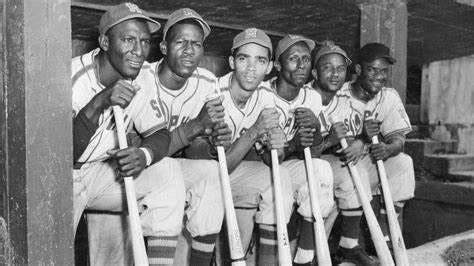
To be fair, Major League Baseball has made efforts recently to honor the Negro Leagues and their legacy. MLB officially recognized Negro League statistics as part of Major League records, a long overdue step that acknowledges the greatness of players like Josh Gibson, Satchel Paige, and Buck Leonard. They also hold tributes to Negro League history during All-Star Games and regular season events.
But while honoring the players is important, it doesn’t change the deeper reality: the Black-owned teams, leagues, businesses, and leadership were never integrated. The players were celebrated. The institutions they built were left behind.
In Dr. Mbalia’s class, for the first time, I understood what people meant by the white power structure. Not individual racist fans yelling slurs but the entire system that defined who got opportunities, who controlled the money, who decided whose institutions survived.
When Major League Baseball integrated, it didn’t bring Negro League teams into the fold. It just took the best Black players, Jackie, Satchel Paige, Roy Campanella, and left Black owners, Black managers, and Black communities with nothing.
The players got integrated.
The Black institutions got erased.
It wasn’t equality.
It was assimilation, on terms the white power structure set.
Fast forward to today while driving home, listening to Malcolm Gladwell. He was talking about Brown v. Board of Education, and it hit me the exact fucking thing happened in education.
In the Brown case, the Supreme Court ruled that “separate educational facilities are inherently unequal.” They said that segregation itself “retards” the development of Black children — not just materially, but psychologically. That being separated by race damaged Black children's self-esteem. The Court, quoting social science studies, suggested that segregation instilled feelings of inferiority that "may affect their hearts and minds in a way unlikely ever to be undone." Direct quote from the brief.
But Black educators at the time weren’t fighting their own schools. They weren’t saying their teachers were bad. They were saying the system was broken, the funding, the resources, the barriers.
Black teachers were producing doctors, lawyers, activists under impossible conditions. Black schools, like Dunbar High School in Washington D.C., had world-class academic reputations.
Integration was necessary, no question. But when it came, it wasn’t just white schools admitting Black kids. It was Black schools closing. Black principals demoted. Black teachers fired. Why weren’t we integrating black schools with white students? or Teachers? Black students loved their teachers, or the other question was why we didn’t we equalize the funding.
Again! The individuals got integrated. The institutions got erased.
The same thing happened when America built its freeways, Black neighborhoods were bulldozed in the name of "progress," their institutions erased to clear a path for someone else's future.
When Jackie Robinson West took the Little League World Series by storm in 2014, it felt like a storybook moment. A mostly-Black team from Chicago, overcoming the odds, inspiring the country.
But when the truth came out that district lines had been manipulated, the backlash wasn’t just about rules. It felt deeper. Like an unspoken line had been crossed. And it made me think, the white power structure of Little League, of baseball parents, didn’t approve of what that team represented.
Not just the technicalities.
The audacity.
The reminder that Black kids could succeed but only if they fought a rigged system every step of the way.
When I wrote about that in The Cost of the Dream: The Pay-to-Play Paradox, I knew it would upset people. And it did.
But I’m not backing down.
I know what’s coming when I post something like this.
It’s always the same pattern.
"But what about…?"
"But not all schools!"
"But not all white parents!"
"But look how far we’ve come!"
"You’re just being divisive by bringing this up!"
In today’s political climate, that’s almost automatic.
It’s easier to shift the conversation than to sit with uncomfortable truths.
It’s easier to cherry-pick exceptions than to look at the system honestly.
But that kind of deflection misses the point.
Talking about the white power structure, in baseball, in education, in youth sports, isn’t about blaming every individual white person.
It’s about recognizing the structures that were built to benefit some while excluding others.
It’s about asking:
Who built the house?
Who holds the keys?
Who decides whose institutions survive and whose are allowed to wither?
That’s not ancient history.
It’s not just "the past."
It’s still baked into how opportunity works today.
And if talking about that makes people uncomfortable, maybe that’s the start of a real conversation, not the end of one.
That’s why I’m writing this.
Not to argue.
Not to point fingers.
But to tell the truth, as I’ve come to see it,
even if it's easier for some people to turn away.
Whether it was baseball in the 1940s, public education in the 1950s, or youth sports today, the pattern is the same:
Black excellence gets recognized.
Black institutions get erased.
Integration happens but only on the white system’s terms.
The doors open but the homes Black people built are abandoned.
Understanding the white power structure isn’t about resentment. It’s about clarity. It’s about seeing who built what, who controlled what, and why that still matters.
That was the epiphany I had all those years ago in Black Reality.
It’s the one Gladwell helped me finally crystallized today.
And it’s why I’m writing this even if it costs me more readers.
Even if it’s uncomfortable.
Because real history isn’t clean.
Progress isn’t free.
And if you don’t tell the full story, you’re not honoring the struggle.
You’re just repeating the cycle.
An excellent article. Thanks for this.
The truth isn't always an easy pill to swallow. Keep telling it like it is. Besides, anyone who doesn't LOSE followers isn't worth a shit in my book.