


If Major League Baseball is one league when it wants power, why does it become thirty local businesses when the stadium bill shows up?
MLB acts collectively when it controls expansion, relocation, territories, media rights, blackout rules, the amateur draft, international talent, and the minor league system. It acts collectively when it negotiates with the players. It acts collectively when it protects franchise values and limits who is allowed into its club.
But when a ballpark needs to be built or renovated, the league fades into the background. Suddenly, everything is local. The owner approaches the governor, the mayor, the county board, and the taxpayers asking them to help pay for “the future of baseball” in their community.
Ballparks are essential to the MLB product. MLB should fund them as part of the MLB product. If the league can operate collectively to protect franchise values, it can operate collectively to pay for the buildings that support those values.
MLB’s new “Level the Playing Field” campaign makes the contradiction even harder to ignore. The league is running commercials and public messaging arguing that baseball needs a salary cap and salary floor to create competitive balance. MLB wants fans to believe that all thirty franchises are part of one interconnected economic system and that the league must step in collectively when some teams spend too much and others spend too little.
Fine. Then let us level the entire playing field.
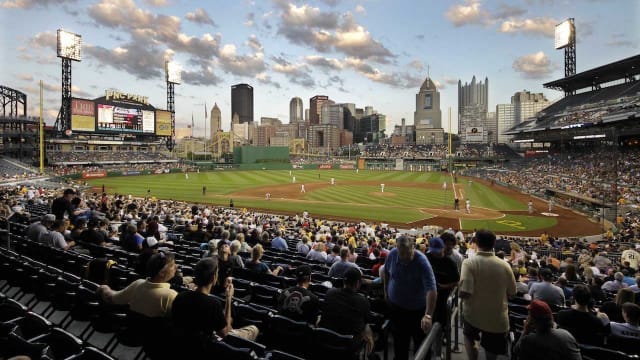
Where is the cap on taxpayer subsidies? Where is the minimum ownership contribution for a new stadium? Where is the requirement that MLB share in the cost of facilities that increase franchise values? Where is the financial floor requiring every owner to invest properly in the team, the ballpark, and the community?
MLB wants cost certainty from the players but offers no cost protection to the public. It wants a ceiling on what teams can spend on labor but no ceiling on what owners can demand from taxpayers. It wants a payroll floor for owners who refuse to invest in their rosters but no stadium-financing floor requiring those same owners to invest their own money in their own buildings.
That is not leveling the playing field. It is deciding which part of the field the owners would like leveled.
The campaign also gives MLB a convenient villain. Fans are encouraged to resent the Dodgers, the Mets, large payrolls, deferred contracts, and highly paid players. The message is simple. Competitive imbalance exists because certain teams spend too much.
That explanation asks us to ignore the owners who spend too little. It asks us to ignore revenue sharing, local media disparities, territorial protections, franchise scarcity, and the billions of dollars in public assistance that have helped increase the value of privately owned teams. It asks fans to focus on player salaries while treating franchise appreciation as though it fell from the sky.
When a player earns a large contract, MLB presents it as a possible threat to competitive balance. When an owner’s franchise increases in value by a billion dollars, the league calls it a healthy business.
Apparently, the field only needs leveling when the money is going to labor.
There is another reason this message works, and it has less to do with spreadsheets than we want to admit. Daniel Kahneman’s Thinking, Fast and Slow helps explain why both stadium campaigns and salary-cap campaigns are so easily tilted. We like to believe public decisions are made by reasonable people carefully weighing evidence, costs, risks, and benefits. But when fear, resentment, and identity enter the room, the emotional mind gets there first.
Kahneman described two ways of thinking. The fast mind is emotional, instinctive, protective, and reactive. The slow mind takes enough time to ask whether the story being told actually holds together.
MLB’s “Level the Playing Field” campaign is built for the fast mind. It offers fans an obvious imbalance and an easy solution. One team spends nearly four hundred million dollars. Another spends less than one hundred million. Put a cap at the top, create a floor at the bottom, and fairness will supposedly follow.
The slow mind asks more uncomfortable questions.
Will a salary cap force owners to invest more, or will it simply limit what players can earn? How much revenue are teams actually generating? How much revenue is being shared? How much money is being moved through related companies, stadium operations, real estate developments, parking, concessions, and regional media arrangements? Why should labor accept limits on compensation while there is no limit on franchise appreciation?
Most importantly, why is MLB demanding collective financial responsibility from the players while refusing to accept collective financial responsibility for its ballparks?
Stadium debates are also built for the fast mind. Before the public can examine the numbers, the question has already been framed around loss. Are we going to lose the team? Are we going to fall behind other cities? Are we going to be remembered as the place that let baseball leave?
That is where the deal starts to tilt.
If public money is going into a stadium, the public should get real terms. No public money should go into a stadium without relocation penalties that hurt. No public money should go into a stadium without open books on stadium revenue. No public money should go into a stadium without enforceable community benefit agreements. No public money should go into a stadium without public participation in major decisions. No public money should go into a stadium without a share of the upside if the franchise is sold.
And no public money should go into a stadium while local fans are prevented from watching the team because of blackout rules imposed or protected by the same league asking for their support.
That should not be considered radical. If taxpayers are being asked to finance a private sports facility, the arrangement should look like an actual investment. It should not be a donation wrapped in civic pride.
A city should not be asked to take on the cost while the owner keeps control, MLB keeps its leverage, and the public is told that the emotional privilege of having a team is payment enough.
Major League Baseball has mastered a familiar American business move. Privatize the profit and socialize the cost.
Every time an owner wants a new ballpark, the language gets softer. It becomes a civic project, an economic-development opportunity, a gathering place, downtown revitalization, regional pride, protecting tradition, or keeping the team where it belongs.
Then the bill arrives, and the public is asked to carry it.
Baseball wants to be treated like a public trust when it needs money, loyalty, land, infrastructure, tax breaks, and political support. Once the stadium is built and the franchise value rises, the team returns to being private property.
The owner keeps the upside. The league keeps the leverage. The public gets memories, traffic, and a payment schedule.
MLB controls scarcity. There are only thirty major league franchises, and only so many cities are allowed to have one. Cities are not simply negotiating with their local team. They are negotiating against every other city that wants major league baseball.
Nashville wants a team. Portland wants a team. Salt Lake City wants a team. Charlotte wants a team. Montreal wants baseball back. Other markets would gladly enter the conversation if an existing franchise appeared available.
MLB knows that demand exists. The league controls expansion and relocation, so every stadium negotiation takes place inside a market MLB created and protects.
That is why MLB’s antitrust exemption matters. It sits in the background, helping preserve the league’s control over franchise movement, territories, and access to top-level professional baseball. When one organization can limit supply and control movement, cities are not negotiating in a normal market. They are bidding for continued membership in a protected club.
A team becomes civic identity when the owner wants public money, then becomes private property when the public asks for power.
If a city pays for part of a stadium, the city should receive more than promises about economic impact and community pride. If taxpayers help build the house, why does only the owner receive the equity?
Kahneman’s idea of loss aversion explains much of the answer. Losing something hurts more than gaining something helps. When an owner hints that a team could leave, the question changes. It stops being, “Is this a good investment?” and becomes, “How do we keep from losing the team?”
Framing matters. Ask whether taxpayers should subsidize a billionaire’s private business and many people will say no. Ask whether the city wants to lose baseball, and the answer becomes emotional.
Owners and politicians rarely say, “We want taxpayers to increase the private value of a sports franchise.” They say “investment,” “partnership,” “world-class facility,” “economic engine,” and “fan experience.”
MLB is doing something similar with “Level the Playing Field.” It does not say, “We want to limit labor costs and protect ownership profitability.” It says competitive balance. It says hope. It says fairness. It tells fans that the league is trying to make sure every team has a chance.
The wording is designed to make ownership’s preferred economic system sound like a moral cause.
Meanwhile, franchise values rise, media arrangements change, and stadium districts become real estate projects. The modern ballpark is not only about baseball. It is about land, development, naming rights, parking, concessions, retail space, housing, entertainment districts, and long-term valuation.
Yet when stadium funding is discussed, taxpayers are often presented with only the public-facing portion of the calculation. The owner receives the surrounding opportunities. The public receives projections.
MLB cannot have this both ways. It cannot tell us that the thirty teams must behave like one economic unit when negotiating player compensation, then insist every franchise is an isolated local business when the infrastructure bill arrives.
If competitive balance is a league responsibility, stadium infrastructure is a league responsibility. If MLB believes every team needs a modern facility to compete, MLB should create a league stadium fund. Dedicate a portion of national media revenue, licensing revenue, postseason revenue, or expansion fees to construction and renovation.
The league could establish a stadium salary cap of its own. Limit how much public money an owner may accept. Establish a financing floor requiring the franchise and MLB to provide most of the capital. Require public equity when taxpayers contribute. Require full financial disclosure. Prohibit relocation threats while negotiations are underway.
That would actually level the playing field between owners and cities.
Of course fans are emotional. Baseball sells belonging, memory, and place. It sells your grandfather’s team, your father’s voice on the radio, your daughter’s first game, the neighborhood bar before first pitch, and the walk up the ramp when the field opens in front of you.
MLB and its owners know fans do not experience baseball as a spreadsheet. That emotional bond is part of why baseball matters. It is also why stadium threats work.
No stadium deal should be decided under emotional pressure. No city should be forced to negotiate while ownership is openly or quietly testing other markets. No public money should be committed without clear numbers, open books, relocation protections, enforceable community benefits, and a meaningful share of the upside.
If the public is being asked to pay, the public deserves enough time and information to think slowly.
The fast mind says, “Do not let them leave.”
The slow mind asks, “Why are we paying a billionaire to stay?”
The owners want public money but private control. They want civic attachment but corporate freedom. They want the city’s name across the jersey but the city’s voice kept out of the boardroom.
They want the players’ earnings capped while their franchise values remain unlimited. They want struggling teams required to meet a payroll floor while no owner is required to meet a stadium-financing floor. They want to level the playing field everywhere except between themselves and the taxpayers.
If MLB wants modern ballparks, MLB can help pay for modern ballparks. If owners want stadium districts, owners can finance stadium districts. If the league believes a facility is essential to the health of its product, it can treat that facility as a cost of doing business.
If the public pays, the public should receive more than nostalgia.
Baseball does not belong entirely to the owners, no matter what the legal documents say. The owners may hold the franchises, but they did not create the meaning.
Fans did that. Cities did that. Local broadcasters, ushers, vendors, neighborhood bars, Little League coaches, and minor league towns did that. The game became valuable because generations of people loved it before every part of that love had been measured, packaged, sponsored, and monetized.
The stadium grift takes that love and turns it into leverage. The “Level the Playing Field” campaign takes the language of fairness and turns it into leverage against the players.
It is the same strategy. Identify the fans’ fear, frame the issue around what they might lose, offer the owners’ preferred solution, and discourage everyone from looking too closely at who keeps the money.
I love baseball. I love ballparks. I believe competitive balance matters.
I just do not believe the people who own the field should be allowed to decide that everyone else must pay to level it.
I laughed when I read the list of your leveling the field questions for owners, not because they aren’t valid, but I could picture random owners being interviewed on TV and what their reaction would be to these questions. Reactions ranging from apoplectic to insulted to hysterical laughter.
Well stated - MLB propaganda- the owners never open up their books to show how much they make. Meanwhile, every player salary is public knowledge. Fans are jealous that a player is paid a large sum of money. But they also can do things that very few human beings can do ( hit a 100mph pitch and/or throw a 100mph pitch). Meanwhile, the billionaire owners ( many of whom inherited their team) blackmail cities into building stadiums for them. I say “let em leave”. Our society has too many real problems to fix. Our tax money shouldn’t go to sport stadiums, unless everyone benefits. Not just a rich team owner. MLB can go to hell as far as I’m concerned.