


What pisses me off about MLB realignment is not just the map.
It is the motive.
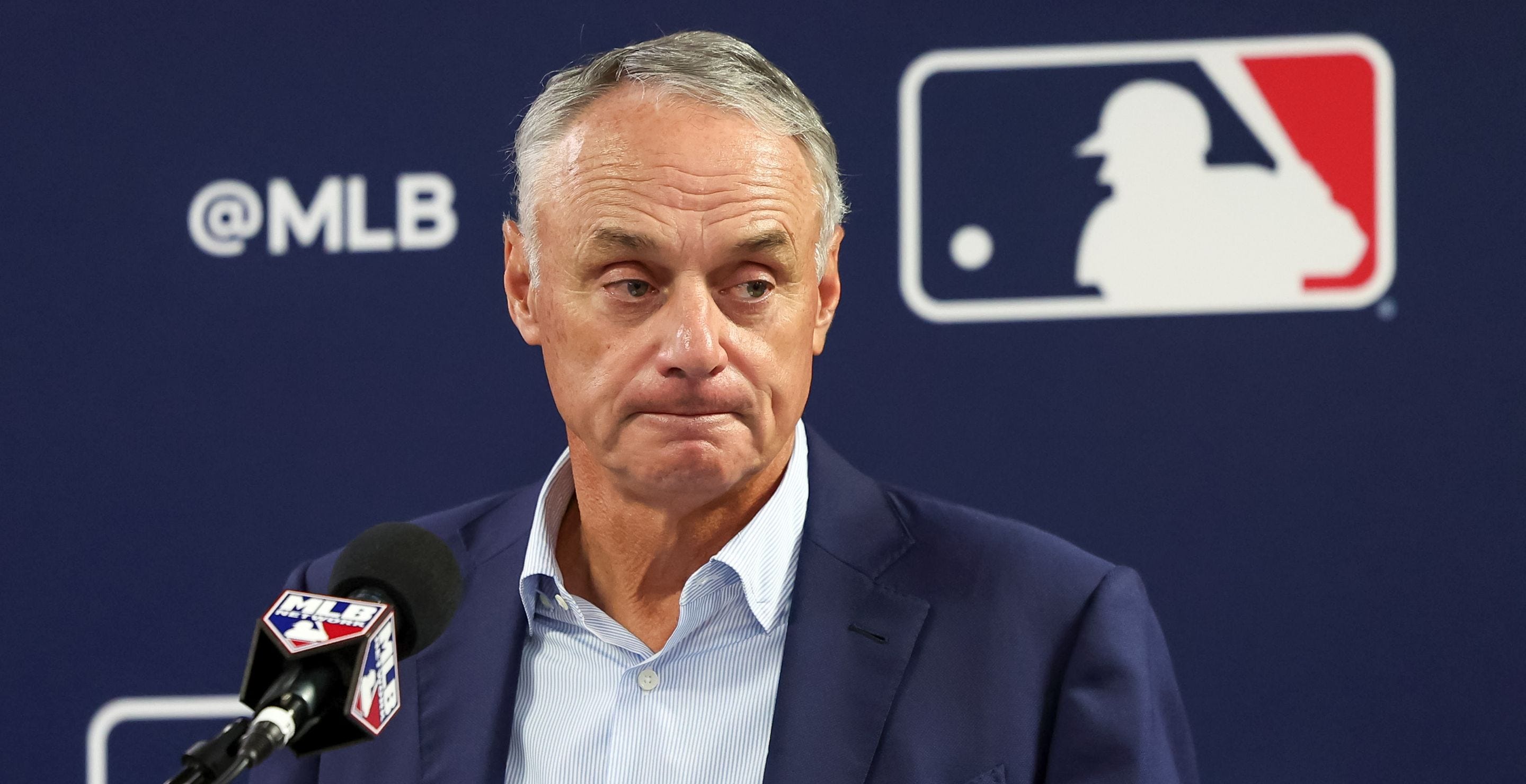
Rob Manfred and the MLB brass can dress this up however they want. They can talk about geography. They can talk about player travel. They can talk about scheduling balance, regional rivalries, broadcast windows, expansion markets, and all the clean little phrases that make a money grab sound like stewardship.
That is what this is. Expansion means new ownership groups paying massive expansion fees. It means new stadium fights. It means new markets. It means more inventory for television, streaming, gambling, advertising, sponsorships, merchandise, and whatever other revenue pipe they can bolt onto the side of the game. Then they will call it “growing baseball” and expect fans to clap like we do not know what is happening.
I am fucking tired of it.
Baseball is not some normal business selling widgets. It is woven into American life. It has history, memory, civic identity, family ritual, local radio, summer nights, old grudges, ballpark smells, scorecards, heartbreak, and joy. It matters because people have carried it across generations. The owners did not create that. The fans did. The players did. The cities did. The broadcasters did. The minor league towns did. The people who showed up when the team stunk did.
And yet the people who profit most from that inheritance keep acting like they alone own the game.
This is why the antitrust exemption needs to go!
MLB has enjoyed a legal protection no other major American sport has in the same way, and what have the owners done with that special treatment? They have used it to consolidate power, squeeze markets, control franchise movement, crush minor league communities, manipulate access, and protect their cartel while preaching tradition to the rest of us. They want the public romance of baseball and the private economics of monopoly power.
If baseball wants to behave like a ruthless modern entertainment corporation, then fine. Let it compete like one. Get rid of the antitrust exemption. Stop letting MLB hide behind the mythology of the national pastime while operating like a protected cartel. You do not get to ask taxpayers for stadium money, sell off pieces of the game to every bidder with a logo, gut parts of the minor leagues, black out fans from watching their own teams, chase gambling money, dilute the playoffs, and then lecture everyone about the good of baseball.
No. The good of baseball is not the same thing as the good of MLB ownership.
Fans are not against change. That is the insult built into all of this. Whenever fans push back, the league acts like we are just nostalgic cranks who cannot handle modern baseball. That is not it. We can handle change. We have handled wild cards, interleague play, replay, pitch clocks, larger bases, streaming, free agency, expansion, relocation, and the designated hitter infecting the National League. We may complain, because complaining is part of being a fan, but we adapt.
What we hate is being lied to.
Do not tell me eight divisions of four is about the soul of the game when it is really about building a cleaner playoff-and-broadcast machine. Do not tell me expansion is about fans when the first thing everyone talks about is franchise valuation. Do not tell me baseball needs public help when billionaires keep privatizing the profits. Do not tell me local tradition matters while making it harder for local fans to watch their team.
And definitely do not tell me that more playoff teams automatically means more excitement.
The playoffs are already getting diluted. The 162-game season is supposed to mean something. Baseball is built on the long test. It is not football. It is not supposed to be a short weekly drama where one hot weekend defines everything. Baseball is accumulation. Baseball is endurance. Baseball is the slow proof of who you are. When too many teams get invited to October, the regular season becomes less sacred. It becomes inventory.
That is the word that keeps coming back to me.
Inventory.
Games become inventory. Rivalries become inventory. Fans become data. Ballparks become real estate plays. Broadcasts become gambling platforms. Expansion cities become fee opportunities. The postseason becomes content. Tradition becomes branding.
And somewhere in all of that, the actual game gets shoved into the corner.
If MLB expands to 32 teams, then realignment should protect baseball instead of carving it into little revenue pods. Four divisions of eight makes more sense than eight divisions of four. Make a division title hard to win. Make the regular season matter. Preserve rivalries. Keep geography reasonable, but do not turn the sport into a boardroom map. Baseball should not get smaller just because the league gets bigger.
But even that is only part of the argument.
The bigger issue is power.
As long as MLB has its antitrust exemption, the owners know they operate from a protected position. That protection should come with responsibility. It should come with humility. It should come with an obligation to the public trust of the game. Instead, we get blackout rules, franchise leverage, stadium threats, minor league contraction, and endless monetization sold as innovation.
So yes, get rid of the antitrust exemption.
Make MLB answer for itself like any other business. If the league wants to make decisions purely for the bottom line, then stop giving it special treatment based on some romantic idea of baseball it no longer honors. You cannot claim the game belongs to America only when you want protection, subsidies, nostalgia, and loyalty. If it belongs to America, then America gets to question how you are running it.
Realignment is not just about divisions.
It is about whether baseball still understands the difference between stewardship and extraction.
Good points all the way across the board. Oh, and don't forget, higher concession prices than ever. Another little tidbit that not just MLB, but all pro sports leagues in general, love to do is sell you on the idea that a 16-ounce domestic beer with a team logo on it is worth around $20 out of your pocket, when a 12-pack outside the stadium for the same brew costs about the same. MLB and the rest certainly know how to rob fans of a good time after they've already paid for a usually overpriced ticket.
Valid points, but greedy politicians meddling in anything doesn’t give me a warm and fuzzy feeling.