


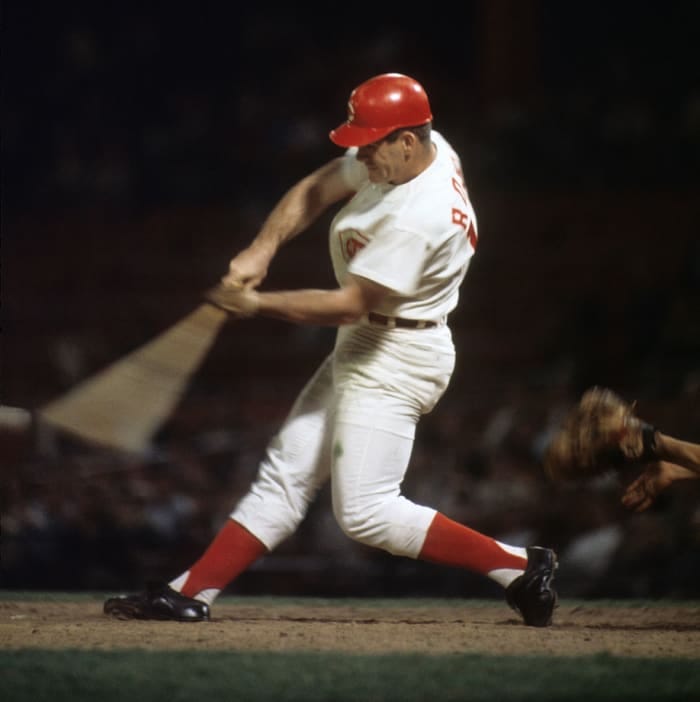
Pete Rose's influence on the Cincinnati Reds' culture in the 1970s went beyond his relentless play; he helped shape a disciplined team identity that eventually evolved into official policies. Rose, known for his clean-cut image, was an early advocate for uniformity and discipline in appearance, pushing for a no-facial-hair approach long before it became a formal team rule. While this initiative is often attributed to manager Sparky Anderson, who officially implemented the policy in 1972, Rose’s leadership within the clubhouse had already established this culture.
Sparky Anderson, who became the Reds' manager in 1970, shared Rose’s belief in professionalism and discipline, aligning with his star player’s views on maintaining a polished team image. Anderson made the no-facial-hair rule part of the Reds' formal code in 1972, banning beards and mustaches. The idea was to present the team as focused, serious, and unified, and it fit perfectly with Anderson’s philosophy of creating a team-first culture. This move reinforced the mindset that Rose had already been encouraging.
Anderson’s policy wasn’t just about aesthetics—it symbolized a commitment to eliminating distractions and putting the team’s goals first. Players, even those with strong personalities like Johnny Bench and Joe Morgan, abided by the rule. The policy stayed in place for years, becoming a defining characteristic of the Reds and contributing to the perception of the Big Red Machine as a well-oiled, disciplined powerhouse.
Rose’s role in fostering this sense of discipline is significant because he wasn’t just a star player—he was a leader. His expectations for team behavior, both on and off the field, helped shape the culture that Anderson would formalize. Rose was known to hold his teammates accountable, calling out even established stars if they weren’t giving maximum effort. His intensity set the tone for the team's success in the mid-1970s, culminating in back-to-back World Series titles in 1975 and 1976.
However, after his father, Harry Rose, passed away in 1970, Rose made a striking personal change. Known for always keeping a clean-cut image under the influence of his father’s strict discipline, Rose began to let his hair grow longer. With his father no longer guiding him, Rose allowed himself to step outside the boundaries of his usual discipline and routine. For a man who had spent his life following strict rules, this was a rare glimpse into how deeply his father's presence had impacted him.
While Rose eventually returned to his traditional appearance, this brief period showed a more vulnerable, human side to the player who had built a reputation for toughness and discipline. It highlighted the internal struggle he faced without his father’s guiding hand, a subtle departure from the tight control he typically exhibited. This lesser-known moment adds depth to Rose’s legacy, showing that beneath the hard-nosed competitor was someone deeply affected by the personal loss of his father, even as he continued to shape the disciplined culture of one of baseball’s greatest teams.