


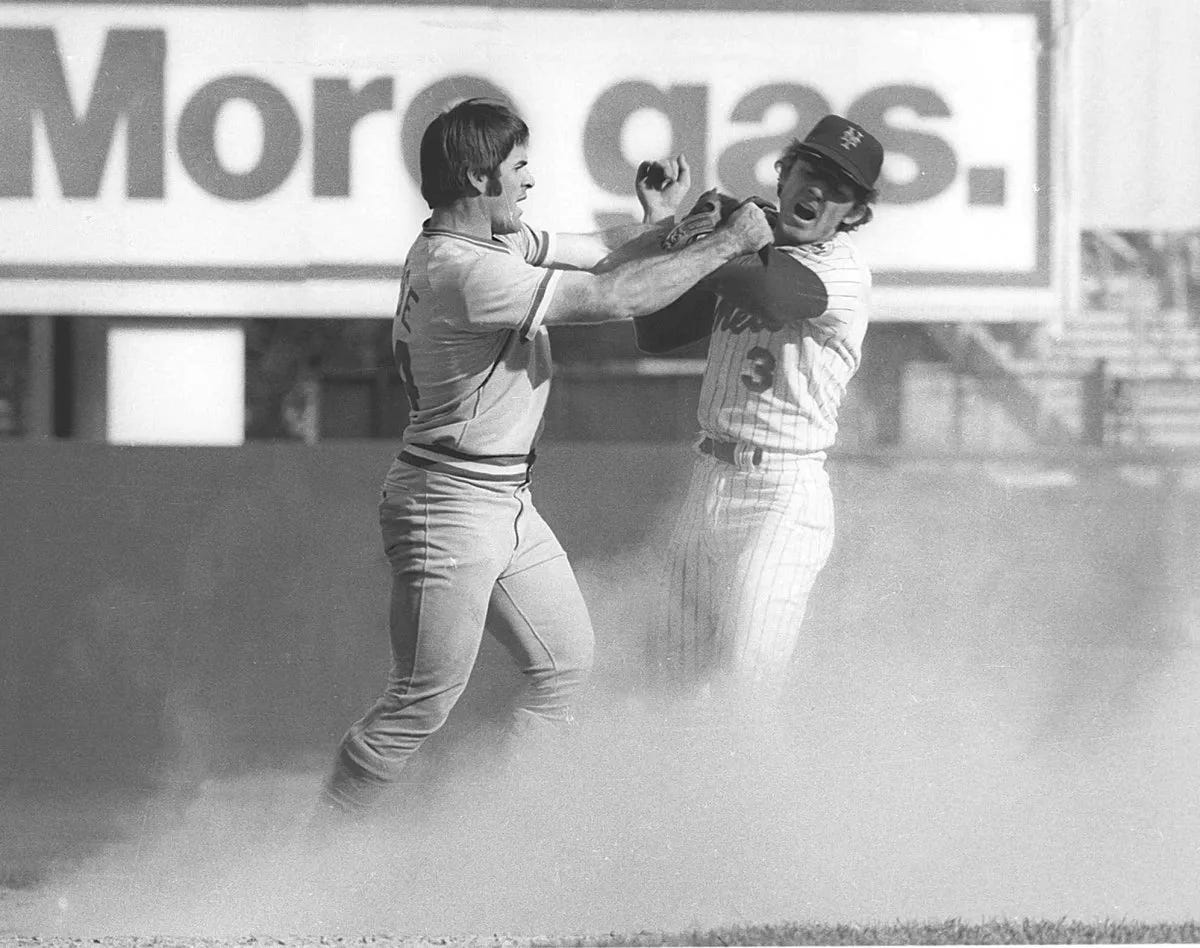
In the heat of the 1973 National League Championship Series, tensions flared during Game 3 between the Cincinnati Reds and the New York Mets. The incident that ignited the infamous brawl occurred in the top of the 5th inning when Pete Rose, known for his aggressive and unyielding style of play, slid hard into second base to break up a double play. Bud Harrelson, the Mets’ shortstop, was covering the bag and perceived Rose’s slide as excessively aggressive. This perception led to a heated exchange of words and quickly escalated into a physical confrontation. Both benches emptied, and players from both teams poured onto the field, engaging in a full-scale brawl. The intensity of the fight was mirrored by the reaction of the fans, who began throwing debris onto the field from the stands.
Despite the chaos, the game eventually resumed, and the Mets capitalized on the disruption, securing a decisive 9-2 victory. The incident had a significant impact on the dynamics of the series, heightening emotions and drawing increased media attention. The Mets carried the momentum from the brawl through the series, ultimately winning the NLCS in five games and advancing to the World Series.
Rose, already a polarizing figure in baseball, became even more contentious due to his role in the fight. Rose’s competitive nature and relentless drive were both admired and criticized. His involvement in the brawl exemplified his fiery passion for the game, but it also painted him as a reckless and overly aggressive player in the eyes of many. Rose’s character has always been a subject of debate; his undeniable talent and determination often clashed with his controversial behavior both on and off the field.
The Rose-Harrelson fight remains one of the most famous brawls in baseball history, remembered not just for the physical altercation but for what it symbolized about the intensity and stakes of postseason baseball. It underscored the thin line between competitive spirit and unsportsmanlike conduct, a line Rose frequently walked throughout his career. This incident is etched in baseball lore, serving as a testament to the passionate and often volatile nature of the sport.