


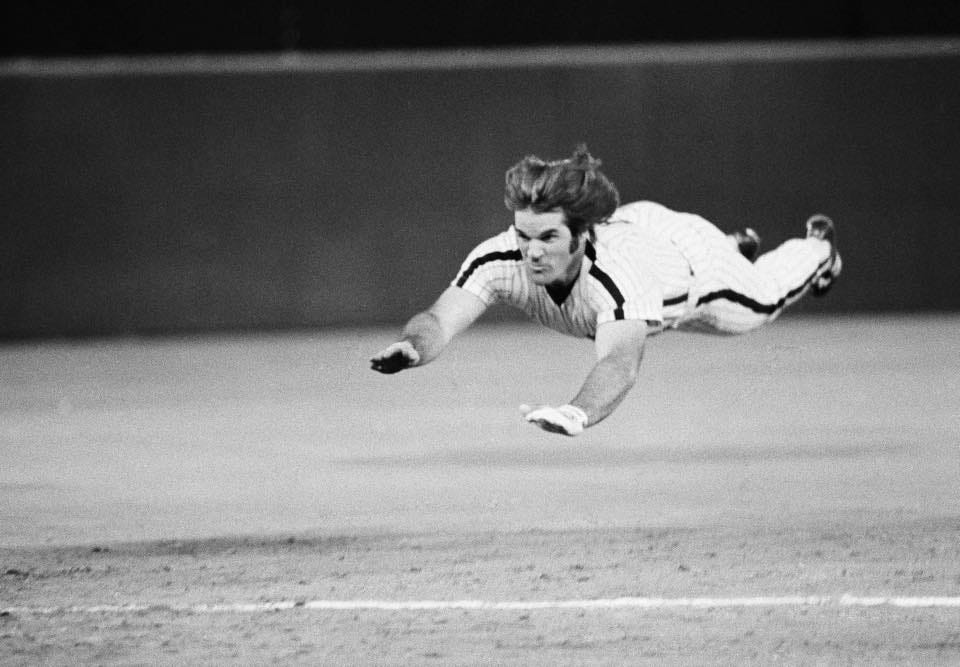
The pursuit of the thrill associated with gambling can be destructive. The adrenaline rush of placing a bet, the anticipation of the outcome, and the momentary euphoria of winning can become a potent cocktail that fuels addictive behavior. The competitive environment of professional sports, with its emphasis on winning at all costs, may have normalized or even encouraged Pete Rose’s gambling habits. In a culture that celebrates risk-taking and rewards those who push boundaries, gambling can be seen as an extension of that competitive spirit, rather than a dangerous addiction.
Welcome to Ballpark Confidential: Baseball’s Backstory on Culture, Society, & History. Whether you’re a die-hard fan, a newcomer to the game, or just someone who enjoys a good baseball story, we’re set to dive deep into the essence of baseball, uncovering pivotal moments and key figures. This is more than a history lesson; it’s a judgment of how baseball reflects and influences our culture and society.
A new installment of River Rat – “Hustle, Heroism, and Hubris: The Pete Rose Conundrum” comes out every Friday!
In this first series, titled River Rat – “Hustle, Heroism, and Hubris: The Pete Rose Conundrum” I’m examining books, articles, opinions, watching TLC reality TV show “Hits & Mrs.” on Pete and will read the document that rocked Major League Baseball – The Dowd Report sparking a 35+ year debate on one of baseball’s greatest players.
Over the past several weeks, we have embarked on a comprehensive journey through the Dowd Report, breaking it down section by section. This analysis has allowed us to examine the evidence, testimonies, and conclusions that led to Pete Rose's lifetime ban from Major League Baseball. Each section of the Dowd Report has been explored to provide a clear and nuanced understanding of the events and actions that defined this pivotal moment in baseball history.
This portion of the report covers the Rose, Gioiosa and Peters betting between 1985 & 1986. It sheds light on several aspects of the human condition in relation to Pete Rose and the individuals involved.
Rose’s steadfast denial of betting on baseball, despite substantial evidence to the contrary, exemplifies a fundamental aspect of human nature: the instinct to safeguard one’s reputation and public image, even when it requires sacrificing truth and integrity. This tendency stems from a deep-seated fear of judgment, rejection, and loss of social standing.
The human tendency to prioritize self-preservation and maintain a positive image, even at the expense of truth, is a complex and deeply ingrained aspect of our nature. Pete Rose’s case serves as a reminder of the lengths to which individuals may go to protect their reputation and the potential consequences of succumbing to denial and deception.
The report’s depiction of Pete Rose’s alleged gambling habits paints a picture of a man potentially consumed by addiction or is it a competitive drive. The alleged high stakes of his bets and the frequency with which they were placed suggest a compulsive behavior that went beyond casual wagering. This compulsive behavior, characteristic of addiction, is often driven by a dopamine rush associated with risk-taking and the anticipation of winning.
His competitive drive, combined with the inherent risks and rewards of gambling, may have contributed to Rose’s alleged addictive behavior. The adrenaline rush of placing a bet, the anticipation of the outcome, and the satisfaction of winning likely mirrored the emotions he experienced on the baseball field. However, this constant pursuit of winning, whether in sports or gambling, can easily spiral into a compulsive need to prove oneself, leading to increasingly risky behaviors.
One key factor that stands out in this portion of the report is the involvement of multiple individuals corroborating Pete Rose’s alleged betting activities. Witnesses like Tommy Gioiosa, Michael Fry, Ron Peters, and Dave Morgan provided testimonies and details about Rose’s alleged gambling habits, the amounts of money involved, and the methods used to place and settle bets. This corroboration from multiple sources strengthens the case against Rose, as it isn’t reliant on a single individual’s account.
As you read through this portion of the report, reflet on the relationships and conflicting loyalties revealed in the report, how does the Pete Rose case highlight the broader ethical dilemmas individuals face when personal relationships clash with professional responsibilities or societal expectations?
If you just started reading this series I suggest starting with Part One.
III. RESULTS OF INVESTIGATION, A. THE ROSE-GIOIOSA – PETERS BETTING – 1985 & 1986
In 1978, Pete Rose befriended a young man from New Bedford, Massachusetts, named Tommy Gioiosa (also known as Tommy Gio) . Rose was introduced to Gioiosa by his son, Pete Rose II, in Florida during Spring training where Gioiosa was playing in a community college baseball tournament. Gioiosa became, over the next few years, a constant companion and runner for Pete Rose. Gioiosa moved in with Rose and his family in 1978 and, after Rose was divorced on July 31, 1980, he moved into a condominium with Rose . Rose added that “[Gioiosa] paid no rent; he didn’t have to buy food; and I let him drive one of my cars.”
The evidence uncovered during the investigation revealed that Gioiosa started running bets for Pete Rose in the fall of 1984, several months after Gold’s Gym opened in suburban Cincinnati, Ohio, on June 1, 1984. Michael Fry was the owner of Body Power, Incorporated, doing business as Gold’s Gym .
Donald Stenger, an investor of $25,000 in the gym and the Vice President of Body Power, Incorporated, was a good friend of Pete Rose . Don Stenger introduced Tommy Gioiosa, who claimed to have prior experience in the management of health clubs, to Mike Fry . Gioiosa and Stenger began regularly working out at Gold’s Gym around September of 1984. Around November 1984 , Gioiosa and Stenger began to bring Pete Rose to Gold’s Gym . Gioiosa and Stenger became critical of the operation of the gym, and as a result, Gioiosa became the manager of the gym around February 1985 . He ran the gym with the assistance of Don Stenger and Linda Kettle .
James Eveslage, who runs the Miami Beach Tanning Salon in Oxford, Ohio, was a member of Gold’s Gym and had known Don Stenger for eight years prior to the opening of Gold’s Gym. Stenger told us that Gioiosa once asked him if he knew someone who could take bets. Stenger thereupon introduced Gioiosa to Jim Eveslage . Eveslage recalled that Gioiosa approached him and asked if he, Eveslage, knew of anyone who could take “big action” for Pete Rose . Gioiosa told Eveslage that he wanted to “lay down” bets on football for Rose . Eveslage was aware that Rose and Gioiosa were associated because he had seen them together on occasion . Eveslage also knew that Gioiosa was a gambler who made bets on all types of sports activities . Eveslage told Gioiosa that he would give him the name of someone who could handle his betting action .
Following his conversation with Gioiosa, Eveslage contacted Ron Peters, a bookmaker in Franklin, Ohio . Eveslage and Peters were good friends. They had known each other for about ten years — from the time Peters was the assistant golf pro at Beckett Ridge Country Club in Franklin, Ohio. Eveslage was a member of that club. Eveslage and Peters used to play poker at the club together at night. Eveslage told Peters: “I don’t know if this guy, Gioiosa, is in business or not. He says he is laying down money for Pete Rose.” Eveslage subsequently introduced Gioiosa to Peters . Although Eveslage failed to state when the introduction took place, Peters claims it occurred in the fall of 1984 .
For a period of two to three weeks after the introduction of Gioiosa to Peters, Eveslage claimed to have served as an intermediary between Gioiosa and Peters on each weekend during the football season . Eveslage stated that Gioiosa placed bets on ten football games a weekend at $2,000 per game . Eveslage advised that gambling payoffs were delivered to him at his home personally by Peters or Gioiosa . Michael Fry confirmed Eveslage’s recollection that Gioiosa placed bets for Pete Rose while Gioiosa was a regular at Gold’s Gym . Fry stated that Rose bet on football and basketball, but he added that he did not believe Rose bet on baseball . Fry also stated, however, that Paul Janszen bet on baseball based on tips from Rose:
“I can say for sure that Janszen was, but Pete — and I can say for sure that Pete was helping Janszen pick the teams, but then I remember Janszen also making the statement that Pete he was having better luck picking the teams than Pete was for the baseball bets.”
Further, Fry said that Janszen could not afford to bet $2,000 a game on baseball:
BRI: Would Janszen bet $2,000 a game?
FRY: No. He didn’t have the money.
BRI: So, if there were bets placed with Ron Peters say $2,000 a game…
FRY: You can bet on it; you can almost be assured that it was Pete Rose.
BRI: And you say Paul Janszen did not have that kind of money?
FRY: No. Paul didn’t have that kind of money. Not to bet no $2,000 a game.
The betting records of Janszen and Peters, however, indicate baseball bets of $500, $1,500, $2,000 and $2,500 on the Cincinnati Reds and other Major League teams. According to Janszen and Peters, the $500 baseball bets were Janszen’s, and the $2,000 bets were Rose’s.
Lance Humphrey, the daytime manager of Gold’s Gym, stated that Tommy Gioiosa boasted of being a professional gambler. Humphrey personally observed Gioiosa placing bets for $1,000 to $5,000 per game on football, basketball and baseball. Rose would call Gioiosa at the gym frequently, and Gioiosa told Humphrey that he was placing the bets for Pete Rose. Humphrey also advised that Gioiosa did not have the financial wherewithal to place bets for himself, except possibly with drug proceeds.
Peters verified Eveslage’s account. He testified that he was introduced to Tommy Gioiosa by Eveslage in the fall of 1984 and began to take bets from Gioiosa for Pete Rose. The amount of the bets was usually $2,000 per game, sometimes as high as $5,000 per game. The bets at that time were on football.
Peters testified that he took bets from Gioiosa and Pete Rose during the period from late 1984 to late 1986, when he stopped taking Rose’s action. He stated that Pete Rose bet on professional football, college basketball, and Major League baseball. He specifically stated that Pete Rose bet on Major League baseball games in 1985, 1986, and 1987, including games played by the Cincinnati Reds while Pete Rose was both a player and manager.
DOWD: “And when he bet baseball, did he bet on the Cincinnati Reds?”
PETERS: “Yes, he did.”
DOWD: “And was this at a time that he was Manager of the Cincinnati Reds?”
PETERS: “Yes, sir.”
DOWD: Is there any doubt in your mind?
PETERS: Absolutely not.
Although Gioiosa usually placed the bets for Rose during this period, on four to six occasions, Rose contacted Peters directly. On one of these occasions, in 1985 or 1986, Pete Rose called Peters to place bets on baseball, including the Cincinnati Reds. Peters recorded the conversation, and then played the tape back to Pete Rose. Rose became upset and asked him why he had taped him. Peters explained to him that he wanted an insurance policy to make sure Rose would pay his gambling losses. The tape, however, cannot be located.
During his deposition on April 20-21, 1989, Pete Rose denied that Gioiosa ever placed bets on baseball games for him.
DOWD: Did Tommy-bet major League baseball for you?
ROSE: No. Nobody bets major league baseball for me.
However, Rose admitted that he has bet on sports events since 1975. The only person with whom Rose acknowledged making bets was Tommy Gioiosa, with whom Rose said he placed bets on professional football and college and professional basketball games, from 1986-1988. Rose stated that Gioiosa was not a bookmaker, but claimed he did not know with whom Gioiosa placed the bets. Rose stated that Gioiosa never called a bookmaker from Rose’s house.
During his deposition, Rose revealed a good deal of personal knowledge of how bookmakers operate. For example, Rose stated that he settled up his bets on Tuesday after the weekend and Monday night football games were over. Rose explained that bookies make their money by charging a 10% fee, which he volunteered was called “vigorish,” a bookmaking term.
Rose elaborated that if you bet $1,000 and you lose, you pay $1,100; if you bet $500 and lose, you pay $550. Rose also testified that when Gioiosa bet, he bet on credit, i.e., he did not have to put cash up before betting. Rose said he could not recall whether it was his credit or Gioiosa’s, because he did not know how Gioiosa called in the bet.
Rose said he always bet the same amount — $1,000 per professional football game. The most he ever bet was $2,000 on the Super Bowl. The most he ever lost was $34,000 on college basketball games.
While acknowledging a good deal about gambling, Rose did not acknowledge that in gambling parlance, a “dime” means “ten.” When asked whether a “dime” means “one thousand,” Rose said, “It don’t to me.” This assertion by Rose is belied by a key exhibit in this case: three betting sheets in Pete Rose’s own handwriting listing bets on baseball games, including the Cincinnati Reds. These sheets, which are Discussed in more detail in the “Documentary Evidence” section of the report, cover baseball games played in early April 1987. They have been determined by a handwriting expert to be in Rose’s handwriting. The sheets include three Cincinnati Reds games and handwriting showing “5 dimes” being bet on several games. A “dime” means one thousand dollars in gambling parlance.
During his deposition Rose was confronted with the betting sheets determined by expert analysis to be in his handwriting. When asked whether the handwriting on the sheets was his, Rose responded that “I couldn’t tell you if that’s my handwriting” and “I don’t recognize it as my handwriting.” Rose also testified that he did not recognize the betting sheets as something he had seen before. When advised that a handwriting expert had analyzed the sheets and determined that the handwriting was his, Rose responded: “All I can tell you is what I know. I can’t disagree or agree with that. I mean I never seen that before.”
Peters’ testimony about Rose’s betting on sports events, including baseball, is supported by Peters’ associate, Dave Morgan. Morgan was a golf course maintenance man at the Beckett Ridge Country Club where Peters was an assistant golf pro. Morgan also attended high school with Peters and lived with him for approximately eight months in 1978.
Morgan testified that in 1985 he learned that Peters was in the bookmaking business, when Peters asked him for assistance in taking bets from the smaller players, whom Morgan described as those who bet between $50 – $100. Morgan agreed, and for the next two and one-half years, from 1985 to 1987, he assisted Peters with his bookmaking business. Peters, on the other hand, concentrated on taking bets from the big players, who bet over $100. Whenever the big players called, Morgan gave the phone to Peters.
According to Morgan, one of Peters’ big players was Tommy Gioiosa. Morgan stated that Peters explained to him that Gioiosa was betting for Pete Rose. Gioiosa also advised Morgan that “he was betting for Pete.” Although the big players used code names or numbers to identify themselves, Gioiosa never used a code name or number when he called to place a bet. When Gioiosa called and Morgan answered the phone, Morgan turned the phone over to Peters. According to Morgan, Gioiosa was placing bets on football and basketball. During basketball season, Gioiosa called every night.
Morgan also testified that, when Peters was too busy to collect the losses, Peters sent Morgan to pick up the money from Gioiosa. Morgan recalled meeting with Gioiosa on at least five separate occasions to collect for Peters. Two of these meetings took place at Gold’s Gym, two were at a gas station parking lot near Route 747 and I-275 in Tri-County, and one was in the parking lot of an old truck stop located at I-75 and Cincinnati-Dayton Road. Morgan recalled collecting $22,000 and $60,000 from Gioiosa, although he was not positive that the second pick-up was for $60,000. The other three collections were for at least $10,000 cash each. After he picked up the money, he delivered it to Peters. Morgan testified:
“I’d just pull up and he’d throw it into my car. You know, he’d have it wrapped in rubber bands or something, he’d throw it in my car. And, you know, I’d just take it back to Ron and hand it to him.”
If Peters lost money on the gambling activity, Morgan explained that Peters would personally handle the payoffs. Because Peters’ betting activity was light during baseball season, and Morgan’s duties on the golf course occupied most of his time, Morgan did not answer the phone during this time. Instead, Peters handled most of the calls. Morgan, however, recalled Peters telling him during the 1987 baseball season that he was “getting murdered” by Pete Rose on baseball. Morgan stated that Peters advised him that Rose had him “hooked” for “about seventy-five thousand.” According to Morgan, Rose’s winnings occurred near the beginning of the baseball season when Cincinnati was winning a lot of games.
Morgan never met Pete Rose. He recalled, however, answering a call from Rose on one occasion during the football or basketball season. He was not sure whether the caller identified himself as Pete, or if he recognized the voice as that of Pete Rose because he had heard him on the radio or television. Morgan gave the phone to Peters who handled the transaction.
Peters testified that he assigned Rose a code number, 14, his player number, which Rose never used. Instead, when Rose called him directly, he would always state, “This is Pete.” Peters recalled one occasion in which he received a call directly from Pete Rose to place a bet five minutes before game time. This event stayed in Peters’ mind because he specifically recalled viewing Rose in the dugout on television five minutes after their conversation ended. Additionally, the telephone toll records of Gold’s Gym show frequent calls to Ron Peters during 1986, including the Major League Baseball season.
Gioiosa handled the payoffs of Rose’s losses to Peters. Peters remembered one particular occasion, in 1986, when Rose owed him $24,000. He said that Gioiosa came to see him at Jonathan’s Café, a restaurant owned by Peters in Franklin, Ohio, and tried to pay him with three $8,000 checks payable to cash and signed by Pete Rose. He told Gioiosa to cash the checks because he did not want his name on the checks. Gioiosa had the checks cashed and the next day gave Peters $24,000 in cash.
Peters’ recollection of the attempt by Gioiosa to pay him by check in 1986 is supported by Pete Rose’s bank records, including four of his personal checks dated February 5, 1986. One check is payable to Tommy Gioiosa for $8,000; one check is payable to Mike Fry for $8,000; and two checks are payable to cash for $8,000. All four checks were signed by Pete Rose and endorsed by Mike Fry; Gioiosa also endorsed two of the checks. Peters identified three of these checks as the checks that were presented to him by Gioiosa to pay off the $24,000 debt. Peters further testified that he would not have extended credit to Gioiosa to place large bets because of Gioiosa’s meager financial situation.
Mike Fry did not specifically recall cashing these checks, but he stated that he often cashed checks for Gioiosa because Gioiosa had no credit or business relationship with a bank. Fry testified that he was frequently asked by Rose or Gioiosa to cash Rose’s checks. Fry further testified he loaned cash of $17,000 and $30,000 to Pete Rose to pay his gambling debts in the fall of 1985. The first loan of $17,000 was delivered by Fry to Gioiosa at the Riverfront Stadium clubhouse in September 1985, in the presence of Rose. Fry was repaid by Rose several weeks later.
Fry described the transaction as follows:
“I’d met Pete at the gym, sure, but I never really talked to him or associated with him. And when I went down there, I got a little close to Pete at one time and Pete called me Mike and he knew who I was and Gioiosa asked me if I had $17,000, that he needed to pay a bookie with. I said sure. I have 17 grand here and I gave it to him. A few weeks later, Pete repaid me.”
The second loan was for $30,000 in October or November 1985.
“The second time I loaned him money I was a little skeptical about it, so we struck a deal. Pete had broke the record and received a red Corvette, I put the red Corvette in my garage. It sat there for a few months. I marketed the car as a Pete Rose collector of memorabilia, a collector item. I paid for a car cover, I had it exclusively for Mr. Pete Rose, 9/11/85-4/92 and we were supposed to market the car and split the money when we sold it. Pete and I would, and I was to get my $30,000 back at that point.”
Fry was repaid in cash, in early 1986, but he never received “the half of what [Pete] owed me for helping with the car.”
Rose denied receiving these loans from Fry. Rose further testified that Fry never loaned him money, and he never paid money to Fry. He also testified that he never saw Mike Fry in the Cincinnati Reds clubhouse.
Rose testified that it was Gioiosa who took care of the Corvette he received when he broke Ty Cobb’s record, not Fry. However, Rose did testify that Gioiosa arranged for “a ‘spare garage’ in which to store the car, as well as a car cover with the number ‘4192’ on it.”
Fry further testified that Rose sold Don Stenger his $100,000 M1 BMW for $75,000 in cash to pay a gambling debt. Rose acknowledged that he sold his $100,000 M1 BMW to Don Stenger, but Rose recalled the sales price to be approximately $50,000. Rose claimed that he sold the M1 for a low price because he had blown out the engine after a couple of years and Stenger had a “real good mechanic… and he (Stenger) said he could fix it up.” Rose could not recall if he was paid in cash or by check.
Peters recalled that in 1985 or 1986, Pete Rose personally visited Jonathan’s Cafe with Tommy Gioiosa and Mike Fry to collect $37,000 in winnings for Rose. Peters said that Pete Rose, during this visit, gave a black Mizuno bat to Peters for Jonathan’s Cafe. The bat is endorsed ‘To Jonathan’s Cafe, Best Wishes, Pete Rose.’ While Rose and Fry were having lunch, Peters gave Gioiosa $37,000 in the back room or the men’s room, which Gioiosa stuck in his sock. Rose admitted that he traveled with Gioiosa to Jonathan’s Cafe on one occasion. Rose stated that he went to Jonathan’s because Gioiosa ‘had to deliver something to somebody.’ He stated that upon arrival at Jonathan’s, Gioiosa and Peters ‘went back in the back room and talked about something.’ He did not know what they talked about, and Rose added, it ‘wasn’t none of my damn business.’ Rose did recall, however, what he had for lunch (‘tuna fish sandwich and ice tea’) and that he gave Peters a bat autographed ‘To Jonathan’s.’ Rose emphasized that this was the only time he met or spoke with Ron Peters. Rose also testified that Gioiosa was not there to pick up gambling winnings for him from Peters.
Peters further testified that in late 1986 Rose refused to pay him $34,000 that Rose owed him for losses on gambling action. Gioiosa told Peters that Rose was unable to pay Peters because he had to pay a mafia bookmaker in New York. Because Peters was not paid the $34,000 owed to him by Rose, he did not take any further baseball betting from Rose until May 1987.
End of Section
Pete Rose’s alleged betting activities in 1985 and 1986 primarily involved football, basketball, and baseball. Tommy Gioiosa, a close associate of Rose, acted as his intermediary with bookmaker Ron Peters. The report details multiple instances of large bets being placed, along with financial transactions and loans related to settling gambling debts.
Tommy Gioiosa was Rose’s primary contact with bookmaker Ron Peters, while individuals like Michael Fry and Don Stenger were involved in financial transactions to cover gambling debts.
The report indicates that Rose allegedly bet on football, basketball, and baseball games, including games involving the Cincinnati Reds while he was both a player and manager.
The report details instances of check cashing, loans, and payments related to settling Rose’s gambling debts, involving individuals like Michael Fry and Don Stenger.
A recorded conversation between Rose and Peters, along with betting sheets allegedly in Rose’s handwriting, are cited as evidence of Rose’s involvement in gambling.
Despite the evidence presented, Rose consistently denied betting on baseball, particularly on the Cincinnati Reds.
Overall, this section of the report focuses on the alleged betting activities of Pete Rose in 1985 and 1986, highlighting the involvement of his associates, the nature of the bets, and the financial transactions that took place to cover gambling debts.
Pete Rose’s lifelong engagement with betting and his intensely competitive nature appear to be intertwined, fueling each other in a complex and potentially destructive relationship.
From a young age, Rose exhibited a drive to win, both on and off the baseball field. His determination to succeed translated into a competitiveness that permeated every aspect of his life, including his gambling habits. Betting became another arena where Rose could test his skills and knowledge, seeking the thrill of victory and the validation of being right.
Rose’s competitive nature may have also blinded him to the potential consequences of his actions. His unwavering belief in his ability to win, both in baseball and gambling, might have led him to underestimate the risks involved and overestimate his chances of success. This distorted perception of reality can be a hallmark of addiction, where individuals become convinced of their invincibility and fail to recognize the harm they are causing to themselves and others.
In the next post we will examine:
Section III. RESULTS OF INVESTIGATION, B. The Rose-Bertolini Betting.