


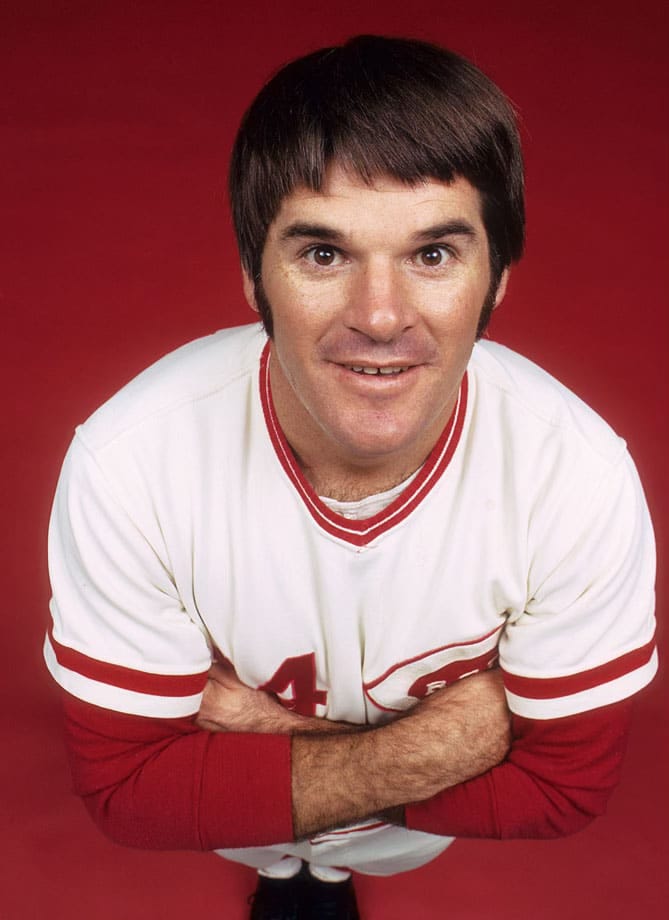
The investigation into Pete Rose's alleged gambling activities uncovered substantial evidence contradicting his sworn denials. Despite Rose's adamant claims under oath that he never bet on the Cincinnati Reds or other Major League Baseball games, the evidence presents a different story.
Welcome to Ballpark Confidential: Baseball’s Backstory on Culture, Society, & History. Whether you’re a die-hard fan, a newcomer to the game, or just someone who enjoys a good baseball story, we’re set to dive deep into the essence of baseball, uncovering pivotal moments and key figures. This is more than a history lesson; it’s a judgment of how baseball reflects and influences our culture and society.
A new installment of River Rat – “Hustle, Heroism, and Hubris: The Pete Rose Conundrum” comes out every Friday!
In this first series, titled River Rat – “Hustle, Heroism, and Hubris: The Pete Rose Conundrum” I’m examining books, articles, opinions, watching TLC reality TV show “Hits & Mrs.” on Pete and will read the document that rocked Major League Baseball – The Dowd Report sparking a 35+ year debate on one of baseball’s greatest players.
Over the past several weeks, we have embarked on a comprehensive journey through the Dowd Report, breaking it down section by section. This analysis has allowed us to examine the evidence, testimonies, and conclusions that led to Pete Rose's lifetime ban from Major League Baseball. Each section of the Dowd Report has been explored to provide a clear and nuanced understanding of the events and actions that defined this pivotal moment in baseball history.
This section outlines the key pieces of evidence and corroborating testimonies that illustrate Rose's extensive betting activities. It highlights the conflicting accounts, documented betting records, and testimonies from various associates, painting a comprehensive picture of Rose's involvement in betting on baseball. This detailed examination reveals the intricate network Rose utilized to place bets and manage his gambling debts, ultimately challenging his credibility and integrity.
If you just started reading this series I suggest starting with Part One.
VII. SUMMARY OF THE EVIDENCE
Pete Rose denied under oath placing bets or causing others to place bets on the Cincinnati Reds and other ball games of Major League Baseball. Indeed, Rose denied under oath ever associating with anyone placing bets on his behalf on the Cincinnati Reds or the games of Major League Baseball. He admitted placing bets with Tommy Gioiosa on other sports activity, but denied knowing the Ohio bookmaker or other bookmakers in New York. He denied being delinquent in paying his gambling losses or having borrowed from his associates and friends to pay his gambling losses.
A. THE KEY EVIDENCE
The evidence should be viewed as a whole in order to obtain a clear picture. Nevertheless, it is important to note the following five distinct pieces of evidence pointing to Pete Rose's betting on the Reds and baseball:
First, the three-page document in Rose's handwriting recording baseball games and the results. Pete Rose's explanation that he does not recognize the document or the handwriting is perhaps the only answer he can render given his posture in this case.
Second, the notebook of Paul Janszen recording the betting action of Pete Rose from April 1, 1987 to May 3, 1987, on Reds games as well as other games. To those who might the notebook was fabricated by an unpaid creditor, the next piece of evidence should be closely examined.
Third, the telephone traffic in the collective telephone records bears remarkable witness to the betting action before game time of the Cincinnati Reds — home or away, night or day — particularly the unexplained calls from Rose's home and hotel rooms to Chevashore, Val and Peters during the baseball season. Rose offered no explanation for these telephone calls.
Fourth, the betting records of Ron Peters which show baseball betting action on the Reds and other Major League Baseball games in 1987 by one customer.
Fifth, the unguarded statements of Steve Chevashore on tape contradicted Rose's statement that Janszen, Chevashore and Val were not involved in the sports betting action on the Cincinnati Reds or Major League Baseball for Pete Rose.
Sixth, the Bertolini tape reveals not only serious questions as to Rose's testimony about his gambling habit, but the modus operandi employed by Rose to disguise and conceal his enormous gambling indebtedness, the identity of his bookmakers and his betting on baseball. The generating of funds through loans to Bertolini, the remission of checks to fictitious payees, and the delay in the production of bank records from Star Bank and Oak Hills Savings and Loan all raise serious questions whether Pete Rose is trying to conceal his gambling on baseball and the Reds.
B. SUMMARY OF THE TESTIMONY OF RON PETERS
The sworn, voluntary, corroborated testimony of Ron Peters, the bookmaker from Franklin, Ohio, establishes that he took bets at $2,000 per game on the Reds and other Major League baseball teams from Pete Rose, and from Tommy Gioiosa, Paul Janszen and Danita Marcum on behalf of Pete Rose. Peters testified that he would not extend credit of $2,000 per game to Gioiosa, Janszen and Marcum personally, but did so because the bets were for Pete Rose. He testified that he received telephone calls from Rose, and from Gioiosa, Janszen and Marcum to place bets for Rose, and that he collected Rose's betting losses from, and paid Rose's winnings to, Gioiosa and Janszen. Peters testified that Rose, through Gioiosa and Janszen, provided tickets to him for the Reds games in 1986 and 1987. He received a Mizuno bat autographed by Pete Rose when Rose visited Jonathan's Cafe, Peters' restaurant, with Gioiosa and Fry. During that visit, Peters gave Gioiosa $37,000 in winnings for Pete Rose in a back room of the restaurant. Peters recalled Gioiosa attempted to pay him in 1986 with three $8,000 checks signed by Pete Rose. Peters stopped taking bets from Rose in the fall of 1986, after the baseball season, because Rose refused to pay him $34,000 from past betting.
Peters testified Gioiosa told Peters that Rose was unable to pay Peters because Rose owed money to a bookmaker in New York.
Peters testified that in mid-May 1987, he resumed taking Rose's bets from Janszen after Janszen gave him a copy of Rose's $34,000 check, dated March 12, 1987, payable to Gioiosa and signed by Reuven Katz, the attorney for Pete Rose. Peters testified that Rose was his only baseball betting customer in 1987. He testified that Rose won $27,000 in May 1987 and $40,000 in June 1987 on baseball games including the Reds. He testified that he refused to pay Rose because Rose still owed him $34,000. Peters testified that as a result, Rose stopped betting with him in mid-July 1987. Peters recalled that Janszen tried to collect the $40,000, because Rose was also indebted to Janszen for $40,000. Peters refused to pay Janszen the $40,000 but later gave Janszen three checks totaling $6,000 -- the difference between what Peters owed Rose and what Rose owed Peters.
Peters recorded a telephone conversation with Robert Pitcairn, Rose's attorney, on his own initiative after being contacted by your investigators. Pitcairn was returning a call Peters made to Reuven Katz to find Pete Rose to inform him of your inquiry. During their conversation, Peters was surprised that Pitcairn did not question who Peters was or dispute Peters' statement that he took bets from Rose.
1. SUMMARY OF CORROBORATION OF PETERS' TESTIMONY
• Ron Peters' testimony is corroborated by the testimony of James Evsleage who voluntarily told us that he arranged for Peters to accept Pete Rose's betting through Gioiosa.
• Ron Peters' testimony is also corroborated by Mike Fry. Fry observed Gioiosa placing bets for Pete Rose while Gioiosa was the Manager of Gold's Gym, which Fry owned. Fry voluntarily admitted loaning Pete Rose $17,000 and $30,000 in the fall of 1985, after the baseball season, to pay Rose's gambling losses. Fry admitted cashing checks for Gioiosa in February 1986 in order for Gioiosa to pay Peters. Fry's endorsement appears on the checks. Fry further stated Gioiosa and Janszen could not have afforded to bet $2,000 per game with Peters. Fry stated that he went with Pete Rose and Gioiosa to visit Jonathan's Cafe.
• Ron Peters' testimony is also corroborated by Lance Humphrey, the daytime manager of Gold's Gym. Humphrey testified that Gioiosa told him that he was betting for Rose on baseball, basketball and football with Ron Peters at $1,000 to $5,000 per game. Humphrey testified that Gioiosa could not afford to place bets of that size.
• Ron Peters' testimony is corroborated by the telephone records of Gold's Gym for 1986 which show sixty-five telephone calls from Gold's Gym to Ron Peters during the 1986 baseball season, when Tommy Gioiosa was manager of Gold's Gym.
• Ron Peters' testimony is corroborated by the three $8,000 checks signed by Pete Rose on February 5, 1986, endorsed by Fry and cashed by Gioiosa.
• Ron Peters' testimony is corroborated by Rose's $34,000 check, dated March 12, 1987, signed by Reuven Katz, and endorsed and cashed by Tommy Gioiosa.
• Ron Peters' testimony is corroborated by the phone records of Rose, Janszen and the Cincinnati Reds, and by the hotel bills of Pete Rose during May, June and July 1987. These records show a pattern of telephone traffic prior to the beginning of each Reds game — home or away, night or day — between Janszen, Marcum, Rose and Peters.
• Ron Peters' testimony is corroborated by the sworn admissions of Pete Rose during his deposition. Rose testified that he gave his bets to Gioiosa to place with a bookmaker; that he had Gioiosa pay his gambling losses and collect his winnings; that he signed the three $8,000 checks on February 5, 1986 for Gioiosa to pay his gambling losses; that he directed his attorney, Reuven Katz, to give a $34,000 check to Gioiosa to pay his gambling losses; that he cannot explain how a copy of the $34,000 check was in the possession of Ron Peters and Paul Janszen in May 1987; that he did send Mike Bertolini eleven checks totaling $88,000 in October, November and December 1986, which is the time when Gioiosa told Peters that Pete Rose was unable to pay Rose's $34,000 debt to Peters due to Rose's indebtedness to a mafia bookmaker in New York; that he visited Jonathan's Cafe with Gioiosa, where he gave an autographed bat to Ron Peters for his restaurant and Gioiosa met with Peters in a back room; and that he ordered tickets to Reds games for Peters in 1986 and 1987, which he explained by saying that someone else must have asked him for the tickets.
• Ron Peters' testimony is corroborated by the transcript of his conversation with Rose's counsel, Robert Pitcairn, on March 13, 1989, prior to any publicity about Peters. Pitcairn returned Peters' call to Katz and made inquiries about the Commissioner's investigation without asking Peters who he was and without disputing Peters' statement that Pete Rose bet with him.
• Ron Peters' testimony is corroborated by the voluntary sworn testimony of Paul Janszen and Danita Marcum who testified that they placed bets of $2,000 per game at the request of Pete Rose with Ron Peters on the Reds and other baseball games during May, June and July 1987.
• Ron Peters' testimony is corroborated by betting sheets obtained from Rose's home and found by an expert to be in Rose's handwriting. The betting sheets contain a listing of Major League Baseball games, including the games of the Cincinnati Reds, with the results.
• Ron Peters' testimony is corroborated by the voluntary sworn testimony of Jim Procter and Dave Bernstein. Procter overheard Rose betting on baseball games with Paul Janszen, and Bernstein was advised by Janszen in the spring of 1987 that Rose was betting on baseball and the Reds with Ron Peters.
• Ron Peters' testimony is corroborated by his own betting records, which show bets on the Reds and other baseball games. The records also indicate that Peters had only one baseball betting customer in 1987. These records
• Ron Peters' testimony is corroborated by the report of the gambling expert who authenticated and verified Peters' betting records for 1987. His report states that Peters had only one customer during that season.
• Ron Peters' testimony is corroborated by the telephone toll records from Pete Rose's home and hotel room during May and June 1987. The records reveal telephone calls to Ron Peters' telephone number before the start of the games of the Cincinnati Reds.
It should be noted that Ron Peters bears no animus toward Pete Rose -- Peters recovered his 1986 losses on baseball betting by not paying Rose the $34,000 in 1987. Ron Peters gained nothing by his voluntary sworn statements against Rose. Ron Peters gave this testimony about Pete Rose against Peters' penal interest, that is, Peters' statements were incriminating and exposed him to prosecution for conducting an illegal bookmaking operation. Admissions against penal interest are considered trustworthy under the Federal Rules of Evidence. His testimony and his voluntary pleas of guilty to federal offenses are acts of integrity.
I find Ron Peters worthy of belief in view of the independent corroboration of his testimony.
C. SUMMARY OF THE TESTIMONY OF PAUL JANSZEN
Paul Janszen has given voluntary, sworn testimony, without promise of reward, that in April, May, June and July 1987 he placed bets of $2,000 per game on the Cincinnati Reds and other Major League Baseball teams for Pete Rose with Steve Chevashore, a runner of bets in Florida; with Val, a clerk for a bookmaking operation in New York; and with Ron Peters, a bookmaker in Franklin, Ohio. Janszen testified that Rose gave him the bets in person and on the telephone and that he or his girlfriend, Danita Marcum, called in the bets to Chevashore, Val or Peters. Janszen testified that he paid Rose's gambling losses with cash from Rose, and from his own cash when Rose was short of cash. He testified that he gave the status of bets on baseball games by hand signals to Pete Rose while the Cincinnati Reds were playing, during the time period when the scoreboard at Riverfront Stadium reporting the scores of other ball games was not working.
Janszen testified that Rose refused to repay him the $40,000 of his own money which he used to pay Rose's gambling losses. Janszen testified that Rose told him to collect his money from Peters, who owed Rose $40,000 in winnings. Janszen testified that he arranged for tickets with Pete Rose for Peters to attend a Reds game in 1987. He testified that he accompanied Rose on card shows and that he would count and hold the cash paid to Rose, which Rose used to pay his gambling debts.
Janszen testified that Rose bet with Ron Peters through Gioiosa in the fall of 1986 on the National League baseball playoffs and other sports events. He recalled Peters refusing to take any more bets from Rose in 1986 because Rose was delinquent in his gambling debts.
Janszen testified that he and Marcum were invited and stayed with Rose and Rose's family in Florida for Spring training in 1987. He testified that while in Florida, Pete Rose introduced him to Steve Chevashore and asked Janszen to place bets on sports events with Chevashore. Janszen testified that in April 1987, at the beginning of the baseball season, Rose asked him to continue placing bets on sports events, including the Reds games and other Major League games. Janszen testified that Rose would often write down the teams on which he wanted Janszen to place bets. He testified that he bet on the Reds and other baseball teams for Rose from April 6 to April 17, 1987 with Steve Chevashore; from April 17 to May 13, 1987 with Val in New York; and from May 17 to mid-July 1987 with Ron Peters — all at $2,000 per game and all at the request of Pete Rose. Janszen testified that he could not afford to bet $2,000 a game, and that the bookmakers would not extend credit to him for that amount.
Janszen testified that in mid-May 1987, Val refused to accept any more bets from Rose because Rose failed to pay his gambling losses. Janszen testified that Chevashore called Rose to collect the gambling losses and Rose told Chevashore that Janszen was betting in Rose's name. Janszen testified that Rose turned to him after the call from Chevashore and told Janszen not to worry because Chevashore was afraid of Janszen.
Janszen testified that Mike Bertolini was a photographer, card show promoter and memorabilia salesman, as well as a runner of bets for Pete Rose to another New York bookmaker. Bertolini told Janszen that Pete Rose bet on baseball and was indebted to New York bookmakers.
Janszen testified that Rose asked him to contact Ron Peters about taking bets from Rose. Janszen testified that Peters would not take Rose's bets because Rose owed him $34,000. Janszen testified that when he told Rose about Peters' response, Rose gave Janszen a copy of the $34,000 check dated March 12, 1987, payable to Tommy Gioiosa and signed by Reuven Katz, to give to Peters. Janszen testified that Peters told Janszen he never received any of the money from Gioiosa. Janszen testified that he gave a copy of the $34,000 check to Peters and Peters agreed to resume taking Rose's bets, which included bets on the Reds and Major League Baseball.
Janszen testified that Rose won $27,000 from Peters in the first week of betting, which Janszen collected and gave to Rose in cash. He testified that Rose lost $20,000 the second week, and that he collected cash from Rose and paid Peters for the losses. Janszen testified that Rose won $40,000 from Peters during June and early July, but that Peters refused to pay Rose. As a result, Rose stopped betting with Peters.
Janszen testified that Rose told him to collect from Peters the $40,000 Rose owed Janszen. He testified that he tried to collect the $40,000 from Peters and Peters refused to pay Janszen because Rose owed Peters $34,000. Janszen testified that eventually Peters paid Janszen three checks for $2,000 each, representing the difference between the amount Rose owed Peters and the amount Peters owed Rose. Janszen testified that those checks are now in the possession of the FBI in Cincinnati. Janszen testified that he placed no more bets for Rose because Rose refused to pay Janszen the money Janszen had expended on Rose's behalf.
Janszen testified that he visited Reuven Katz, counsel for Rose, early in 1988 seeking payment of the money from Rose because he needed it to hire an attorney for his criminal case. Janszen told Katz that Rose had bet on baseball. Janszen testified that Katz replied that it was "over" for Pete Rose. Shortly thereafter Katz arranged for a $10,000 check on Rose's account to be paid to Janszen. Katz told Janszen he wanted the check to appear as a loan.
Janszen testified that Katz asked Janszen to appear as a loan. Janszen testified that Katz did not ask Janszen to sign a promissory note to Rose and Rose has never sought repayment of the $10,000 from Janszen.
Janszen provided copies of letters to Katz and Pitcairn, Rose's counsel, which demand payment by Rose of the outstanding money owed to Janszen by Rose. Janszen admitted trying to collect the debt from Rose and being upset with Rose for using him and failing to pay the debt, all of which is reflected in the correspondence he voluntarily furnished to us.
Janszen admitted tape recording the conversations with Michael Bertolini on April 4, 1988 and with Steve Chevashore on December 27, 1988. Janszen provided copies of Rose's betting sheets in Rose's handwriting which he obtained from Rose's home, and copies of his own notebook recording the bets for Pete Rose from April 8, 1987 through May 13, 1987.
1. SUMMARY OF CORROBORATION OF JANSZEN'S TESTIMONY
• Paul Janszen's testimony is corroborated by the voluntary sworn testimony of Danita Marcum, Ron Peters, Jim Procter, David Bernstein, the unguarded statements of Steve Chevashore on the tape of December 27, 1988, the unguarded statements of Mike Bertolini on the tape of April 4, 1988, and the statements of Mike Fry.
• Paul Janszen's testimony is corroborated by the betting sheets he obtained from the home of Pete Rose, which record the results of the Reds and other baseball games. The handwriting expert has established from the handwriting exemplars of Rose and the 1987 handwriting samples of Rose that the three sheets are in the handwriting of Pete Rose. Another handwriting expert has established that the three sheets are not in the handwriting of Paul Janszen or Danita Marcum.
• Paul Janszen's testimony is corroborated by his own notebook in which he recorded the betting results of Reds games. The bets in Janszen’s notebook match the games and results of the three sheets in Rose's handwriting. The handwriting expert has established that the writing in the notebook is that of Janszen and Marcum.
• Paul Janszen's testimony is corroborated by the betting records of Ron Peters. Peters betting records show betting on the Reds and other baseball teams by one customer in 1987. These records bear the names of Janszen and "Pete.”
• Paul Janszen's testimony is corroborated by the gambling expert who has found all of the betting records to be authentic and correct based upon a comparison with the schedules, betting lines and results of Major League Baseball in 1987.
• Paul Janszen's testimony is corroborated by the collective telephone traffic which shows continuous contact between Janszen and Rose and (1) between Janszen and Chevashore from April 8 to 17; (2) between Janszen and Val from April 17 to May 13; and (3) between Janszen and Peters from May 17 to July 5, 1987 — just before game time for the Reds — home or away — night or day.
• Paul Janszen's testimony is corroborated by the taped conversation with Steve Chevashore in which Chevashore acknowledged that Janszen was betting for Rose with Val; that Rose was delinquent in paying his gambling losses; that Danita Marcum placed bets on the Cincinnati–Montreal game for Rose; that Chevashore called Rose to collect Rose's debts; that Rose denied betting after the Reds–Mets series and that Rose said Janszen was betting in Rose's name; that "the bosses" in New York held Rose responsible; that Janszen could not afford to bet $2,000 game for Rose; that Chevashore called Rose to collect Rose's debts; that Rose denied betting after the Reds–Mets series and that Rose said Janszen was betting in Rose's name; that "the bosses" in New York held Rose responsible; that Janszen could not afford to bet $2,000 per game; and that Bertolini was in trouble with people in New York.
• Paul Janszen's testimony concerning the debt owed to him by Rose is corroborated by Bertolini's remark in the April 4, 1988 conversation with Janszen, when after Janszen told Bertolini that Rose owed him $12,000, Bertolini asked whether Rose had paid Janszen $38,000; by the testimony of Ron Peters that Janszen tried to collect the debt from Rose's winnings; by Peters' testimony that he paid Janszen the difference between what Peters owed Rose and what Rose owed Peters; by the $10,000 check -- "for loan" -- given to Janszen by Rose's counsel in March 1988 to pay Janszen's attorney's fees for Janszen's criminal case for which neither Katz nor Rose has ever sought repayment; by the correspondence between Janszen, his attorney and Rose's counsel in which Janszen asserted his claim for monies due, which Rose's counsel did not dispute; and by the statement of Mark Stowe, the Assistant Clubhouse Manager of the Cincinnati Reds, who asked Rose, in the spring of 1989, why he had a falling out with Paul Janszen and Rose told him it was over betting losses owed to Janszen which Rose told Janszen to collect from someone else who owed money to Rose.
• Paul Janszen's testimony that Pete Rose bet on the Reds and baseball with another bookmaker in New York, through Mike Bertolini, and that Pete Rose used the cash from card shows, memorabilia sales, and loans arranged for Bertolini and Bertolini's company, Hit King Marketing, Inc., to pay gambling losses is corroborated by the unguarded taped conversation of April 4, 1988 in which Bertolini acknowledged the following: the indebtedness to the New York bookmakers by Rose; Rose's conversations with the bookmakers; the enormous indebtedness of Rose for gambling losses; the payment of $150-$200,000 in betting losses; the outstanding debt of $200,000; the indebtedness of Rose to Bertolini; and the gambling habit of Pete Rose. During the conversation, Bertolini said that he was the only proof of Rose's betting and he would "die" before he told on Pete Rose.
• Paul Janszen's testimony that Bertolini was betting on baseball for Pete Rose is corroborated by Rose's bank records for an account at Oak Hills Savings and Loan in Cincinnati. The account was used to funnel checks in the fall of 1986, after the baseball season ended, to Bertolini in amounts under $10,000 and made payable to fictitious payees. The checks were cashed by Bertolini at a check cashing service in New York to pay the bookmaker in New York.
• Paul Janszen's testimony concerning the placing of bets on the Reds for Pete Rose is corroborated by the voluntary, sworn testimony of Danita Marcum, who verified all of Janszen's testimony concerning his relationship with Rose; the events at Spring training in Florida; the betting sheets in Rose's handwriting; the notebook in her and Janszen's handwriting; and placing the bets with Chevashore, Val and Peters. More significantly, Danita Marcum testified that she took bets directly from Pete Rose on the Reds and other baseball games and placed those bets for Rose with Val and Peters. Her recollection is corroborated by Peters' testimony that he took bets from Marcum for Pete Rose on Reds game, and by Chevashore's statements recounting Marcum's betting on the Cincinnati–Montreal game in May 1987.
• Paul Janszen's testimony is further corroborated by the voluntary sworn testimony of Ron Peters, who admitted taking bets from Rose and Janszen on the Reds.
It is quite significant that Peters and Janszen were not friends or close associates. At the time of their testimony, Peters possessed a bitter animosity towards Janszen because Janszen assisted the government in catching Peters engaging in activity which led to Peters' arrest, indictment and conviction.
• Notwithstanding this animosity, Peters corroborates Janszen. Peters testified that he began taking bets from Janszen on behalf of Rose in mid-May 1987 after Janszen gave him a copy of the $34,000 check of March 12, 1987 signed by Katz. He testified that Rose won $27,000 the first week, which he paid to Janszen for Rose; lost $24,000 the second week, which Janszen paid him in cash for Rose; and won $40,000 in June and early July which he refused to pay Rose because Rose still owed him $34,000 from earlier betting. Peters testified that he took bets for Pete Rose from Danita Marcum during May, June and early July 1987. Peters also received tickets to Reds games from Pete Rose through Paul Janszen.
• Paul Janszen's testimony is corroborated by the sworn testimony of David Bernstein and Jim Procter. Bernstein and Procter observed and heard Janszen taking bets on baseball games from Pete Rose during the 1987 season. Bernstein and Procter were also told by Janszen that Rose bet on the Reds. Bernstein also witnessed Janszen giving the status of bets to Pete Rose with hand signals at Riverfront Stadium when the Reds scoreboard, reporting the scores of other baseball games, was not working.
In view of this independent corroborative evidence, I find Paul Janszen's testimony worthy of belief.
D. ANALYSIS OF ROSE'S TESTIMONY IN LIGHT OF THE EVIDENCE
• It is difficult to square Rose’s sworn testimony with the sworn voluntary testimony of other witnesses, and the betting records in Rose's handwriting and the handwriting of others.
• Pete Rose testified he did not recognize the handwriting on the three betting sheets found in his home. Yet, according to a handwriting expert, the games of the Cincinnati Reds are recorded in Rose's handwriting on the betting sheets.
• Pete Rose testified that he never bet on the Reds or on baseball with Ron Peters. Yet, his bets on the Reds and baseball appear in Peters' betting records for the 1987 baseball season.
• Pete Rose testified that he never bet on the Reds or baseball with Paul Janszen or Danita Marcum. Yet, the records of Janszen and Marcum show bets on the Reds and baseball during the 1987 baseball season.
• Pete Rose did not explain how Ron Peters and Paul Janszen came into possession of a copy of the $34,000 check to Gioiosa written by Rose's attorney on March 12, 1987 and kept in Rose’s accountant’s office. Yet, Janszen and Peters recalled the check and stated that it was used by Rose to persuade Peters to resume taking Rose's baseball betting.
• Pete Rose claims the $34,000 check of March 12, 1987 was to pay for his gambling losses on the 1987 Super Bowl and the 1987 NCAA Basketball Championship, not the gambling losses to Ron Peters in 1986. But, the NCAA Basketball Tournament had not begun before March 12, 1987.
• Pete Rose denies knowing Ron Peters, the bookmaker from Franklin, Ohio. But, the records of the Cincinnati Reds show tickets for Peters were ordered by Rose in 1986 and 1987. Peters' restaurant, Jonathan's Cafe, exhibits a Rose-endorsed bat.
• Pete Rose admitted that Gioiosa bet for him on other sports activity, not baseball. Gioiosa is under indictment and has been unwilling to talk to us. However, Gioiosa told other people that he bet on baseball for Pete Rose. The telephone toll records of Gold's Gym for 1986, when Gioiosa was manager, also show sixty-five telephone calls to Ron Peters during the 1986 baseball season.
• Rose claimed to have no knowledge of Gioiosa collecting $37,000 in winnings for Pete Rose from Ron Peters at Peters' cafe, but he remembered Gioiosa meeting with Peters in a back room and can remember what he had for lunch.
• Pete Rose said he entrusted Mike Bertolini with hundreds of thousands of dollars because Bertolini was an honest man. However, when Pete Rose heard the unguarded statements by Bertolini on the April 4, 1988 tape, describing the payment of those funds to a New York bookmaker on behalf of Rose, Pete Rose said Bertolini was lying.
• Pete Rose remembered traveling to Ron Peters' Jonathan's Cafe in Franklin, Ohio, with Tommy Gioiosa and giving him an autographed Mizuno bat.
• Pete Rose claimed that he did not know Ron Peters was the bookmaker used by Gioiosa. Ron Peters called for Rose at Reuven Katz's office and received a call back from Robert Pitcairn, who, according to Peters, did not inquire who Peters was and did not dispute Peters' statement that Pete Rose bet with Peters.
• Pete Rose testified that he loaned Paul Janszen $10,000 in March 1988, through his attorney Reuven Katz, for Janszen's legal fees in a criminal case. But Janszen never signed a note. In Janszen's letter to Rose's counsel in 1989, Janszen acknowledged receipt of the $10,000 as partial payment of Rose's debt to him. In response, Rose's counsel did not dispute Janszen's description and did not seek repayment of the $10,000 by Janszen.
• Pete Rose testified that he never owed Paul Janszen $40,000. Rose testified that he never told Janszen to collect from Peters the money Rose owed Janszen. But Peters testified that Janszen tried to collect the debt from him, and Peters gave Janszen the $6,000 difference between what Rose owed Peters and what Peters owed Rose. Rose also told Mark Stowe that he had told Janszen to collect what Rose owed him from some other person. In addition, as noted, Reuven Katz paid Janszen $10,000 on Rose's behalf without receiving a note or demanding repayment.
• Pete Rose testified that he had never placed bets with a person named Val, had never spoken with a person named Val and did not know anyone named Val. Rose stated that he had never received a call from Chevashore seeking payment of monies owed to Val. However, the unguarded statements of Chevashore on the December 27, 1988 tape contradict Rose's sworn testimony. Chevashore's statements are corroborated by the baseball betting records in the handwriting of Rose, Janszen and Marcum, and the telephone traffic for April and May 1987.
• Pete Rose testified that he had not borrowed cash from his friends and associates to pay his gambling losses. He stated under oath that he "owes nobody nothing," and that he never "stiffed anyone." In contrast, the evidence from 1986 and 1987 reveals loans from Gioiosa to Rose which Gioiosa recovered by keeping the proceeds of a $34,000 check intended for Peters. In addition, the following transactions also reveal Rose's debts: the $7,500 debt to Chevashore and the April 3, 1987 check to cash for $7,500 deposited in New York; the $34,000 debt to Peters and the March 12, 1987 check for $34,000 to Gioiosa; the $44,000 debt to Janszen; the $17,000 and $30,000 debts to Mike Fry; the $8,000 check to Fry of February 5, 1987 and the $13,790 debt to Val; the twenty-nine checks to fictitious payees totaling $227,000 cashed by Bertolini to pay a bookmaker; and the $70,000 debt to Bertolini.
• The evidence revealed that in order to protect his stature as one of the most famous baseball players in Major League history, Pete Rose employed middlemen to place bets for him with bookmakers and at the racetrack and to pay gambling losses and collect gambling winnings, thereby concealing his gambling activity. Rose befriended, entertained, and promoted the businesses of friends and through this arrangement protected his betting from public exposure.
• The evidence revealed Pete Rose generated cash, which is difficult to trace or document, at card shows and through the sale of memorabilia. He cashed checks and arranged for others to cash checks to generate cash to pay his debts. He arranged loans for others who are not credit worthy to generate funds. He wrote checks payable to cash, to a close associate and to fictitious persons for amounts under $10,000 so as to avoid detection by the authorities.
• Pete Rose testified that the very people he carefully chose and cultivated, and who admitted that they had conducted, maintained and protected his betting on Major League baseball and the Reds, could not be believed because they had been caught, convicted and sentenced for various criminal activities during the period of time they were employed, entertained and promoted by Pete Rose.
• Pete Rose thereby avoids any knowledge of the criminal activities or the obvious fruits of criminal activity by Messrs. Gioiosa and Janszen. This is best illustrated in his testimony when he acknowledged he was aware of the inexplicable improvement in the financial condition of Mr. Gioiosa and stated he heard rumors that Gioiosa was involved in cocaine trafficking. Rose stated that although he raised and cared for Gioiosa, he did not inquire about Gioiosa's new found wealth because Gioiosa was not "bothering" him.
• Pete Rose befriended Janszen, a recently retired barrel salesman, who Rose acknowledged had unexplained wealth and who was lowering his public profile. Rose made no inquiry of Janszen about the source of his support and unexplained cash; and yet, promoted his memorabilia business.
• Pete Rose testified that he was ignorant of the activities of his companions. His ignorance of their criminal activities allows Rose to use these young men for his own purposes and if they are caught -- claim they are not credible.
• The testimony of Peters, Janszen and Fry has been voluntary and forthright. Each has stood before the bar of justice and engaged in the most painful act of integrity -- the admission of guilt to illegal acts. Each is now paying the debt society imposed for his acts against society. None of them has anything to gain for his voluntary act of cooperation with this investigation.
• Pete Rose claimed that Janszen is a blackmailer and is seeking revenge against Rose and, therefore, is not credible. However, you should consider the following:
First, during an initial meeting with the investigators, Paul Janszen voluntarily disclosed his efforts to collect money from Rose.
Second, Janszen provided his correspondence with Rose's counsel evidencing his efforts to collect from Rose. Nowhere in this correspondence is there an attempt at blackmail by Janszen or a claim of blackmail or denial of Rose's debt by Rose's counsel. Indeed, the letter from Janszen's attorney to Rose's counsel specifying the debt has never been answered by Rose or his attorneys.
Third, Janszen told the investigators about Rose's payment of $10,000 for Janszen's attorneys' fees in a criminal case in March 1988. Janszen referred to the $10,000 payment in his letter of January 1989 to Katz demanding payment from Rose.
Fourth, Rose admitted that Janszen was not required to sign a note for the $10,000.
Fifth, nowhere in their correspondence with Janszen's attorney did Rose's attorneys claim that Janszen owed Rose $10,000 or any other money.
Sixth, the claim of blackmail arose after Rose was exposed to the evidence during his deposition on April 20 and 21, 1989.
End of Section
In the next post we review:
Section VIII. ACKNOWLEDGEMENT & CONCLUSION OF REPORT