


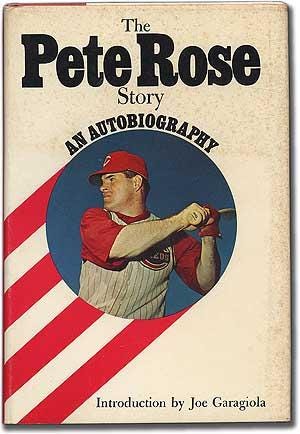
"The Pete Rose Story: An Autobiography," published in 1970 by World Publishing and co-authored by Pete Rose and sports journalist Dick Perry, offers a glimpse into the life and career of one of baseball’s most enigmatic figures. The autobiography captures Pete Rose at a time when his star was rising, long before the scandals that would later redefine his legacy. Through this lens, the book serves as both a time capsule and a character study of an athlete whose dedication and work ethic earned him the enduring nickname "Charlie Hustle.
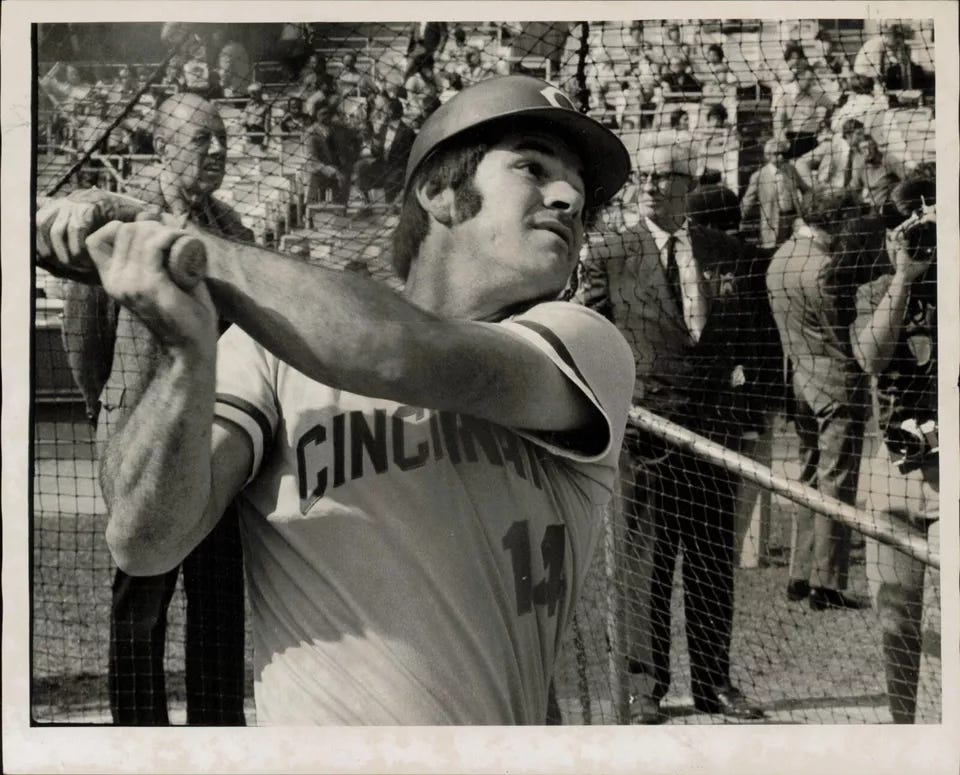
In the book, Rose takes readers on a journey back to his roots in Cincinnati, Ohio, where he grew up in a working-class family with a strong passion for sports. Rose’s recounting of his childhood is filled with stories of a young boy who was obsessed with baseball, driven by an insatiable desire to succeed. He describes how this determination was fostered by his father, Harry Rose, who played a significant role in shaping his early athletic endeavors. From playing in local sandlots to making a name for himself in high school, Rose’s trajectory seemed destined for greatness, and the autobiography does a fine job of capturing the optimism and hope that characterized his early years.
The narrative then shifts to Rose’s ascent in professional baseball, where his hustle and competitiveness began to set him apart from his peers. Rose shares anecdotes from his early days with the Cincinnati Reds, detailing his transition from a rookie trying to prove himself to a key player on the team. His recollections are marked by a sense of pride in his achievements, yet they are also tinged with the awareness of the sacrifices he made along the way. One of the themes in the book is his $100,000 contract—a significant milestone at the time. Rose describes how this contract was not just a financial boon but a validation of his hard work and commitment to the game. It represented a turning point where he could channel all his energy into his on-field performance without the distractions of financial insecurity.
A large portion of the autobiography is devoted to Rose’s playing style and the philosophy that underpinned it. Known for his aggressive base running, tenacious hitting, and unwavering focus, Rose explains how he cultivated the persona of "Charlie Hustle." He gets into the mental and physical discipline required to maintain his level of performance, offering insights into his daily routines, training regimen, and the mental fortitude that propelled him to the top of the game. Rose’s reflections on his dedication to baseball are both inspiring and revealing, showing a man who was willing to push himself to the limit to achieve greatness.
While the autobiography is rich in detail about Rose’s professional life, it is notably sparse when it comes to his personal life. For instance, Rose was a new father during the period covered in the book, yet there is little mention of how he balanced—or failed to balance—his family responsibilities with the demands of his career. This omission provides a subtle yet telling insight into Rose’s priorities at the time. His life, as depicted in the autobiography, was singularly focused on baseball, often at the expense of personal relationships. The absence of personal details such as his experiences as a father suggests that Rose’s identity was almost entirely wrapped up in his career—a fact that would have implications later in life.
Reading "The Pete Rose Story" with the benefit of hindsight adds layers of complexity to the narrative. Written during his prime years, the autobiography paints a picture of a man who was deeply committed to his craft, yet unaware of the controversies that would later overshadow his accomplishments. The book doesn’t address the gambling scandal that would eventually tarnish his legacy, as it was written long before those events unfolded. This gives the autobiography a somewhat nostalgic quality, allowing readers to see Rose as he was before his fall from grace.
However, the book’s lack of personal introspection also leaves questions unanswered, particularly about how Rose’s focus on his career may have contributed to the decisions he made later in life. It prompts readers to consider the pressures and challenges faced by professional athletes, and how the pursuit of success can sometimes lead to unforeseen consequences.
"The Pete Rose Story: An Autobiography" is a valuable document of a particular moment in baseball history, capturing the spirit of a player who embodied the ethos of hard work and determination. For fans of Pete Rose and baseball enthusiasts, it provides an intimate look at the early career of a man who would go on to become one of the most controversial figures in sports. While the autobiography leaves out significant aspects of Rose’s personal life, it remains a fascinating read for anyone interested in the complexities of fame, success, and the human drive to achieve greatness. As we reflect on Rose’s life and career, the book serves as a reminder of the fine line between heroism and fallibility in the world of professional sports.
Pete Rose was my first hero. I'm not sure young players and fans of baseball have any idea what a prolific player he was, in large part because he tried harder than everyone else and it was obvious. As a kid who watched him, I wanted to be like him. The effort. He was my model for who I should be as a baseball player, and it spilled into other areas of my life. He belongs in the hall. I hope they let him in before he passes. He deserves it.