


You used to hear it all the time: “He’s just a ballplayer, a gamer.” Not a workout freak. Not a stat darling. Just someone who knew how to play the game, a guy who could dig out a bad hop, hit behind the runner, take the extra base when no one else would. Someone whose value was written in dirt and dugouts, not decimal points.
The scout in the stands saw it maybe not in the stat line, but in the posture. In how he wore failure. In the way he leaned on the railing and paid attention. There wasn’t a formula for it, just a phrase scribbled on a notepad, makeup - sharp instincts, ballplayer.
Now? That notepad’s been replaced by an algorithm. The scouting report gets eaten by a model before it’s ever read by a human.
Baseball didn’t get here by accident. Moneyball was the turning point. Michael Lewis told the story of how the Oakland A’s, short on payroll but long on innovation, discovered value in overlooked statistics. It was a strategy born from necessity, a refusal to compete on the Yankees' terms. And it worked. They found hidden gems, exploited market inefficiencies, won more than they should’ve. It wasn’t a gimmick; it was a revelation.
But like most revolutions, it didn’t stop at the border of its original intent. It scaled. It spread. It metastasized. The game became dominated by front offices that spoke in code: OBP, wRC+, EV, WAR. Intuition was replaced by prediction. Gut replaced by grid. The new scouts didn’t chew tabaco and talk shop, they built models and trusted them.
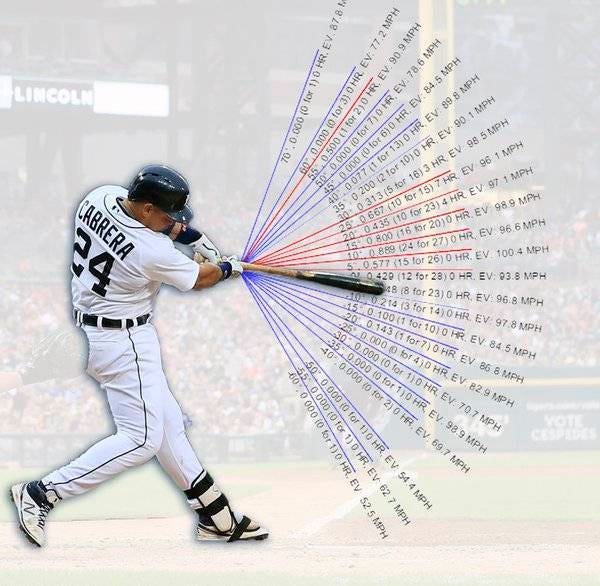
Daniel Kahneman, in Thinking, Fast and Slow, might say this was baseball shifting from System 1 to System 2, from fast, emotional, experiential thinking to slow, deliberate, data-driven logic. And it made sense. System 2 is reliable. It doesn’t trust vibes. It doesn’t get fooled by a guy with a square jaw and a good attitude. It wants proof.
But even Kahneman warned that too much reliance on data leads us to overvalue what we can measure and undervalue what we should feel.
Baseball isn’t just a collection of optimal decisions. It’s a rhythm, a story, a memory. It’s people. And people are irrational. They have hearts. They carry cities. They choke, they rise, they surprise you and to that’s the point.
What happens when you forget that?
You start to see fewer lifers. Fewer guys who stay with one team their entire career. Not because they got worse but because the model told someone else they were inefficient. The math says it’s smart. The soul says it’s sad.
Robin Yount played twenty seasons in Milwaukee. Never left. Never tried to. Came up as a teenager, retired with 3,000 hits, and never put on another uniform. He didn’t chase contracts. He didn’t need a brand strategy. He was Milwaukee. The team wasn’t always good, but it always felt grounded. His presence said: we’re still here.
Kirby Puckett was Minnesota. Barrel-chested, electric, full of joy and fire. Twelve seasons. Two rings. Never wore another logo. He smiled through the grind and swung like he meant to change the season every at-bat. He didn’t get to finish on his terms, glaucoma stole the game from him early but no one ever wanted him in another jersey anyway.
You don’t see careers like that anymore. Not often. Not unless the marketing team signs off on it. Because today’s baseball is built on asset management. It’s a business of turning players into optimized values on a portfolio spreadsheet. You don’t love a player, you leverage him. Trade him at peak. Dump him at decline. Find the next version, cheaper.
But what about meaning?
What about the little kid in the upper deck who wears the same jersey for ten straight years because the guy never left? What about the fan who believes that sticking around through bad years makes the good ones sweeter? What about the player who isn’t a metric but a memory factory?
The algorithm doesn’t track that.
It doesn’t know what Joey Votto means to Cincinnati. It doesn’t care that Clayton Kershaw has never pitched for anyone but the Dodgers. It doesn’t feel the ache in the gut of a fan when the guy they trusted gets flipped for prospects and cap space.
The old scouts? They saw it. They knew a ballplayer wasn’t just someone who produced, he was someone who fucking mattered.
I’m not anti-data. Use it. Trust it. But don’t build your whole church on it. Because if you remove the mystery, the mess, the relationships, you’re not left with a smarter version of the game. You’re left with a simulation.
Baseball doesn’t need to be perfect. It needs to be true. And truth, like loyalty, doesn’t always show up in the box score.
So yeah, let the model spit out its projections. Let the analyst tweak the variables. But save a seat for the old scout with the broken-in glove and a gut feeling about the kid no one else wants.
Because somewhere between the algorithm and the intuition is where the real game lives.
I’ve wondered if the book MoneyBall was never written, how long until the statistical revolution changed the sport? Could the A’s have maintained their information advantage for a couple more years? What would have been the book or magazine article that changed it all? George Will’s landmark book around 1990 didn’t really change the sport. I’m sure something else would have come sooner or later that opened the eyes of owners and changed front offices. I just wonder how many more years it’d have taken.
I've always felt that "baseball is life," whatever the hell that truly means. Baseball is the .wav file of popular American sports while the other sports with their clocks and timed stoppages are .mp3 files, condensed, lacking in depth of an experience's raw format. In baseball, one month of games is truly a month, like 25 games.
I loved sabermetrics as a young boy. I was voracious about reading and understanding Bill James and his compulsive analyses. I tried to create my own esoteric stats but they didn't reveal much other than I had too much time on my hands.
I've been working long enough to see the corruption of industry by data crunchers, the great corporate fetish of data analysis, where workers are rendered as widgets, disposable and only as useful as the utilitarian, greedy ownership class will allow within the leniency of its revenue expectations.
Algorithms allow us to peer deeply into the functions of our output. Good for them and I'm not going to cast judgement on progress because progress is written into our code.
I just miss the days of baseball's raw files.