


The grass is freshly cut. The hot dogs are overpriced. The air smells like promise. It’s Opening Weekend in Major League Baseball—a sacred time when hope is undefeated, and every team is tied for first. Fans pour into stadiums wrapped in the same optimism we’ve carried for over a century: this year could be the year. There’s a rhythm to it all. A pageantry. The timeless, poetic beauty of a game where nothing really happens for long stretches, until—suddenly—it all does.
But this season, while everyone else is scanning box scores and checking rookie projections, I’ll be looking elsewhere. My eyes will be on the shadows cast just beyond the foul lines.
Last year, I spent time wrestling with my boyhood idol, Pete Rose. “Charlie Hustle,” the embodiment of hard-nosed baseball. He was everything I admired as a kid—relentless, passionate, consumed by the game. He slid headfirst into history. And then he slid right out of the Hall of Fame. He bet on baseball. He lied about it for years. He played dumb. Then he played the victim. And as much as I wanted to hold onto the player I once worshipped, I had to confront the truth: Pete Rose lacked the integrity to match his talent. And MLB, for all its moral posturing, wasn’t much better.
That realization lit a fuse. Baseball isn’t just about home runs and RBIs—it’s about character. It has always claimed to be more than a game. A reflection of America. A symbol of discipline, fairness, team before self. But is it really?
This season, I want to go deeper. To satisfy a kind of morbid curiosity I’ve developed about the darker side of the diamond. About the players who stepped over the line—not just into mistakes, but into the realm of crime, deception, and abuse. I want to understand who they were, what the league did about it, and what that says about all of us as fans, as media, as human beings. Because baseball doesn’t just crown heroes. It hides villains in plain sight.
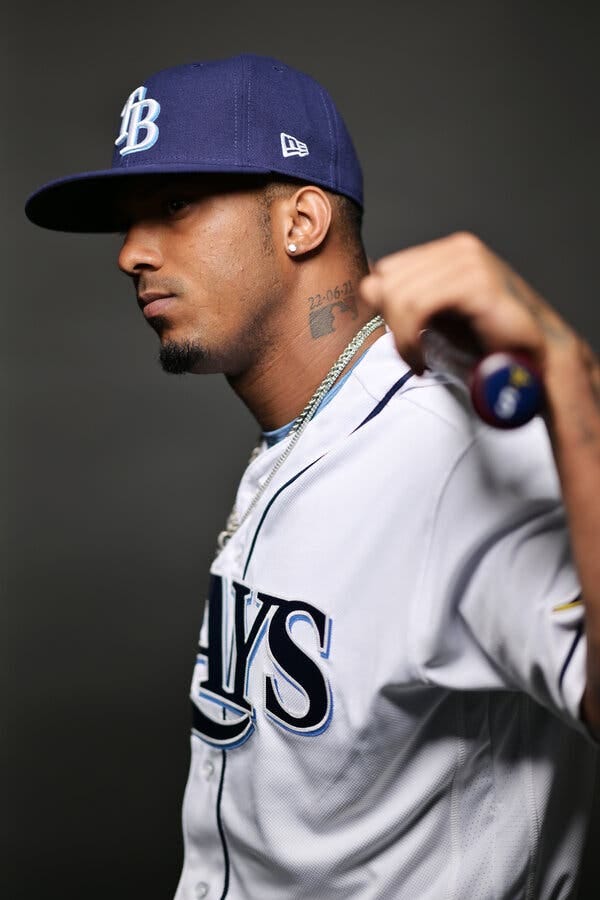
And this year, the first name I have to talk about—the one I can’t look away from—is Wander Franco.
For a while, he seemed like a dream. A perfect story written in real time. Born in Baní, Dominican Republic, Wander Samuel Franco grew up in a family soaked in baseball lineage. His father played in the minors. His uncles, Erick and Willy Aybar, both made it to the big leagues. Even his brothers played in MLB farm systems. Baseball wasn’t a game in the Franco household—it was inheritance.
At just 16 years old, Wander signed with the Tampa Bay Rays for nearly $4 million. Scouts drooled over him. By the time he reached his early twenties, he was the No. 1 prospect in all of baseball. Not just in the Rays system—in the entire sport. He was a switch-hitter with hands like silk, the instincts of a veteran, and the quiet confidence of someone who knew he belonged.
He made his MLB debut in June 2021 and announced his arrival with authority—smashing a three-run homer in his very first game. At just 20 years old, he tied Frank Robinson’s record for the longest on-base streak by a player under 21. It felt like watching a young Miguel Cabrera with Derek Jeter’s glove and Vlad Guerrero’s plate discipline. The Rays wasted no time locking him up. They gave him an eleven-year, $182 million contract—the biggest in franchise history—for a player who hadn’t even played a full season.
And then… everything changed.
In August of 2023, rumors began to swirl online. Social media lit up with accusations that Franco had been involved in relationships with underage girls in the Dominican Republic. Screenshots, names, stories. At first, it was hazy, unverified, the kind of thing you hope isn’t true. But the smoke kept thickening. Major League Baseball placed him on administrative leave. Authorities in the Dominican Republic opened a formal investigation. And by July 2024, the hammer dropped: Franco was charged with sexual abuse and exploitation of a minor. A few months later, he was arrested again after a reported altercation while awaiting trial.
As of this writing in March 2025, Franco is not on a baseball field. He is not preparing for Opening Day. He is waiting to find out whether his once-bright future will instead be defined by prison walls and courtroom testimony. What was supposed to be the story of the next big MLB superstar has now become a cautionary tale still unfolding.
And yet, amid all this chaos, I keep returning to one question: how did we get here?
This is not just a story about a young man who may have committed horrific crimes. It’s also a story about a league that doesn’t seem to know what to do when one of its chosen sons falls from grace. Wander Franco was groomed by the baseball machine from the time he was barely a teenager. He was handled by agents, promoted by media, marketed by MLB itself as the face of the next generation. He was sold to fans—especially Dominican fans—as a symbol of pride, excellence, and hope.
But was he ever taught how to be a man?
Was he ready for the weight of superstardom, money, fatherhood, and responsibility?
Or was he just another prodigy pushed into the spotlight before he had the tools to handle it?
If Franco is found guilty—and the evidence must speak—then there is no question he must face consequences. But if the system around him saw the red flags, or worse, ignored them because of what he could do with a bat and glove, then baseball itself is complicit.
The truth is, MLB has a history of looking the other way. It has suspended players for steroids but barely blinked when it came to domestic violence. It has celebrated redemption arcs without ever demanding true accountability. And fans—us—we go along with it, more interested in OPS than morality, more swayed by highlights than headlines.
Wander Franco is not the only one. He’s just the most recent. Over the coming season, I’ll be exploring more of these stories. Players whose actions off the field challenge everything we believe about who deserves our cheers. Not to shame them, not to sensationalize—but to understand what happens when the game we love is forced to confront the people it creates.
Because if baseball is going to keep selling us the myth of honor, legacy, and grit, then it has to start reckoning with the truths that tarnish that myth. It has to be more than nostalgia and box scores. It has to stand for something.
So while the world cheers on rookies and Cy Young hopefuls, I’ll be following a different trail—the cracked paths, the broken promises, the stories that ask hard questions about integrity, character, and culpability.
This isn’t about canceling players.
It’s about not canceling our conscience.
Because if we’re going to keep calling baseball America’s pastime, we ought to make damn sure we know what that says about us.
Opening Weekend is here.
Let’s play ball—but let’s not look away.
It seems part of the human condition that no human institution, no matter how noble its founding principles, can survive the full spectrum of human behavior. (Politics being a particularly egregious example.) A key question involves whether we value "greatness" or "success" in some field over our supposed moral (and legal) values. We're far too often seduced by the former.
In an industry such as Hollywood — with no real claim to moral values — it can seem almost part of the territory, but with an institution such as baseball, exactly as you say, we should have higher standards. (Or, I guess, accept that we never had them to begin with and just roll with it, but I prefer to look towards what we can rise to rather than what we can sink to.)
Looking forward to your posts in this series. Batter up!
Excellent, first-rate stuff. I can't wait to read your other takes this season.
As a man (boy) who was about as Un-Jock as could be throughout my schooling, I expect zero from modern athletes. Many pro athletes are millionaire versions of those psychopathic, egotistical, and deified retards who took up so much high school space that us dorks had to take our act to the lonely spaces behind C building.
If I want to find someone of character, gravitas, and integrity to fawn over, I'll look *anywhere* but show biz and sports. The Lou Gehrigs and Freddie Freemans are out there but behold them as the rare treasures they are.
My very hot and alienating take is that fuck it, let them play, I don't care. Bring Julio Uras back, don't give a crap. And Trevor Bauer never makes things boring. Don't care, play ball...it's a free market so if teams want to risk the PR nightmare, more power to them.
I do believe gambling should be penalized though as it potentially has a direct influence on the game's outcome.