


I don’t remember where I was when the John Rocker story broke.
But I do remember how it felt.
The moment I read those words in Sports Illustrated (remember when they did hard-hitting exposes), it was like someone had pulled a tarp off a part of baseball we all kind of knew existed but didn’t really want to look at. Racism. Homophobia. Raw, unfiltered hate. And not from some anonymous message board or late-night bar rant, but from a 25-year-old closer with a 100-mph fastball and a playoff pedigree.
“If you’re looking for a story,” Rocker told Jeff Pearlman, “go back to New York and ride the 7 train.”
And then he unloaded. “Queers with AIDS,” “foreigners who don’t even speak English,” “some kid with purple hair next to some dude who just got out of jail.”
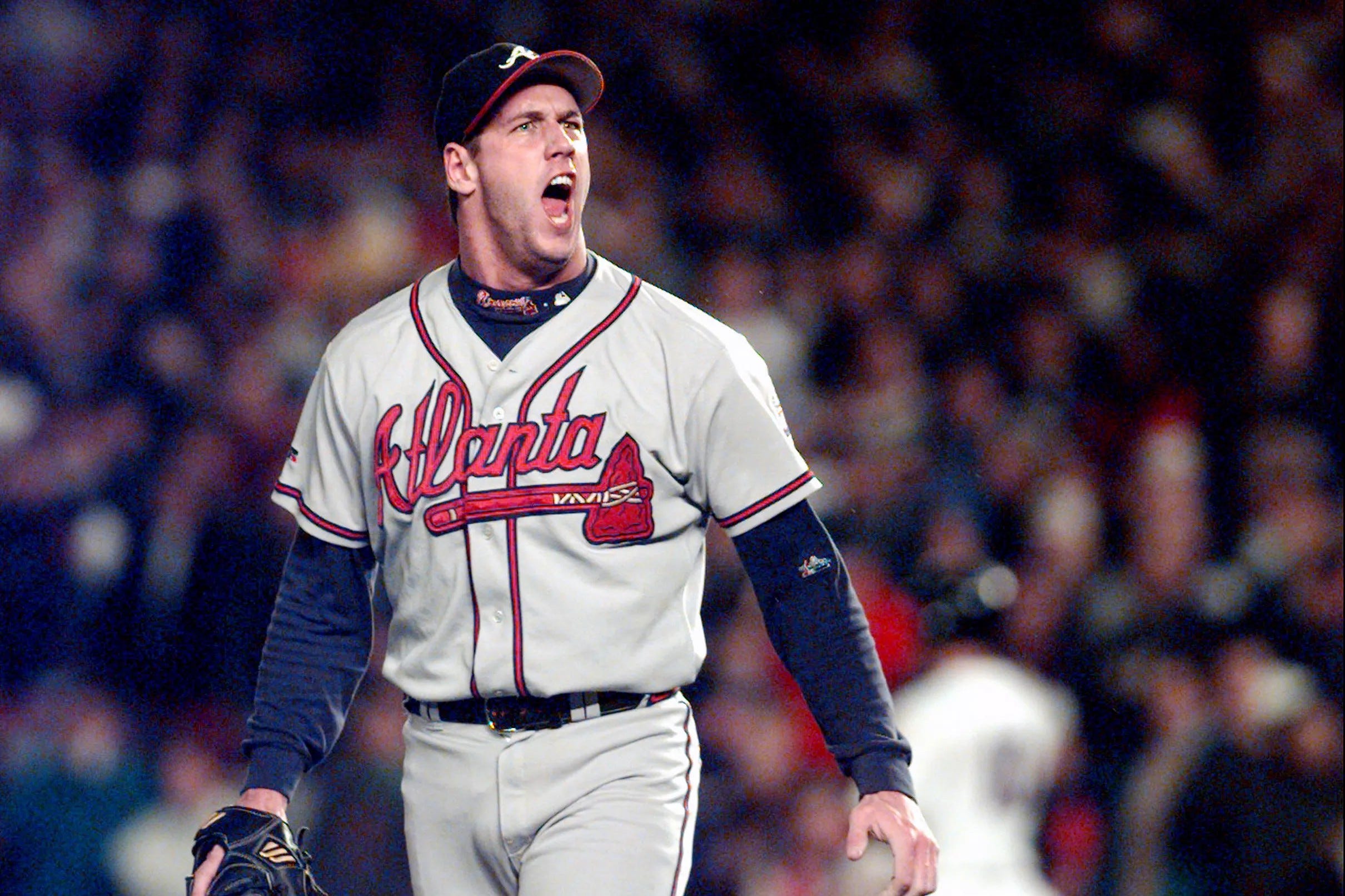
It was ugly. Not coded, not implied, fucking explicit. And it wasn’t just the content of what he said that stunned me. It was the ease. The comfort. The total absence of shame.
That was the moment I realized something that’s stuck with me ever since,
Baseball’s biggest problems aren’t the ones on the field.
They’re the ones it pretends not to hear.
MLB suspended Rocker. The initial 28-game ban got cut down to 14. He was fined. He got booed on the road, grilled by sports talk radio, chased by media. And for a brief moment, it felt like a reckoning.
Then it didn’t.
He returned to the mound. He struck guys out. The Braves didn’t release him. Fans kept showing up. The heat faded.
The truth is, Rocker didn’t disappear because the league truly held him accountable. He faded because his velocity dipped and his ERA rose. If he had kept throwing 100, someone would’ve made excuses. Someone would’ve said he was just being “honest.”
That’s how this game and this country tends to work.
We love to think of baseball as a meritocracy. A place where character counts and the best rise to the top. But Rocker showed us something uncomfortable, if you're talented enough, someone will tolerate almost anything.
Rocker didn’t invent hate. He just didn’t dress it up in PR language.
The part that still gnaws at me? It wasn’t just what he said, it’s that the baseball world already knew guys like him existed. Players. Coaches. Front office guys. Fans.
He broke the code, not the culture. That’s why people turned on him. Not because they disagreed but because he exposed the culture's rot.
The Braves let him pitch. The league let him back in. And inside those clubhouses? The silence was deafening. You didn’t see players, White or Black, Latin or otherwise stepping up to say, “We don’t stand for this.” It was easier to shrug and move on.
And that’s exactly what baseball did.
It moved on.
To be fair, a few voices did speak up. Braves outfielder Brian Jordan publicly condemned Rocker’s comments, saying, “You can't respect a guy that makes comments like that publicly.”
Pitching coach Leo Mazzone predicted the backlash would ruin Rocker’s career.
Hall of Famer Hank Aaron, a senior advisor with the Braves at the time, said he was “very sick and disgusted” by the interview. But those responses, while meaningful, were the exception, not the rule. There was no team-wide stand, no unified message from the league, no broader moment of reckoning. The silence wasn’t total, but it was loud enough to be heard.
Looking back on it from where we are today, Rocker’s story doesn’t feel like an anomaly. It feels like a warning we ignored.
We live in a political culture now where saying the most inflammatory thing possible gets you a following. Where cruelty is framed as honesty. Where being “unfiltered” is considered a virtue. Where conspiracy, bigotry, and outrage aren’t just tolerated they’re monetized.
Sound familiar?
If Rocker came up today, he’d have a podcast. A platform. A YouTube channel. He’d lean into it. He wouldn’t be suspended, he’d be marketed. His “canceling” would make him a brand.
And that’s what scares me. Because back then, there was still shame. Now? There’s clout.
The language has changed. The climate’s changed. But the core questions haven’t:
Who do we allow to represent us?
Who do we tolerate because they throw hard, hit long, or win games?
And what does that tolerance say about us?
This isn’t about condemning a man for eternity. It’s about confronting the rot that often hides behind the romance of the game.
John Rocker didn’t just say something ugly. He told the truth, not about immigrants or New Yorkers or “queers” but about the ugliness that still lives inside the institutions we love.
And we weren’t ready to hear it. Maybe we still aren’t.
But if we care about the character of the game, of this country, then we have to see it. Even when it’s uncomfortable. Especially then.
Because sometimes baseball doesn’t reflect who we are.
Sometimes it reveals who we’re afraid to admit we’ve become.
For a long time, I've thought that first Reality TV and now social media platforms have erased our sense of shame and amplified our narcissism. As you point out, outrage and even hatred have become cottage industries. We're a young and often stupid country, and the way things are going I can't help but wonder if we'll ever grow up.
Check out Jeff Pearlman's YouTube channel. He tells the whole story about hanging with Rocker (he thought he fuckin' sucked) and the repercussions of the piece.