


You hear the word “pipeline” in baseball and it sounds clean, efficient, even admirable. The steady stream of talent coming from the Dominican Republic, Venezuela, Colombia, Mexico—all part of a global game. That’s the way it gets framed, anyway.
But I don’t see it that way anymore. Not since I really started digging into what that pipeline actually looks like.
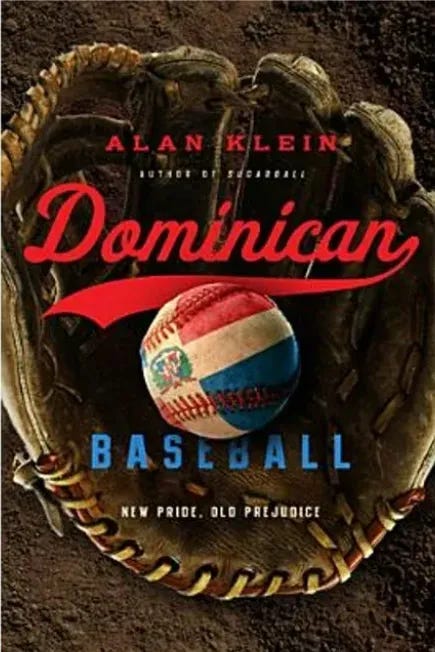
Back in 2014, I read a book called Dominican Baseball: New Pride, Old Prejudice by Professor Alan Klein. It was eye-opening. When I finished the book, I reached out to him. I was surprised he took my call. I wanted to understand it better. We talked, and that conversation never left me. What he laid out in that book wasn’t just research. It was truth. A hard, ugly truth about how Major League Baseball’s global reach depends on poor kids with nowhere else to go.
I used to think of Dominican baseball as a story of opportunity, a beautiful, scrappy tradition of bottlecaps and broomsticks turning into million-dollar swings. But that’s not the real story. Not for most. What Klein showed me—and what I’ve kept seeing ever since—is a system built on extraction. It’s not a story of rags to riches. It’s a machine. It runs on poverty. It’s designed to be quiet, efficient, and disposable.
Kids start training seriously when they’re 12 or 13. Most leave school by then. They’re pulled into local academies that aren’t regulated, aren’t safe, and aren’t designed to educate. These aren’t run by MLB. But make no mistake—they exist to serve it. The kids are taught to throw hard, swing big, and say a few phrases in English. Sometimes they’re taught to lie about their age. Sometimes someone else lies for them.
By the time they’re 15, the scouts are already circling. You get one shot. You sign at 16 or you’re old news. The contracts are a joke compared to what American players get. You might get $20,000 if you’re lucky. Maybe $100,000 if someone thinks you’re the next big thing. But most of the money gets sliced up—the buscone takes his cut, sometimes a trainer, maybe a cousin who helped arrange the meeting. By the time the kid sees any of it, the dream’s already on a timer.
That’s how stars like Pedro Martínez, Sammy Sosa, and David Ortiz entered the system—signed at 16 or 17, funneled into a development track with little to no safety net. Pedro, one of the greatest pitchers of all time, was almost written off because of his size. Ortiz was signed under a false name. Sosa grew up shining shoes to survive. Even Vladimir Guerrero Sr., who signed for just $2,000, came from a level of poverty that most Americans can’t even begin to imagine.
These guys made it. But what stuck with me was how many didn’t.
I think about someone like Esmailyn Gonzalez, who signed with the Nationals for $1.4 million only to have it exposed that he was four years older than claimed. The whole identity was fake. He never reached the majors. He barely made it out of rookie ball. Or Joel Guzmán, once a top Dodgers prospect who signed for over $2 million and was being touted as a future star. He didn’t stick. He disappeared. And there are hundreds more like them.
You never hear about the ones who go home empty-handed. Who walk out of the academy with no high school education, no money, no plan. Their names vanish. Their stories get buried under the next wave of signings. No follow-up. No safety net. One former trainer told me, “Once they’re released, they’re gone. We don’t have time to worry about that. We’re scouting the next kid.” The machine doesn’t stop—it just forgets.
MLB will tell you they’ve made progress. And yes, there are now MLB-run academies in the Dominican Republic. The Yankees have one. So do the Cubs, the Mariners, the Rays, the Astros, the Giants, and many others. These facilities are clean, branded, and come with structured meals and English classes. The dorms look like college campuses. There are classrooms. Some even have mental skills coaches.
And I’ll admit—it looks better than it did ten years ago.
But here’s the thing: even with all of that, the goal hasn’t changed. The academies are still built to turn boys into assets. These aren’t schools. They’re baseball factories with a PR department. The education is just enough to make the kids functional. The meals are just enough to keep the bodies moving. It’s not about preparing them for life. It’s about preparing them for the minors.
It’s window dressing on a system that’s still disposable at its core. The success stories—Wander Franco, Juan Soto, Rafael Devers—are used to justify the machine. But they’re the exception, not the rule.
MLB tried to regulate the chaos with an international draft in 2019. On the surface, that sounded like a good thing. Structure. Oversight. Maybe even fairness. But the players’ union didn’t trust it—and I don’t blame them. They didn’t trust MLB to fix what it helped create. And they were right to be skeptical. The power imbalance wasn’t going away. Nothing changed. The buscones still control access. The kids are still on a stopwatch. And the machine keeps humming.
And here’s where I get conflicted.
Because I can hear the other side. I’ve had people tell me, “But it’s an opportunity. Isn’t that better than nothing?” And they’re not wrong.
If you’re a poor kid in San Cristóbal or Maracay, signing for $50K can change your family’s life—even if it’s only for a little while. If you make it, it’s everything. And I don’t want to kill that dream. I really don’t. It’s real. The kids chasing it are brave. They’re hopeful. They’re trying to make something out of nothing.
But I also think about how lopsided it all is. How little support there is for the ones who don’t make it. How easy it is for MLB to talk about global growth while leaving behind thousands of boys who gave everything to a system that was never built to hold them.
The dream is real. But so is the machine.
And if we keep pretending it's one or the other, we’re just helping the machine run smoother.
But maybe the better question is—why does this matter?
Why should anyone care? Kids in other parts of the world don’t make it all the time. That’s life. That’s sports. Not everyone becomes a star.
But that’s not what this is. This isn’t just a story of broken dreams. It’s a story of who profits when those dreams break.
This system—this pipeline—isn’t random. It’s engineered. It’s not a field of dreams. It’s a supply chain. One that lets billion-dollar MLB franchises outsource the risk of player development to the most vulnerable communities in the Western Hemisphere. Kids are pulled from school, separated from their families, and trained in underregulated conditions—not because it’s the only way, but because it’s cheaper.
We’re not talking about a kid trying and failing. We’re talking about a kid being used, economically and culturally, as part of a system that’s been intentionally designed to discard him if he’s not profitable fast enough.
That’s why it matters.
Because failure in this system isn’t a tragedy—it’s a business write-off. Teams don’t lose anything when a Dominican teenager flames out at 18. They barely spent anything. He was never an investment. He was an inventory line. A scratch-off ticket. A flyer. The team moves on. The press moves on. The fans never even knew his name.
But that kid? He goes home. No diploma. No income. No path forward. Just a broken body and a lingering sense that he failed not only himself, but his entire family.
And the game? It keeps rolling.
We should care because this is our sport. Because Major League Baseball isn’t just a game—it’s a cultural institution. It claims to represent character, tradition, and American values. But if we don’t look at what’s happening behind the curtain—if we don’t interrogate the cost of the product—we’re complicit in its deception.
This isn’t about killing the dream. It’s about questioning who controls it.
And if all of this sounds familiar, it should.
Because outside of baseball, we’re watching the same thing play out in real time. We’re living in an era where immigrants are treated as expendable labor, not as people. Where entire communities are praised when convenient and deported when inconvenient. Where a country built by immigrants tries to seal its borders while still reaping the benefits of their labor in factories, fields, kitchens—and yes, in bullpens.
The Latin American baseball pipeline isn’t separate from this story. It is this story.
Baseball reflects who we are. It always has. It mirrored segregation. It mirrored civil rights. It mirrored war, labor fights, economic collapse, and corporate greed. And right now, it’s reflecting something else: how easily we can justify the exploitation of young, brown bodies as long as the final product entertains us.
The glove might say “Rawlings,” the hat might say “Los Dodgers” on Heritage Night, and the player might be wearing number 27—but if he doesn’t make the roster next spring, he’ll be on a plane back to a country he left at 14, with nothing to show for it except a sore elbow and a burned-out dream.
That’s why it matters.
Because when a dream becomes a business strategy, and failure becomes a rounding error, it’s not just baseball that suffers.
It’s our ability to believe in anything it says it stands for.
And maybe that’s the hardest truth to face.
Great post! Thanks for writing this - it’s so crazy how little it would take to make the system more equitable for the young players. The movie Sugar did a great job realistically portraying the system and how it exploits young players