


Baseball tells us it is fair. Three strikes. Three outs. Ninety feet between the bases. The truth is the game has never been that simple. For more than a century fairness in baseball depended on the man in blue. The umpire was not just a referee. He was the law. His authority was absolute. That power gave baseball a unique flavor, but it also opened a door to abuse, bias, and ego.
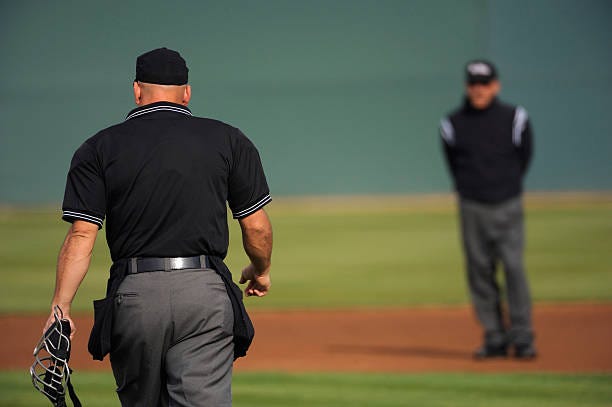
Bill Klem, the most famous early umpire, once said, “It ain’t nothin’ till I call it.” That was not a joke. It was a philosophy. Nothing was real until he declared it so. That authority made the game unpredictable. A pitcher might get a wide zone one night and have to beg for the corners the next. Hitters had to learn the umpire as much as the guy on the mound. Managers studied tendencies and tried to use them to their advantage. In its best form, it was strategy. Another level of the cat and mouse.
I fucking loved that part of the game. The quirks, the personalities, the way players had to adapt. It gave baseball texture. Some nights the ump gave a pitcher two inches off the plate and the offense had no chance. Other nights hitters stood there grinning as those same pitches were called balls. That tension was part of what made the game alive.
But power like that always rots. Earl Weaver made a career of calling out umpires, and they turned it into a sport of their own. Some admitted they baited him, poking the bear just so they could toss him out. That is not order. That is humiliation. That is ego running the show.
Players had to live under that same shadow. Roberto Alomar spit in John Hirschbeck’s face in 1996 after a called third strike. Alomar deserved the suspension, but Hirschbeck had a reputation for carrying grudges and antagonizing players. Alomar snapped. Fans remember the spit, but they forget the poison that came before it.
Go back to the integration years and the story gets uglier. Larry Doby and Monte Irvin lived through strike zones that mysteriously shifted. Close calls at the plate seemed to lean against them. It was another way to remind them that they were outsiders. Racism was baked into the game, not just in the stands, but behind the mask. That was not human error. That was deliberate. That was bullshit.
By the 1970s the umpire union under Richie Phillips made accountability a fantasy. Bad umps were untouchable. Players and managers could scream, the press could write, fans could boo, it did not matter. The fortress was too strong. It only cracked in 1999 when twenty two umpires tried to resign in a stunt and expected to be rehired. MLB finally called their bluff. For once the power flipped. But the damage had been festering for decades.
Technology came along and exposed it all. Replay and strike zone boxes stripped away the myth. Fans could see the truth on every pitch. No more pretending. Yet even with the world watching, the culture of protection still lingered.
Then there was fucking Ángel Hernández comes in. For years he was the face of the problem. His strike zone was a roulette wheel. Sometimes he gave pitchers six inches off the plate. Other times he squeezed them until they had no chance, forcing them to groove the ball down the middle. Hitters wanted to swing at everything because they knew a borderline pitch might be called a strike. Pitchers hated him just as much because they never knew if a perfect pitch at the knees would get the call. Nobody left happy. Hernández managed to infuriate both sides of the matchup.
And yet here is the contradiction. I liked watching it. Games with fucking Hernández had an edge. You knew it was not going to be clean. You knew tempers would flare. You knew someone was going to lose it. He made players swing the bat. He made pitchers throw with anger. He made fans grind their teeth. It was chaos, but it was alive. That kind of unpredictability has mostly been erased by technology.
That is the paradox of umpiring. The same unchecked authority that led to racism, vendettas, and arrogance also made baseball unforgettable. I miss some of that chaos. I miss the shouting matches. I miss managers kicking dirt on the plate. I miss the games where everyone knew they had to beat the other team and beat the umpire too.
The dark side of the umpire power complex is that the game asked us to treat unfairness as part of its charm. Sometimes that was true. The human element gave baseball grit and drama. But there was nothing charming about racism. There was nothing charming about a career cut short because an umpire decided to squeeze the strike zone. There was nothing charming about a playoff game turned on a call that replay would have fixed in seconds. That was not romance. That was corruption.
I can admit both things at once. The system was flawed, sometimes cruel, and at its worst, it reeked of bias and ego. But it also made baseball raw, unpredictable, and human. The truth hiding behind the mask is that the game was never as fair as we pretended. It was messy. It was corrupt. It was alive. And that made it unforgettable.
Nice post!
Umpires are yet another aspect of the Baseball is Life metaphor. They're like judges in having that power and autonomy. The judge you get can affect how your case goes. The umpire you get can affect how your game goes. In both, sometimes the dragon wins.