


I remember Donnie Moore as more than a name tied to one pitch. He was drafted back in 1973 and fought his way through the Cubs, Cardinals, Brewers, and Braves before finding his place with the Angels. In 1985 he finally had his season. Thirty-one saves, a 1.92 ERA, an All-Star nod. He wasn’t the biggest name in the game, but he was good. Managers trusted him.
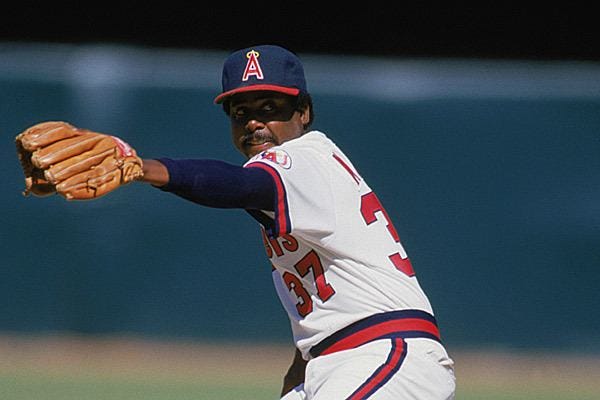
That is why October 1986 stands out. The Angels were on the verge of their first World Series. They had Boston down, two outs, two strikes. Donnie Moore was on the mound, one pitch away from history. He threw a splitter and Dave Henderson drove it into the seats. The Angels fell apart after that. They lost the game, then the series.
From that point on, the story started to write itself. Writers focused on that one moment. Fans remembered the swing every October when the replay came on. It became “the pitch” that defined Donnie Moore. Baseball has always loved those kinds of moments. Bill Buckner had the ground ball. Dennis Eckersley had Kirk Gibson. Those clips live forever.
The difference was in what came next. Eckersley owned his failure, kept pitching, and turned himself into a Hall of Famer. Buckner lived with the boos for years, but he walked back onto Fenway’s grass in the end and heard the cheers. Moore never found peace. He pitched three more seasons, but injuries piled up and the weight of the home run seemed to follow him everywhere. The more people told the story of that one pitch, the more the rest of his career disappeared.
By 1989 Moore was out of the game. He was living with shoulder pain, money problems, and depression. On July 18, his story turned tragic. In an argument with his wife, he pulled a gun and shot her in front of their children. She survived. He went into another room and took his own life. He was thirty-five.
The headlines almost wrote themselves. Reporters tied it back to 1986. They said the home run haunted him, that he never got over it. The narrative was tidy. One pitch had ruined his life.
I do not believe that is the truth. Henderson’s home run did not cause what happened three years later. The tragedy grew out of years of pain, silence, and struggle. Depression, violence, and the lack of support for players were all part of it. The “one pitch” story was easier to tell. It gave people a way to avoid facing the harder reality.
That is the part that mirrors life outside of baseball. We pin people to one mistake and pretend that explains everything else. It is easier to believe Moore was destroyed by one swing of the bat than to admit how complicated people really are. It is easier to tell a neat story than to deal with the messy truth.
What Moore did in the end was horrific and it hurt the people closest to him. That cannot be excused. But it also cannot be reduced to a single pitch. The dark side here is not just Donnie Moore. It is the way we cling to the simplest story when the truth is heavier. Henderson’s home run was one pitch. The tragedy that followed was a reflection of something much larger.
There is no after-care for players after they leave the game and it’s not right. They each gave up their lives to play and baseball shrugs them off when they are done. The players union should be doing a lot better in this.