


I was there the night Aroldis Chapman made his debut for the Cubs. July 27, 2016. Wrigley Field. Cubs vs. White Sox. The moment he jogged in from the bullpen, the place erupted. This wasn’t a closer, it was an event. A flex. A show of force. You could feel it in the air.
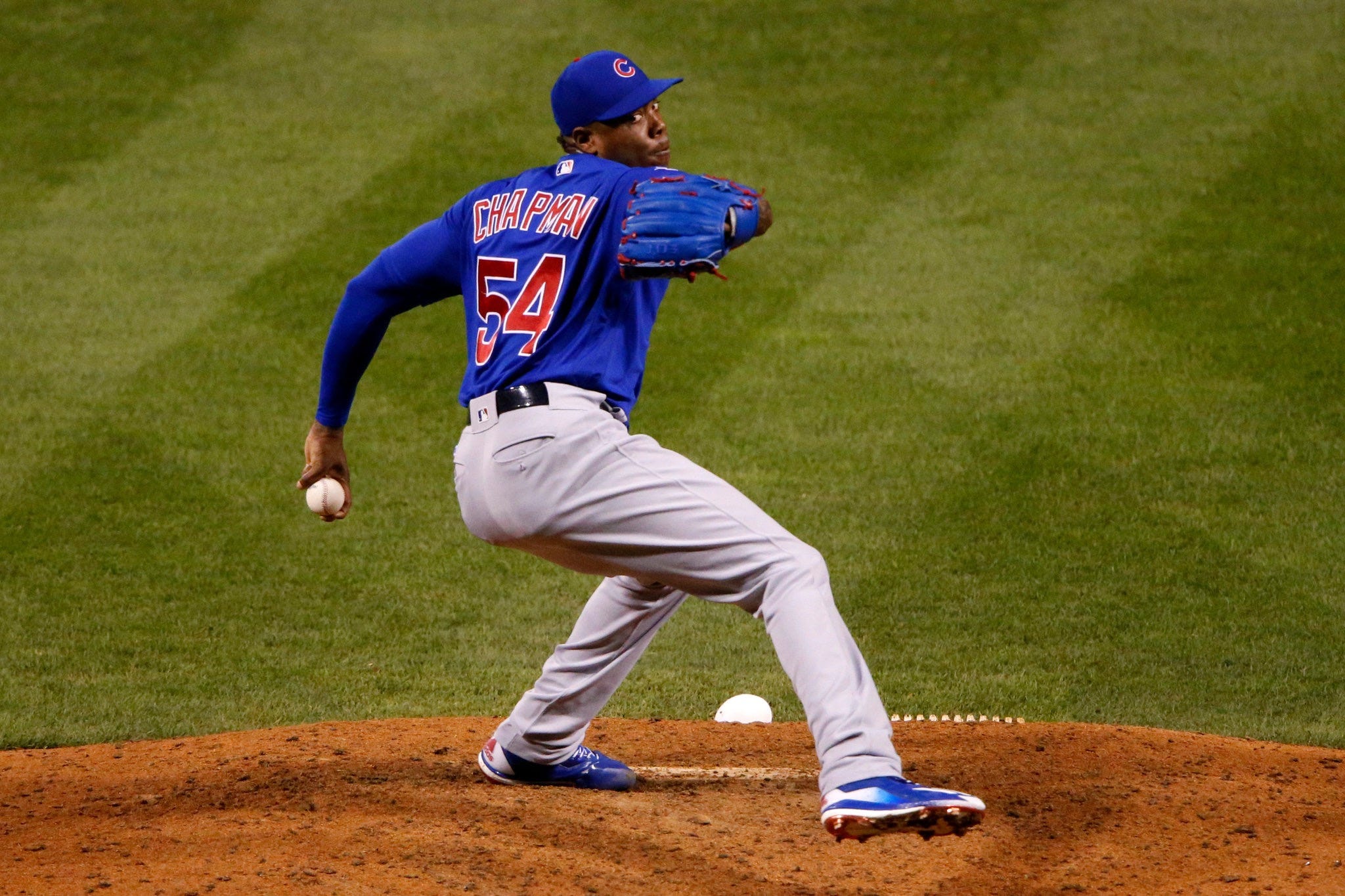
His first pitch was 101 miles per hour.
People high fived. Eyes widened. It was electric. It was everything fans dream about seeing live. And I cheered. I was in awe. I wanted to see the guy throw gas, and he did.
And I knew.
I wasn’t a Cubs fan. I didn’t care about their World Series drought. I wasn’t riding any team’s bandwagon. I was there because I love baseball, the game itself. The feel of it. The power of it. The purity we pretend it still has.
But Chapman’s story was already public. Domestic violence allegations. Choking his girlfriend. Firing eight gunshots into the garage wall. MLB gave him a 30-game suspension, the first real test of their new domestic violence policy. No charges were filed. He didn’t deny it. He just served his time and kept his mouth shut.
And the league? They welcomed him back with open arms. The Cubs gave up a haul to get him. Because he threw 105.
And I still went to watch him.
What the fuck was wrong with me?
I didn’t need him to be convicted to know what happened. I didn’t need a courtroom transcript. I knew. And I chose to show up anyway. I wanted to see something rare. I told myself the league had handled it, that it wasn’t my responsibility to figure out justice. That maybe it wasn’t that bad.
But it was.
And I was part of it.
I was a baseball fan cheering for a guy I knew had done something violent, something ugly, something that should’ve stopped everything cold. And I cheered anyway because his fastball was electric. Because I wanted to see what it looked like up close.
What does that say about me?
It says I wanted the magic more than I wanted the truth. That I let my love of the game override my judgment. That I prioritized velocity over values. And if I’m being honest, I think a lot of baseball fans have done the same. We cheer for the talent and pretend the rest isn’t our business.
But it is.
That night at Wrigley, I felt the crowd rise for Chapman like he was a conquering hero. All sins forgiven if you can throw 103. That’s the game. That’s the system. And I helped it work exactly the way it was designed.
This series, Dark Side of the Diamond, isn’t about calling out players from a moral high ground. It’s about acknowledging the ways we’ve all failed. Baseball isn’t broken because of one player. It’s broken because of a culture that rewards silence, excuses, and performance over character.
I was there. I knew. And I still watched.
No more pretending. No more hiding behind the scoreboard.
I have to own what I did and what I didn’t do.
Because if I don’t, then I’m just part of the problem. And I love this game too much to lie about it any longer.
As we get older I think we realize athletes are people and not hero’s to be fawned over. The real sports hero’s are ones that have taken unpopular positions when it comes to the power structure of sports and society. Ali, Curt Flood and Colin Kap were blacklisted and banned from playing for their views and actions. To be able to question why you cheer for a good player/bad person shows your maturity and growth when it comes to putting perspective on it all.
He’s back in Chicago tonight with Boston. As a devoted Sox fan I cheered when he struck out the side last week, but I feel dirty every time he gets a save.