


I didn’t know who Curt Flood was when I was a kid.
I was three when he told Major League Baseball he wasn’t going to be treated like fucking property. Six when the Supreme Court told him he didn’t have the right to decide where he worked. Nine when I went to my first big league game in 1975.
By the time I was twelve, I fell in love with the game. But even then, I still hadn’t heard a thing about Curt Flood.
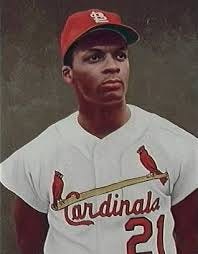
It wasn’t until I got older that I realized what had happened, baseball didn’t forget Curt Flood. It fucking buried him. Before free agency, baseball players didn’t have control. Not a little bit. Not kind of. None.
When your contract ended, you didn’t get to test the market. You didn’t field offers. You either signed the one-year deal the team handed you or you stayed home. And the team could do that every year. Forever.
That was the reserve clause. One line in the contract. Total control.
In 1969, after 12 seasons with the Cardinals, Gold Gloves, All-Star games, two World Series rings, Curt Flood was traded to the Phillies without being asked. He didn’t want to go. He had reasons - real ones. Philly fans were brutal to Black players, and Flood didn’t want to be treated like a piece of inventory.
So he said no.
And he wrote Bowie Kuhn, the commissioner, “After twelve years in the major leagues, I do not feel that I am a piece of property to be bought and sold irrespective of my wishes.”
That quote should be carved into a wall at Cooperstown.
Instead, they erased the man who wrote it.
Flood took MLB to court. He sued. And you’d think, in America, a worker would have the right to challenge a system like that. You’d be wrong. The case went to the Supreme Court in 1972.
And in one of the most cowardly decisions in baseball history, the Court ruled 5–3 against him. They admitted the reserve clause was outdated and unfair but upheld it anyway, citing baseball’s bullshit “antitrust exemption” from 1922.
So the message was clear, the law, the league, and the owners were all in on the fix.
Curt Flood stood alone.
And they fucking nailed him to the wall for it.
You want to know what being a player was really like back then? Read Ball Four.
Guys would show up to spring training not even knowing what they’d be paid. Teams offered what they wanted, $1,000 more than the year before, after a career season, and dared you to fight it. Jim Bouton wrote about GMs who literally had a drawer full of signed contracts from minor leaguers, ready to replace any guy who pushed back.
The pressure was constant. The fear was baked in. The pay was shit.
You either toed the line or you were gone.
Curt Flood was the first guy to say, this is bullshit.
And he paid for it with everything.
Flood tried to come back. The Washington Senators gave him a shot in 1971. He played 13 games. He was out of shape. Booed by fans. Mocked by the press. Burned out.
He left the country.
Lived in Spain.
Watched the game move on without him.
And when he returned to the States? Crickets. No team called. No coaching offers. No front office work. No broadcast booth. Nothing.
They locked the doors and threw away the key.
Then in 1975, just three years after the Court killed Flood’s case, Andy Messersmith and Dave McNally cracked the reserve clause for good in arbitration. Free agency was born.
Every player today benefits from that.
And Curt Flood?
Still blackballed.
He died in 1997. Liver failure. Pneumonia. Sixty years old. Broke. Forgotten.
Major League Baseball didn’t hold a moment of silence. Didn’t put a patch on a jersey. Didn’t issue a formal tribute. Not even a fucking quote from the Commissioner.
The man who laid down on the tracks for player freedom died in silence. With barely a whisper from the league that built its future on his courage.
Imagine this isn’t baseball.
Imagine you’re a nurse. Or a teacher. You’ve worked at the same hospital for 12 years. One day, they say, you’ve been reassigned to a city 800 miles away. You start Monday. You say, no thanks, I want to stay. They say, you can’t work anywhere else. We own your rights.
You sue. You lose. The government says, well, healthcare is special.
Now you’re out of a job. Blackballed. No one will hire you. You can’t pay your bills. The people you fought for don’t say a word. That’s Curt Flood’s story. That’s the truth.
We remember. We stop accepting the sanitized version of baseball history. We stop letting MLB bury its dead in silence.
Curt Flood stood up when no one else would.
He fought for dignity.
And he was erased for it.
Every free agent contract today, every big payday, every no-trade clause, every arbitration win, is built on the foundation that Curt Flood poured by hand.
He wasn’t a victim. He was a fucking hero. And the game still hasn’t given him what he earned.
So say his name. Say it loud. Every spring training, every labor negotiation, every time a team cries poor while charging $18 for a beer.
Say it for the players. Say it for the fans. Say it because the truth matters.
Curt Flood changed baseball.
And baseball fucked him for it.
“After twelve years in the major leagues, I do not feel that I am a piece of property to be bought and sold irrespective of my wishes.” That quote should be carved into a wall at Cooperstown.
I agree. Those words transcend baseball.
I know Flood’s story from other baseball historians, but reading your version still stirs emotion as though it was my first time hearing it. Nice work.
Flood should be in the Hall of Fame for what he did and as an outstanding player who’s career was cut short by the league itself. Just like Colin Kap in football. It’s still a plantation system in the NFL.