


This is a little different than most Dark Side of the Diamond post…
When I grew up, there was Little League baseball. That was it. No travel teams, no national showcases, no private coaches. Just a handful of teams, a dusty field, and a bunch of kids figuring it out with what we had.
Parents came to the games, but they weren’t exactly locked in. They brought lawn chairs, knocked back a couple beers, and mostly laughed at us while we tried to look like serious ballplayers. We thought we were battling for the pennant. They thought they were watching community theater with uniforms.
The coaches were just dads who said yes when nobody else wanted the job. Most didn’t know the game beyond what they remembered from sandlot days or watching the Brewers on TV. No one was running drills from a manual. You hit, you ran, you wore the catcher’s gear if it was your turn. That was the system.
If you were halfway decent, you made the All-Star team. That was the big deal, the one shot to keep the season going. Ashland Little League might win a game or two, but that was about it. We didn’t make it out of the state regional qualifiers. You lost, and you were done. A little heartbreak. Maybe a tear or two. Then it ended.
Baseball season wrapped up by mid-July. And after that, there was nothing organized. So, we made our own games.
We played “fence ball” at the Little League Park. Just a couple kids, a baseball, and one aluminum bat we all shared. One kid pitched, one hit, one chased balls in the outfield. We made up rules as we went. You got points for hitting the fence. If someone caught it, you were out. No umpires, no coaches, no parents, just us, figuring it out on our own.
Now? Baseball never stops. It’s year-round. Fall ball, winter camps, spring training, summer showcases. It’s a schedule, a plan, a strategy. It’s a job. Parents drop thousands every year chasing development and exposure. Everyone’s looking for an edge for the next step.
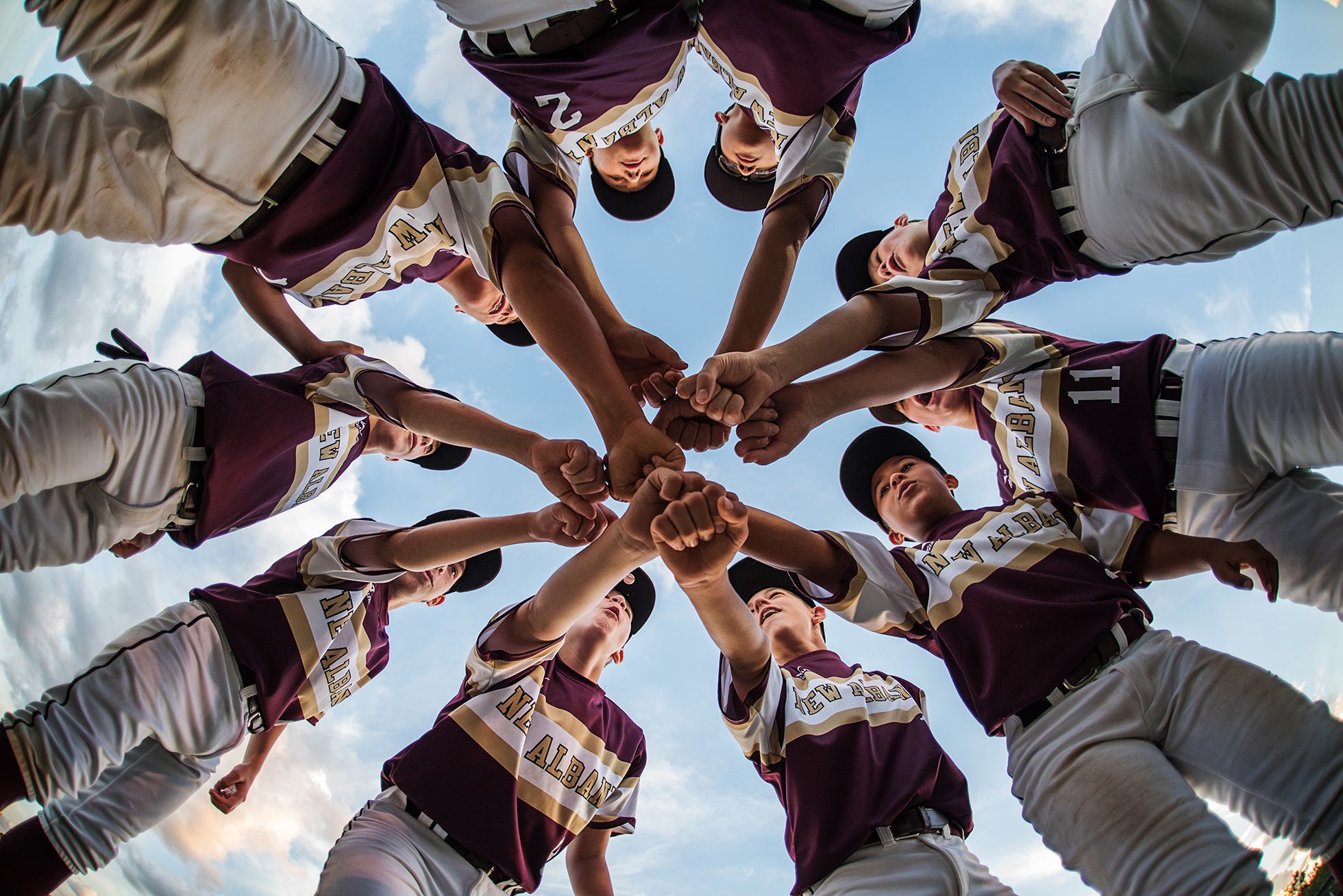
And the kids? Some of them love it. But a lot of them burn out. You can see it in their faces. The joy gets drained out before they even hit high school.
We weren’t elite. We weren’t being scouted. We were just kids, making bad throws, dropping pop-ups, laughing too loud in the dugout, and hoping someone brought Big League Chew.
That version of the game? I miss it. It didn’t ask you to be great. It just asked you to show up.
And if you were lucky, you got a few good swings in before the sun went down.
Now, here’s what it takes.
If your kid wants to keep up in baseball today, you'd better be ready to spend. And not just money, time, weekends, gas, sanity. Because now it’s not just a game. It’s a program. A system. A business.
And the business is good, if you’re the one collecting checks.
It starts with travel ball. You don’t make the “elite” team? Sorry, better luck next tryout, if you’re willing to fork over another $100 for the privilege. Make the team? Great. Now pay your $2,500 team fee, buy two sets of uniforms, pay for the bat bag, the team helmet, the custom cleats. You’ll need a new bat too, $400 minimum. And a glove? Let’s hope you don’t want quality leather, or you’re out another few hundred.
And don’t forget hotels. Every weekend, you're driving to some overpriced tournament in the middle of nowhere, staying at a Fairfield Inn with the team rate that’s still somehow more expensive than it should be. You’re eating fast food, paying gate fees just to watch your own kid, and sitting in 95-degree heat to see if they get three at-bats.
Offseason? There isn’t one. Because if your kid’s not training while everyone else is, they’re falling behind. That’s the pitch, always falling behind. So now you’re booking hitting lessons. Pitching lessons. Speed and agility classes. Biomechanics evaluations. Indoor cage time. Strength coaches who talk about torque and scap load to 11-year-olds.
Then there’s “exposure.” Want your kid to play college ball? Better get them on Perfect Game’s radar. So, you pay to enter a showcase where they’ll wear a jersey with a barcode and get evaluated by a stranger with a clipboard who’ll never remember their name. But don’t worry, you can pay extra for a highlight video set to bad music.
You scroll social media and see 9-year-olds with edited hype reels. Parents branding their kids like products. Posts like “My dude raking this weekend! #FutureStar #HardWorkPaysOff” from dads who think they’re Scott Boras.
Meanwhile, the kid's exhausted. Or injured. Or quietly miserable but afraid to say it because they know how much their family has invested.
And for what? A shot at varsity? Maybe a partial D2 scholarship that doesn’t cover textbooks? Do you know how many kids actually go on to play college baseball, even at the lowest levels? Almost none.
But we all lie to ourselves. We say it’s for development, for discipline, for opportunity. Sometimes it is. But too often, it's about adult egos. About keeping up. About convincing yourself that all this sacrifice is leading somewhere.
I watch it now and it makes me sick not because I hate the game, but because I love it. I love what it used to be. When it didn’t matter what brand your bat was or whether your swing had been broken down in slow motion. When a kid could just play without pressure.
We’re not raising ballplayers. We’re raising kids who burn out by 14. Kids who tear ligaments before they hit puberty. Kids who stop loving baseball because someone turned it into a job before they ever had a chance to enjoy it.
We act like we’re doing them a favor. But we’re not. We’re selling them a dream and handing them a bill.
Baseball isn’t supposed to cost this much not just in dollars, but in joy. In time. In spirit.
We played for nothing but the love of the game. Today’s kids are playing for everything but that.
Let the kids play and figure it out! We had ghost runners, the pitcher as first basemen and fly balls to left field were automatic outs. We should creating the next generation of fans not players.
What happened to the days of scouts coming to whatever local park the kid called home? If the player was good, then the scouts would show up. It wasn't about the kids and parents traveling to get exposure. It was about word of mouth, and scouts staying in cheap hotels and eating fast food so that they could be the first to see a potential next-level player. They wanted to connect with the kid just as much as the player was hoping to meet the scout.
Or, at least, that is how they tell us it used to be. Insane amount of time and money spent by families today just for more exposure. Great points.