


I loved Yasiel Puig.
I loved his nickname, The Wild Horse. I loved the way he played like the game itself might escape him if he didn’t hold on with both hands. He sprinted on routine fly balls, gunned down runners trying to stretch a double, and flipped bats like he was writing calligraphy in the sky. Watching Puig was joy. Wild, unpredictable joy.
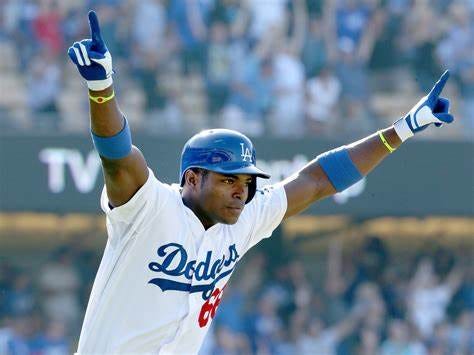
But if this Dark Side of the Diamond series has taught me anything, it’s that joy doesn’t always last. Sometimes it burns too bright to sustain.
Before he was a Dodger, before the celebrations, the flips, and the controversies, Puig was a prisoner. Not in a cell, but in a system. In Cuba, where athletic talent is currency and defecting is a crime, he tried to escape thirteen times.
Thirteen.
Think about that. That’s not someone looking to get rich. That’s someone desperate for air. Desperate to become what he felt he was meant to be. When he finally made it out, it wasn’t on a flight, it was on a speedboat run by smugglers with ties to the Los Zetas cartel. He was trafficked. Held hostage. Ransomed. And eventually, “rescued” by men who expected a cut of his future earnings.
This isn’t fiction. This is modern baseball. And Puig carried all of that trauma, danger, pressure into his very first big league at-bat.
When he showed up in L.A. in 2013, he exploded. He hit .319, smashed 19 home runs in 104 games, and made the Dodgers feel like they’d signed a superhero. He played with a passion that didn’t care about decorum. He made mistakes. He didn’t always know the unwritten rules. But man, he made baseball feel alive again.
For those of us watching, especially for me, it felt like we were witnessing the game reawaken. Puig didn’t just play baseball. He attacked it. His presence felt like defiance. Like joy that refused to be tamed.
Even in that rookie year, the tension was there. Some teammates resented him. Coaches struggled with him. Writers questioned his maturity. Some of it was valid. Some of it, I believe, was cultural. Baseball likes its wildness only in small doses, as long as it conforms when asked.
Eventually, his production dipped. He got injured. He was sent to Triple-A. He was traded. He was out of the league.
And the off-field headlines took over.
A sexual assault accusation in 2018, settled out of court.
An illegal gambling investigation in 2022. He initially pled guilty to lying to federal investigators, then changed his plea to not guilty, citing racial bias and flawed handling of the case.
The joy had curdled. And not because the game turned on him. Puig, for all his charisma, made choices, some of them damaging. Some of them selfish. And in that mix of trauma, fame, and defiance, he lost control of the narrative.
I’m not defending what he did. I’m not saying there weren’t victims. I believe accountability matters. Integrity matters. That’s the whole point of this series.
But I also believe in context.
We cheer these men when they hit balls 450 feet, but we rarely ask what it took to get here. Puig didn’t arrive at Dodger Stadium like a typical rookie. He arrived after barely surviving a human trafficking ring, carrying a price on his head. The system used him. MLB profited from his presence, sold jerseys with “PUIG” on the back, soaked up the spectacle. Then when the chaos got too loud, they quietly stepped away.
That feels familiar, doesn’t it?
Today, Puig plays abroad. He’s had stints in South Korea, in Mexico, in the Dominican Republic. He posts workout videos. Talks about redemption. Mentions charity work. But there’s no return to the majors coming not unless something drastic changes.
And yet I still watch his highlights. Still remember that cannon from right field. Still smile when I think of him launching a no-doubt home run and flipping the bat like a man tossing away a burden.
There was something pure in Puig, even if the man himself was complicated. He reminded me of why I fell in love with the game because baseball, when played without inhibition, is electric. Puig played like a kid who didn’t know the rules, and for a while, that was magic.
We sanitized him. Tried to cage the wild horse. And yes, he made his own messes too. But when the joy faded, we all lost a little something.
The dark side of Yasiel Puig’s diamond isn’t just the scandals. It’s the price of hope. The cost of freedom. It’s the reminder that the same system that sells joy can also discard it. That baseball is a game of second chances until it isn’t.
I still loved watching him. I don’t regret that.
Because for a few seasons, The Wild Horse ran free. And baseball was better for it.
Buddha, another great piece thanks for the memories.
I remember what a dynamo Puig was but had forgotten him until this post. There does seem a strong tension in baseball between star players and the game being a team sport. Even ace pitchers depend on support from the defense.