


This will be my one and only truly political post this year, not about baseball.
I’ve been thinking about a wild idea lately—what would happen if, for just one year, every state in the U.S. paid the exact same amount in federal taxes? Not based on population, income, or GDP. Just a flat number. Fifty billion dollars from each state, regardless of size, wealth, or output. Let the federal government keep the lights on, fund the military, keep Social Security and Medicare flowing, and handle essential services. Everything else—transportation, education, Medicaid, infrastructure, environmental regulation—gets handled at the state level. All the rest of the taxes we pay? They stay in our home state.
At first glance, it sounds fair. Equal contribution. A level playing field. But the more I think about it, the more I realize how deeply unequal this country actually is—and how few people understand what that really means.
California pays over $450 billion a year to the federal government. New York, New Jersey, Illinois, and Massachusetts all kick in way more than they get back. These are the so-called “donor states,” and they’ve been carrying the country on their backs for decades. People love to make fun of California—the taxes, the traffic, the politics, the celebrities—but without California’s money, a huge chunk of America would collapse. That’s not hyperbole. That’s math.
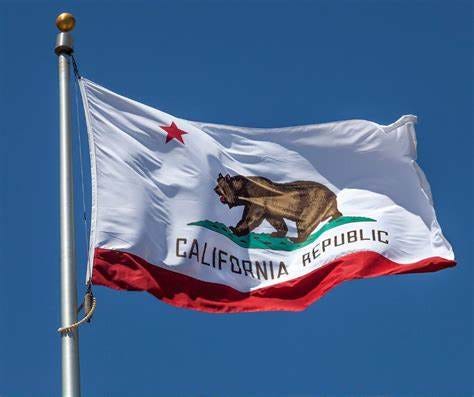
If California kept even half of what it sends to Washington, it could completely rebuild itself. Universal health care? Done. Free college tuition? Covered. High-speed rail? Finally finished. Wildfire prevention, clean water infrastructure, housing for the homeless—check, check, and check. California could operate like a first-world country within a country, funding its own innovations, shoring up its safety nets, and making generational investments in the future. And this isn’t just California. New York could fully renovate the MTA, eliminate tuition at SUNY schools, and bring public housing into the 21st century. Illinois could overhaul Chicago’s public schools and invest in real gun violence prevention. These states have the resources. What they don’t have is control over their own wealth—because it’s being siphoned off to subsidize the rest of the country.
Now imagine the flip side. What happens to Mississippi, Alabama, Kentucky, West Virginia—states that get back two, three, even four dollars from the federal government for every dollar they pay in? These aren’t just states with struggling economies—they’re states that are fundamentally dependent on the federal tax base to function. If they only kept what they generated, it wouldn’t be enough to cover basic services. Medicaid would dry up. Rural hospitals would close. Schools would shutter. Roads wouldn’t be repaired. Disaster relief? Gone. In these states, the federal government isn’t an overreach—it’s a lifeline.
What people don’t realize is that we already live in a hybrid socialist system. It just doesn’t wear the name. When someone in California pays their taxes, a chunk of that money goes straight to support services in Arkansas or Idaho. That’s redistribution. That’s collective investment. That’s socialism. But because it’s filtered through the flag and the federal government, people pretend it’s something else. They rail against socialism on Facebook while cashing Social Security checks paid for by New Jersey taxpayers. They complain about government handouts while driving on roads funded by blue-state money. The hypocrisy isn’t just frustrating—it’s dangerous. Because the second the donor states decide to stop playing along, the whole system falls apart.
I get it. No one likes taxes. No one wants to feel like they’re carrying someone else’s load. But let’s stop pretending this country is a fair economic partnership. It’s not. Some states give more. Some states take more. And the ones doing the taking are often the loudest about government overreach, personal responsibility, and “earning what you get.” The truth is, they didn’t earn it. They were gifted it—by a system designed to hold the country together, whether it was fair or not.
So let’s run the experiment. Just once. Let every state keep what it makes. Pay your fifty billion and take care of yourself. Let’s see what happens. Let’s see who thrives and who sinks. I already know the answer. Deep down, most people do. But maybe they need to see it to believe it.
What we’d learn is that equality isn’t always fair. Equal contribution doesn’t mean equal sacrifice. And shouting about freedom means a whole lot less when someone else is footing your bill.
Or just have the different states receive benefits from the national government in proportion to the taxes they contribute, perhaps?