


Baseball used to be full of weirdos.
Guys who talked to the ball. Who pitched like they were untangling a knot. Who wore their socks inside-out for a month because the hits kept falling. The kind of players who made you lean forward in your seat not because of what they did last game, but because you had no idea what they’d do next.
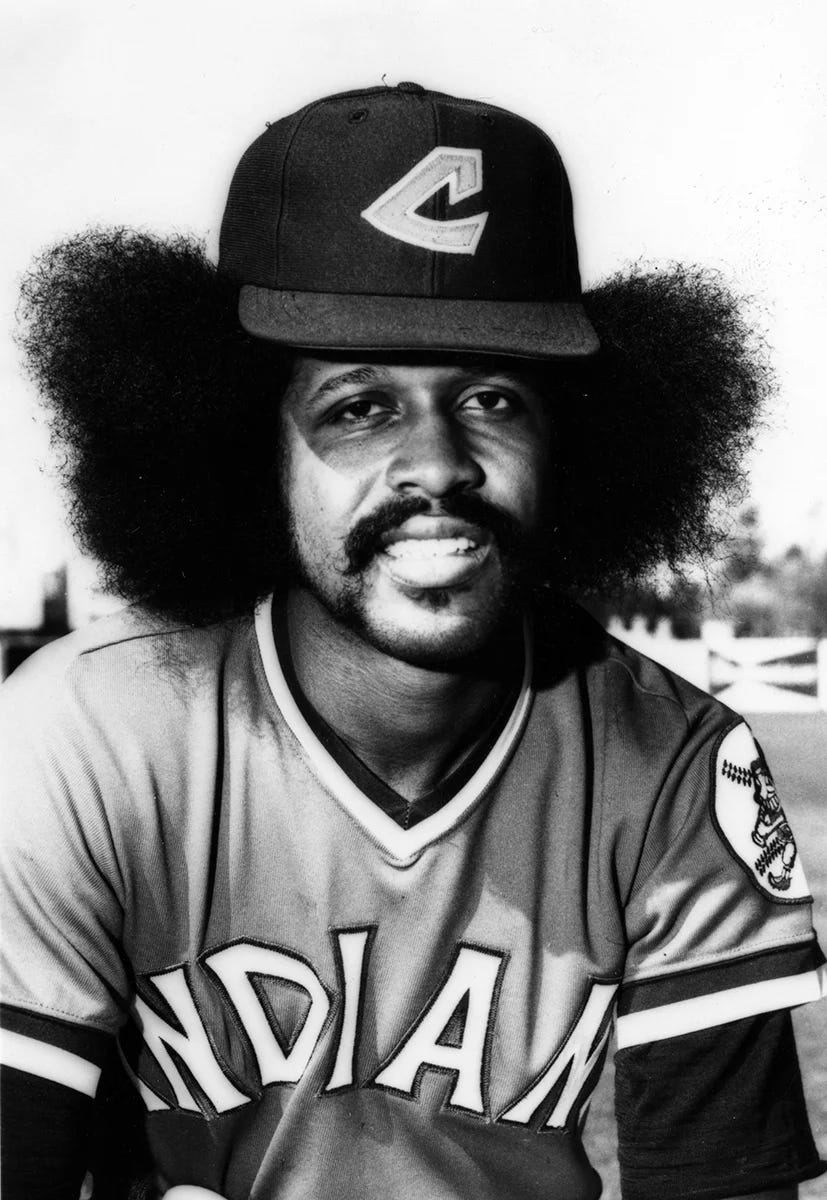
Rickey Henderson spoke about himself in the third person and once framed his first stolen base. Luis Tiant spun his body like he was trying to catch a glimpse of God in center field. Mark Fidrych talked to baseballs and groomed the mound like it was a Zen garden. Manny being Manny wasn’t a tagline it was an inevitability. Oscar Gamble’s hair wasn’t a style, it was a declaration.
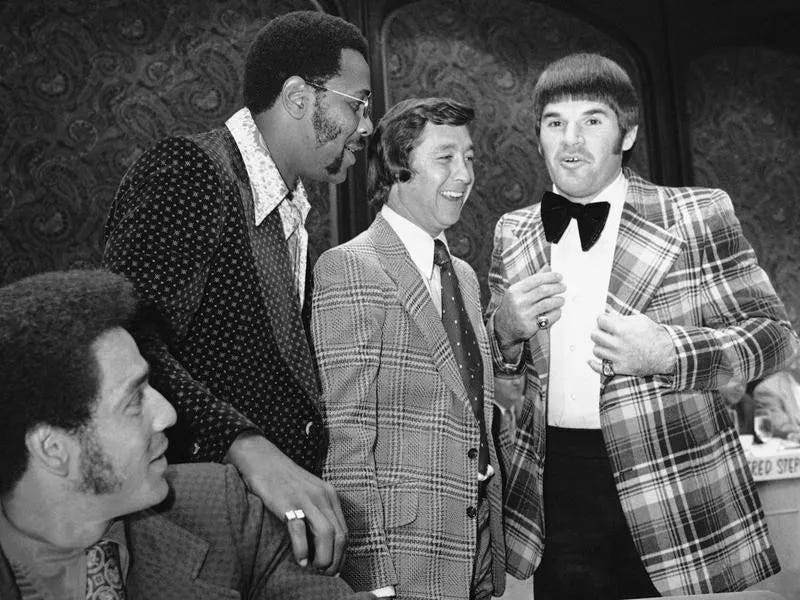
Pete Rose was something else entirely, baseball’s walking contradiction. On the field, he played with the fury of a middleweight boxer. Off the field, he had style and swagger: flashy rings, sharp suits, a gambler’s grin. He lived fast, talked loud, and never hid from who he was, even when he should have. Say what you want about Pete, but he was never boring.
And then there was Yogi Berra.
Yogi was a philosopher disguised as a catcher. He dropped lines like “It’s déjà vu all over again,” or “You can observe a lot just by watching.” He was baffling and brilliant all at once. His weirdness wasn’t loud, it was quiet, accidental, and deeply human. You don’t get guys like that anymore. Now we get media-trained athletes who know what not to say.
Baseball used to be a kids’ game played by adults. That was the magic. As a kid, I remember seeing Luis Tiant pitch for the first time like he was doing tai chi in the middle of a ballgame. He didn’t look like the other pitchers. He didn’t move like them. He was strange, and I loved him for it.
I remember when Sports Illustrated pulled off one of the greatest April Fools’ jokes of all time, the story of Sidd Finch, the mysterious Mets prospect who could throw 168 miles per hour. I read that article like it was gospel. I believed every word. I stared at the page in awe until someone nudged me and said, “Check the date.”
But I loved that kind of shit. I wanted to believe it. I wanted baseball to be that big, that weird, that wonderful. I thought these guys were living the dream. And maybe they were. Because it felt like they all had different personalities, different rhythms, different reasons for being there. The game made room for them all.
You could even see it on their faces.
The Oakland A’s of the early '70s looked like they wandered out of a psychedelic Western. Mustaches everywhere. Gold and green uniforms. White cleats. They were loud. That wasn’t an accident. That was Charlie O. Finley.
The A’s owner was part ringmaster, part mad scientist. He paid players to grow facial hair. Installed a mechanical rabbit named "Harvey" to deliver baseballs. Floated the idea of orange baseballs. Dreamed up the designated runner and hired a sprinter, Herb Washington, who didn’t even know how to slide.
Across the field were the Cincinnati Reds, clean-shaven, corporate, no-nonsense. Beards weren’t allowed. Sideburns were frowned upon. They looked like they were ready for a team photo in the Sears catalog. And they won. Big.
Two teams. Two cultures. Both champions.
And baseball let that happen.
Then came Jim Bouton, who cracked the illusion wide open. Ball Four wasn’t just a book, it was an unfiltered window into the clubhouse. Bouton didn’t clean anything up. He showed us the gossip, the insecurity, the amphetamines, the absurd rituals. He showed us humans. The league hated him for it. He wasn’t exiled for a bad pitch, he was exiled for honesty.
But he proved that baseball didn’t need polish. It needed truth.
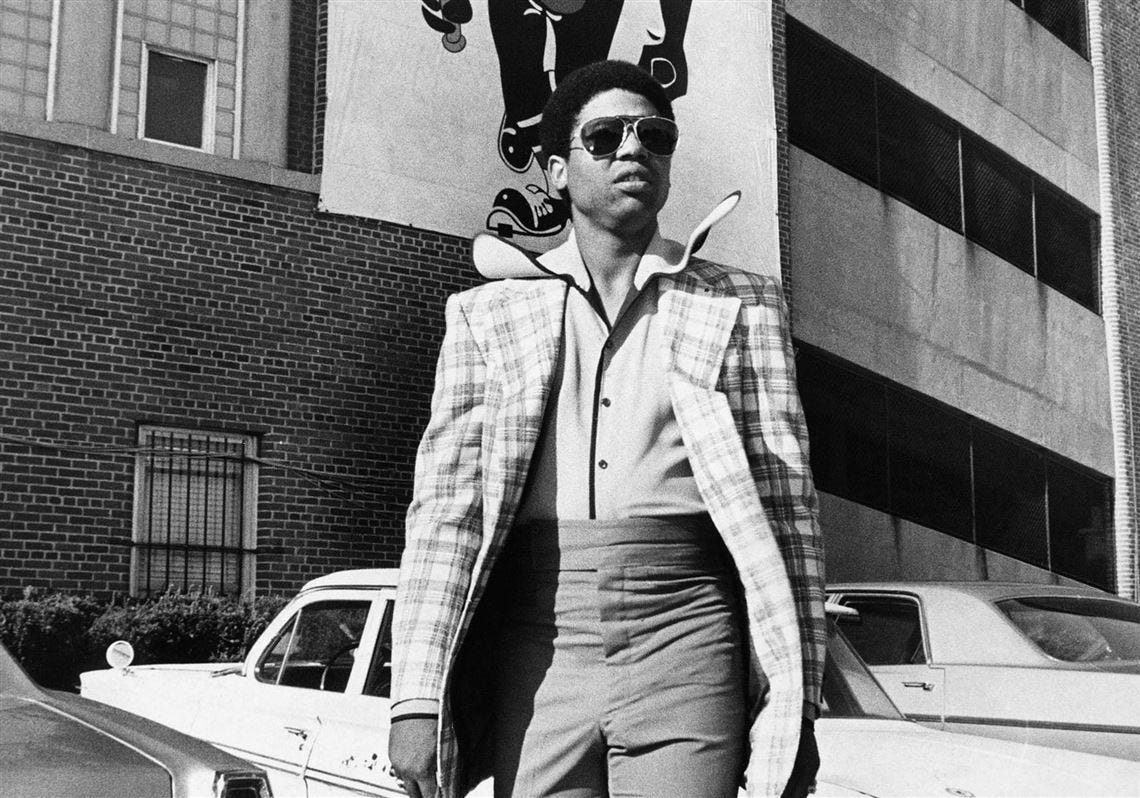
And no one embodied that like Dock Ellis, who threw a no-hitter while tripping on LSD. A man threw a no-hitter while high on acid. He didn’t know what city he was in. Didn’t know who he was facing. But he threw strikes. Baseball didn’t make sense. That’s why it made sense.
These days, it’s all middle of the road. Ballplayers don’t just train together, they sound alike, look alike, feel alike. It’s the baseball equivalent of a coffee shop that looks the same in Milwaukee, Miami, and LA. Polished concrete. Edison bulbs. Clean lines. Comfortable. Pleasant. Forgettable.
Even the way they dress is flattened.
In the '70s, players didn’t walk into the stadium, they arrived. Wide lapels. Bell bottoms. Suits in mustard, maroon, lime. Leather jackets, gold chains, and hats with feathers sticking out. You’d see a guy in a three-piece powder-blue suit with alligator shoes and think, that man just hit .214 last year, and it didn’t matter, he looked like a star.
Now? It’s designer neutrals. Monochrome joggers. Subtle watches. Middle-of-the-road fashion for middle-of-the-road personalities.
But every once in a while, someone lets it fly.
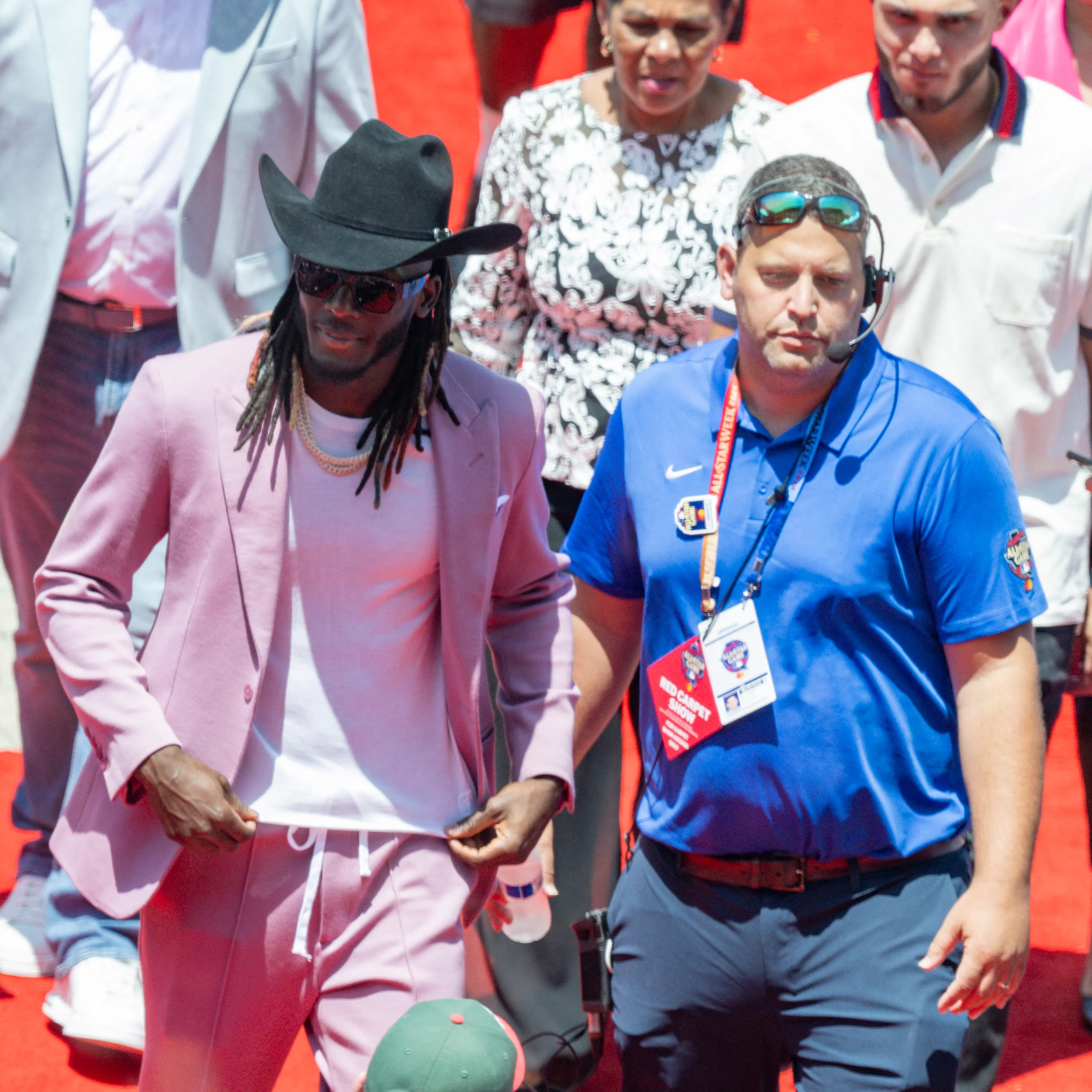
Elly De La Cruz walked into the All Star Game wearing a hot pink suit with a wild cowboy hat and made you look. It wasn’t polished. It was fun. It was bold. It was him. And it felt like a glitch in the matrix, a reminder of how good baseball looks when someone breaks from the algorithm and just shows up as themselves.
It defines the eras.
The Eisenhower conservatism of the 1950s bled into the early '60s, uniform, upright, predictable. Then the '70s hit like a a big fuck you. The free love generation stormed the gates, and the patriarchs of baseball didn’t know what to do with all that color, flair, and rebellion. Slowly, we worked our way back to the middle.
I’m the middle. I know it. I’ve lived it. But every once in a while, you’ll see me in a '70s leisure suit with boots to match, gold chain around my neck, shirt unbuttoned halfway down. It’s a look, sure but it’s also a statement.
I might look like you, but I sure as fuck don’t think like you.
Say what you will about Trevor Bauer, his off-field choices, his chaotic public persona, the accusation that derailed his career but the guy has an edge. He poked the bear. He didn’t play the PR game. And now, he’s gone. Blackballed. Not just for controversy, but because he didn’t blend. He didn’t sound like the league’s press release. And whether you liked him or couldn’t stand him, you noticed him.
Baseball doesn't know what to do with players like that anymore. If you're not quiet, safe, and brand-aligned, you’re a risk. And risks are bad for business.
Players are branded before they debut. Everyone's got the same swing coach, same curated Instagram feed, same soundbite in the postgame. Celebrations feel like sponsored content. Dugouts look like locker rooms at a fintech conference. Everyone’s clean, optimized, and interchangeable.
The pitch clock speeds things up. The graphics scream for attention. In-game betting apps encourage instant gratification. And underneath it all, something’s missing the space to just be. To be strange. To be memorable. To be human.
I’m not saying the game was better back then. I’m saying it was looser. Stranger. More alive. The weirdos weren’t distractions, they were the soul of the game. Without them, it’s meat and potatoes. Efficient. Predictable. And kind of bland.
I think about those guys.
The ones who made baseball feel like the last place where being strange wasn’t just allowed, it was loved.
But this isn’t just baseball. It’s America. It’s the world. It’s the slow drift toward a culture where everything’s pre-approved, pre-assembled, and pre-flattened. Where being too bold, too different, too yourself is seen as a threat to the brand, the algorithm, the message.
Trevor Bauer is not “was.” He is. He’s out there, still throwing, still loud, still unrepentantly himself. But he’s no longer allowed inside the machine. That’s what happens now. You don’t just get suspended, you get erased. Not for what you did. For what you represent.
And that’s the real loss. Not just to baseball. But to all of us.
Baseball doesn’t need more stars.
It needs more truth.
It needs more weirdos.
This is why I cheered for the '93 Phillies. They just looked like they'd be fun to play for.
But for me there is a fine line between character and trying to grab attention for the sake of getting more clicks. I'm okay with letting the game speak for itself, too.
Spot on. My younger brother and sister (knowing how much I liked sports books) got me Ball Four for my 12th birthday. Little did they (or I) know
A few years later, I read Bo Belinsky’s and Joe Pepitone’s bio’s Good lord! A different time indeed