


The Los Angeles Angels sit at 25 because they wasted something most franchises will never even touch. Two generational players, both in their primes, both wearing the same uniform, and nothing to show for it that matters. No October presence, no sustained run, no identity that held. In a sport defined by scarcity, they were handed abundance and turned it into noise. That’s not bad luck. That’s failure.
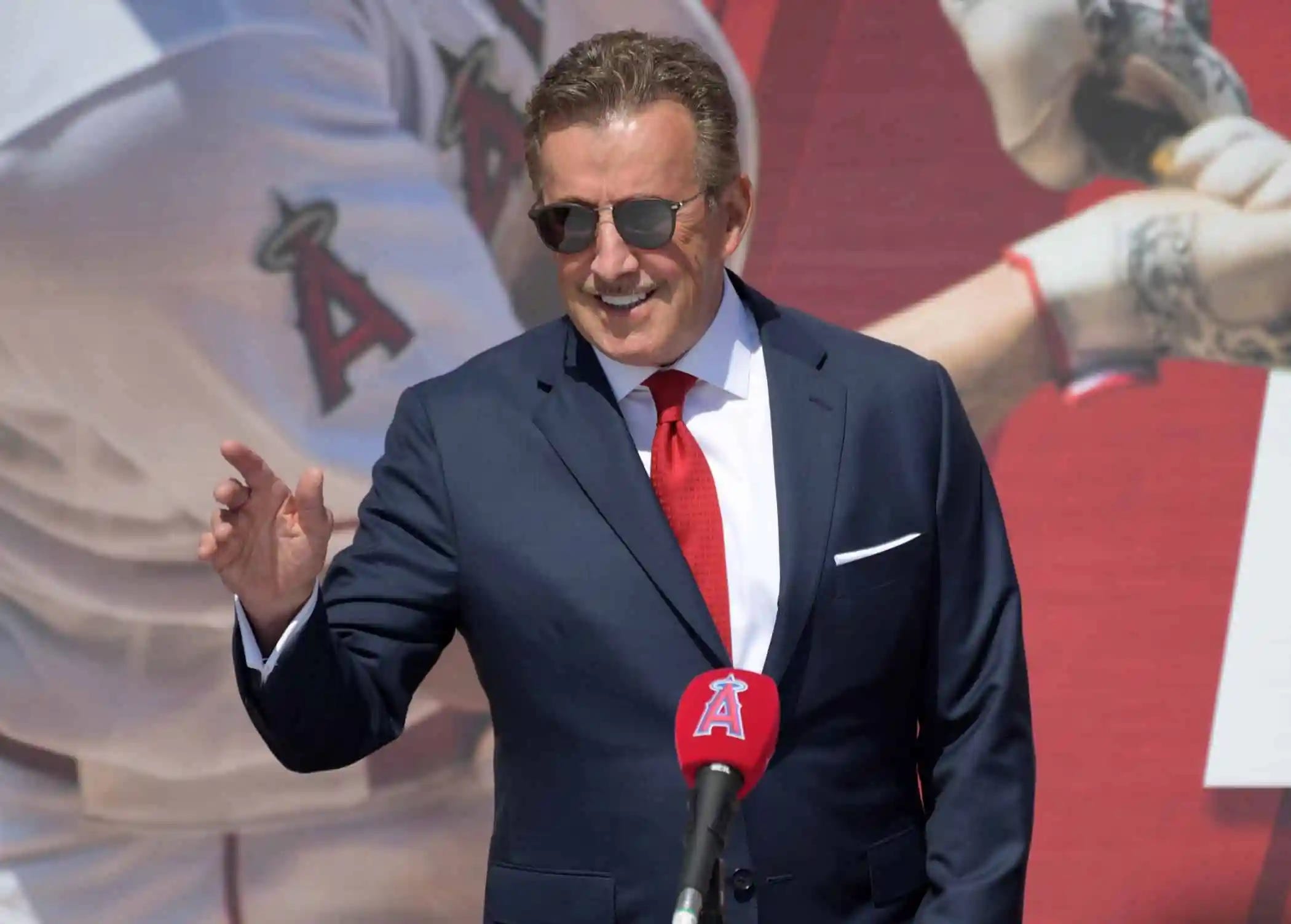
Arte Moreno bought the team in 2003 and brought energy, visibility, and a willingness to spend. He wasn’t hiding from the job, and that’s part of what makes this harder to explain away. Over the 2015 to 2025 window, spending without structure became the defining flaw, and that’s a deeper problem than being cheap. Cheap teams can point to limits. The Angels never had that cover. They had Mike Trout, arguably the best all-around player of his generation, and Shohei Ohtani, a player so singular the sport had to rethink how it measures value. They overlapped for six seasons, in a major market, with real payroll flexibility, and the result was one playoff appearance and zero postseason wins.
At some point the fallback line that baseball is hard stops carrying weight. The randomness of October only matters if you can get there with something that holds together. This wasn’t a small market getting squeezed or a roster gutted by scandal or a rebuild that ran out of time. This was an organization that never built a durable system around elite talent. Not a contender that fell short. Not a window that closed too quickly. A decade that never formed into anything coherent enough to even test itself in October.
Moreno’s fingerprint is everywhere, not in neglect but in constant presence without clear structure. Big headline contracts for position players that felt like statements more than solutions. A pitching pipeline that never stabilized and never gave the roster a foundation. First-time general managers cycling through without a unifying philosophy above them. No empowered president of baseball operations to set direction and enforce it. Owner involvement at the wrong altitude, where influence replaces clarity. Managers coming and going, trade deadlines approached like reactions instead of plans. The Angels weren’t passive. They were incoherent, and in modern baseball incoherence at the top turns into inconsistency on the field, and inconsistency over a decade becomes identity.
Even the sale saga carried the same tone. Moreno publicly explored selling the team, framed it as the right moment for transition, then reversed course months later citing unfinished business. The message landed the same way everything else did, unresolved and unclear. Meanwhile, Ohtani leaves and says winning is his priority, which reads less like free agency language and more like a final evaluation of the environment he just left. Trout stays, loyal in a way that reflects on him more than the organization, but loyalty cannot replace direction, and it cannot create a system that was never built.
The payroll dollars were real. The effort, at least on the surface, was real. But the architecture never existed, and that’s the failure. If you cannot build a sustainable contender around Trout and Ohtani, in that market, with that ownership willingness to spend, then what exactly is the operating model. What is the plan beyond the next headline move. Because it never looked like a system designed to win over time.
The Angels are not villains in the dramatic sense. There’s no scandal to point to, no single moment that defines the fall. It’s quieter than that, and in some ways worse. In a sport built on scarcity, where greatness is rare and windows are short, they were handed something almost no franchise ever gets, and they let it dissolve into mediocrity. That’s not just failure. That’s waste.
Competitive Intent and Effort: 23. The Angels spent and tried, but effort without structure kept collapsing under its own weight.
Fan Alignment and Honesty: 23. The message was always that contention was close, even as the results kept proving it wasn’t.
Cultural Fit to the Area: 22. Southern California rewards stars, but it ultimately demands winning, and the Angels never converted one into the other.
Financial Integrity and Revenue Use: 24. The money was there, but the allocation never matched the actual needs of building a complete roster.
Labor Ethics and Organizational Culture: 24. Turnover and shifting direction created instability and prevented continuity.
Long-Term Vision and Stability: 25. A star-driven approach never evolved into a system-driven organization.
Integrity and Accountability: 23. No scandal, but repeated strategic misfires without structural correction is its own form of avoidance.
Relationship to History and the Game: 22. The 2002 championship stands, but the Trout-Ohtani era will be remembered more for what it failed to become.
Impact on the Health of Baseball: 24. The sport lost one of its most compelling potential narratives because the team around it never held up.
Composite Score: 210 out of 270.
Overall Rank: 25.
Kinda feels like you took it easy on them for the Tyler Skaggs thing. That felt like institutional rot.
Ownership had been a mess, but with the mighty Dodgers 30 miles to the north, and the suddenly hip Padres 70 miles to the south, it's rather remarkable that the Angels still average close to 30,000 a game in the 4th oldest stadium, that doesn't have any of the charm or lore of Fenway, Wrigley, or Dodger Stadium. A credit to their loyal fanbase with 2 more popular teams in their front and backyard.