


The Chicago White Sox sit at 26, they are not poor, they are historically relevant, they play in one of the largest cities in American sports with reach, resources, and a fan base that has proven it will show up, and that is exactly the problem, because when a franchise with that kind of advantage ends up here, it is not circumstance, it is ownership, and that weight sits squarely with Jerry Reinsdorf.
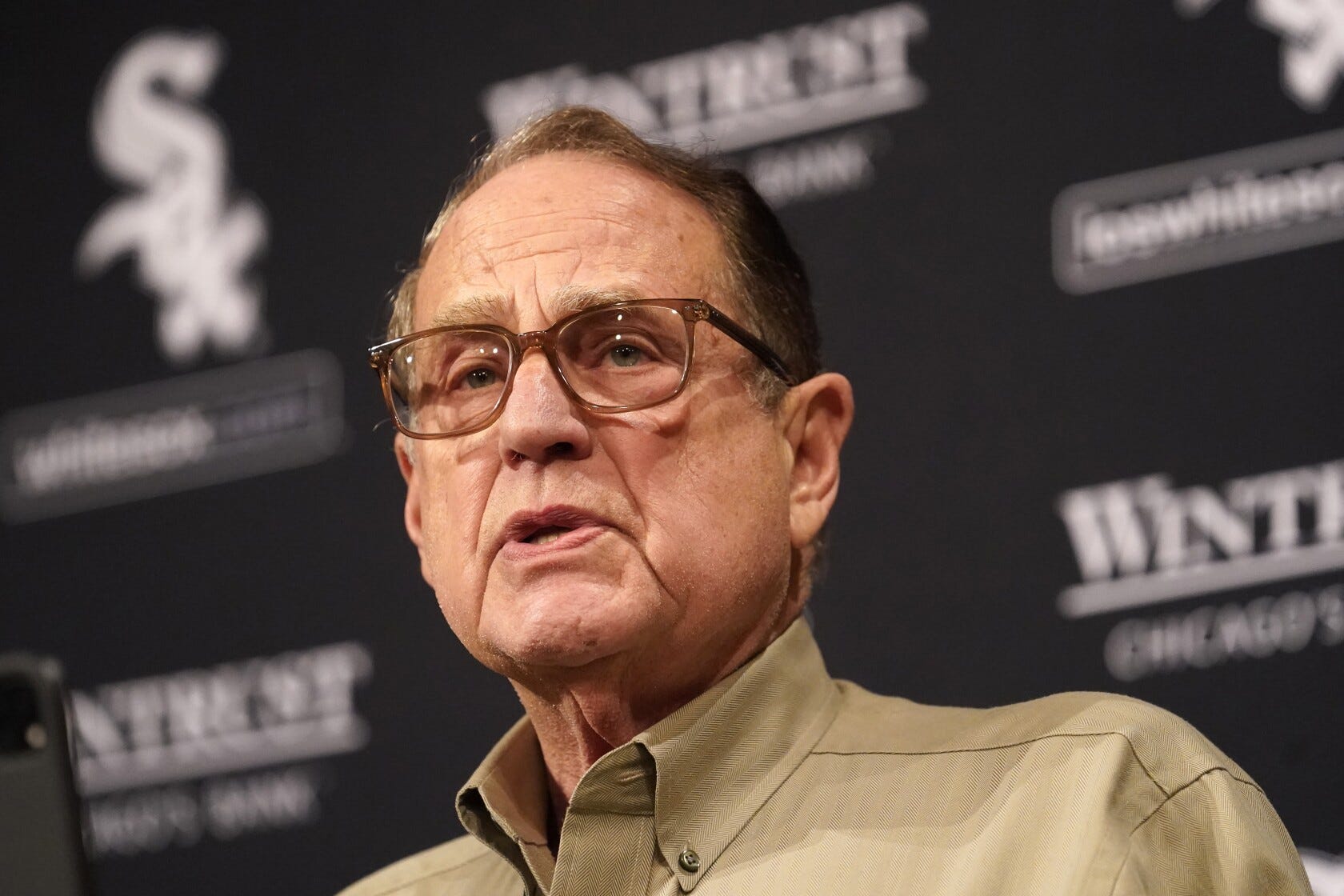
Reinsdorf has owned the White Sox since 1981, which means more than four decades of control, one of the longest tenures in Major League Baseball, and this is not an owner unfamiliar with greatness, because he owned the Bulls during the Michael Jordan era and has seen what elite looks like up close, which is what makes what has happened on the South Side feel less like misfortune and more like a choice, a quiet acceptance that the White Sox do not have to be what they could be.
This is not a secondary franchise without roots, this is a charter American League team, a franchise that carries the weight of 1917, the stain of 1919, the importance of Minnie Miñoso, and the authority of the 2005 World Series run, and that team was built with conviction and clarity, not luck, which is why what followed feels so hollow, because instead of raising the standard or creating sustained pressure to remain at that level, the organization drifted back into that soft middle where relevance can be sold without ever committing to excellence.
From 2006 through 2015 they lived in that space, close enough to matter but never serious enough to demand anything more, and then came the rebuild in 2016, with Sale gone, Eaton gone, Quintana gone, and the promise of discipline and direction, tear it down, build it correctly, sell patience in exchange for something real, and for a moment it worked, because by 2020 and 2021 the White Sox had a young core that should have forced ownership to act like a major market powerhouse, with Anderson, Robert, Jiménez, Moncada, and Giolito, along with a division title and a postseason appearance, and a window that was no longer theoretical but open and demanding action.
That is where ownership reveals itself, not in the rebuild but in what comes next, and what came next was hesitation, with payroll that never pushed into the tier it should have, and a franchise in Chicago behaving like it needed to protect itself instead of pressing forward, not poor, not incapable, just unwilling to fully commit, and unwilling to treat the moment with the urgency it deserved.
Then came the move that told you everything, the hiring of Tony La Russa, which was not a decision built for the roster, not aligned with the era, and not reflective of where the game is going, but instead a comfort hire, a personal decision wrapped in experience, nostalgia over alignment, familiarity over evolution, ownership preference over organizational coherence, with a 76-year-old manager stepping into a young clubhouse that needed energy and clarity and instead receiving something pulled from another time.
That decision was not just a mistake, it was a signal, because it showed that this franchise was still being run through the lens of one man’s comfort rather than the demands of the modern game, and the team followed that path not upward but into decay, and by 2023 and 2024 the White Sox were not merely disappointing, they were embarrassing, because a rebuild that should have created sustained contention instead produced a brief spike followed by collapse, and that is not randomness or bad luck, that is failure at the ownership level, because when the window opened it was not reinforced, it was not sharpened, it was left to fade.
What makes this worse is where it is happening, because this is not Oakland, not Tampa, and not a franchise fighting structural limitations, this is Chicago, with market size, corporate base, television reach, and a fan base that shows up and cares, which means there are no excuses here and no safety net to hide behind, because this is not a resource issue, it is a conviction issue.
Reinsdorf talks about loyalty and stability and about standing by people, and those ideas can sound admirable, but in practice they have translated into inertia, into holding on too long, resisting change when it is clearly needed, and confusing comfort with wisdom, which is how you end up with a franchise that feels fine being competitive adjacent instead of actually dangerous, fine living between 75 and 85 wins, and fine asking fans for patience while offering nothing that justifies it.
Other organizations do not hide from that moment, because Milwaukee pushes its windows, Tampa weaponizes its constraints, and Cleveland extracts every ounce of value and keeps finding its way back, while the White Sox did the hardest part by rebuilding, developing a core, and opening the window, and then ownership failed the next step, the one that proves whether any of it was meant to lead somewhere.
Competitive intent comes in at 25, because the rebuild was real but the follow through was not, fan alignment at 22 because they sold sustained contention and delivered collapse, cultural fit at 21 because the South Side deserves urgency and instead gets drift, financial integrity at 23 because a major market acted like it needed to play small, organizational culture at 22 because misalignment at the top bled into the roster, long term vision at 23 because a plan stalled when it needed conviction, accountability at 22 because there was no scandal but far too little urgency in response to obvious decline, relationship to history at 20 because the past still matters but cannot carry the present, and impact on the game at 22 because when a Chicago franchise wastes this much opportunity it reflects on the league.
That lands them at 200 out of 270, firmly in the bottom tier, not because they lack advantages but because they wasted them, and that distinction matters.
Oakland is decay, Miami is instability, Pittsburgh is fear, Colorado is confusion, and the White Sox are something else entirely, they are squandered opportunity, and that word matters because squandered means it was there, it was real, it was within reach, and it was let go anyway.
This is not about one bad season or one bad hire, it is about a pattern, a philosophy, and a decade where the franchise had every reason to become something and instead chose to remain comfortable, and at some point fans have to stop being told to be patient and start asking what exactly they are being patient for.
Because the South Side has shown up, it always has, through bad teams, through good ones, and through everything in between, and what it has gotten back over the last decade is not urgency, not commitment, and not a demand to be great, it has gotten a franchise that feels fine being almost.
In a market like this, with this history and this opportunity, is not an accident, it is a decision. The White Sox are not 26 because they cannot be better, they are 26 because they have not been required to be, and until that changes, until ownership feels pressure instead of comfort, until winning becomes expectation instead of possibility, nothing else really will, that is the truth sitting underneath all of this.
Great article, as has been the case for every team, as you evaluate the state of each team. I know it's become a cliché and has been stated ad nauseum, but you cannot talk about the White Sox market without mentioning the elephant(the bear?) in the room. Of course I'm talking about the Cubs. It seems that no matter what this team does it will ALWAYS be the 2nd team in Chicago. I'm in no way saying the Sox don't have a great and loyal fanbase, because they do. All I'm saying is it will forever be a constant challenge for the Sox to play in the shadow of a team with a national fanbase in a stadium that is a bucket list destination for any baseball fan. Sox fans relish as being the gritty blue collar team that plays in the less glamorous ballpark on the less glamorous side of town, and whether it's fair or not it's something the Pale Hose will always have to deal with, regardless of ownership or success on the field.
The same guy who claimed that white Sox were a small market team. Chicago. Small market.