


This is what I’ve been working on this offseason. I needed a break from the grind, and I’m still taking the break from Substack. I’m also STILL editing the meditation book. It was supposed to be done before Thanksgiving, then before Christmas, the goal is Spring Training, most likely it will be ready by Opening Day….
I’ve always been wired to care more about structure than spectacle. About how decisions get made, who makes them, and what incentives sit underneath everything we see. In my professional life, I live in that world. Strategy, alignment, accountability, long-term consequences. You learn quickly that outcomes don’t magically appear. They’re built, or undermined, by the people at the top and the systems they design. Baseball clicked for me the same way. The game on the field is the visible layer, but the real story is upstream. That’s where direction is set, corners are cut or protected, and truth either exists or gets managed. I’m less interested in what happens on a random Tuesday night in July than in why it keeps happening year after year. That’s the lens I’m bringing here, because that’s where the game actually gets decided.
Every baseball season, we argue about the wrong people. We argue about players. About effort, contracts, loyalty, slumps, body language. We yell at managers like they’re generals instead of middle management. We debate front offices as if they’re sovereign entities. It’s all noise. Because none of it exists without ownership. Baseball doesn’t move at the speed of the game on the field. It moves at the speed of money, patience, ego, and leverage. And all of that lives in the owner’s box.
Ownership is the quiet constant in a sport obsessed with the daily churn. Players come and go. Managers get fired. Prospects rise and disappear. Owners stay. They decide when a team is “close enough.” They decide when a rebuild is convenient. They decide when payroll is a tool and when it’s suddenly a burden. They decide when a city deserves a winner and when it should be grateful just to have a team. Yet we rarely talk about them honestly. When we do, it’s usually framed as inevitability. Small market. Big market. Business realities. As if those phrases explain anything at all.
I’ve never been as interested in player stats as most fans are. I don’t obsess over WAR, exit velocity, or projected upside in a vacuum. I’m far more interested in who actually runs the game. Baseball, at its core, is an organizational sport from top to bottom. Drafting, development, payroll philosophy, patience, communication, risk tolerance, and honesty. None of that shows up in a box score, but all of it determines whether those box scores ever matter. The organizational strategy matters. The incentives matter. The people at the top matter. And when ownership gets it wrong, everything downstream suffers. The clubhouse. The fanbase. The city.
If anyone doubts that baseball is an organizational game, they only need to look at the Los Angeles Angels. For years, the Angels had two of the most extraordinary talents the sport has ever seen in Mike Trout and Shohei Ohtani. Generational players. And what did the organization do with them. Almost nothing that mattered.
That wasn’t a failure of talent. It was a failure of structure, vision, and leadership. Trout and Ohtani didn’t fail the Angels. The Angels failed them. Poor roster construction. Short-term thinking. Constant churn. No coherent pitching strategy. No sustainable development pipeline. The presence of those two players should have guaranteed relevance, contention, and credibility. Instead, it exposed how hollow the organization really was from the top down. You can have Mike Trout. You can have Shohei Ohtani. You can have highlight reels, jersey sales, and national attention, and still be fundamentally broken. Talent doesn’t save bad ownership. Stars don’t fix misalignment. Baseball punishes organizations that mistake individual brilliance for organizational health.
This season, Who Owns the Game is me pushing back on all of that. One owner at a time. Thirty weeks. No pretending this is neutral. No hiding behind balance for balance’s sake. This will be my take on the people who actually shape the game. The owners I respect. The owners I don’t trust. The owners who confuse me. And the owners who flat out piss me off. Because if we’re going to keep asking fans to emotionally invest in baseball, to pass it down, to show up, to care, then it’s fair to ask what kind of people are sitting at the top deciding what that investment is worth.
Some owners get it. Mark Attanasio runs a small-market club with discipline and realism, but without contempt for the fanbase. He doesn’t pretend Milwaukee is something it’s not, and he doesn’t treat restraint like a moral achievement. Mark Walter and the Dodgers show what happens when resources are paired with competence instead of chaos. That organization feels intentional. Serious. Like winning is the expectation, not a happy accident. You may not like the imbalance, but you can’t say it’s bullshit.
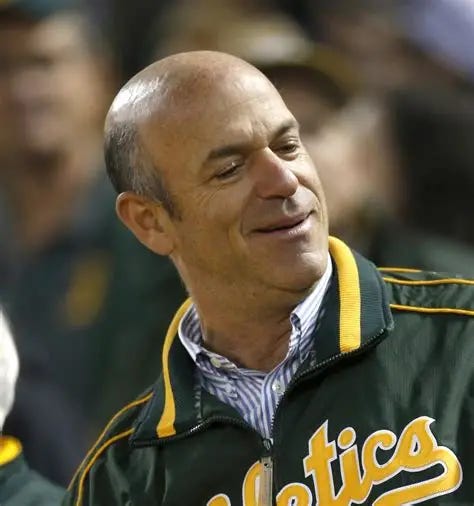
Then there are owners who test the limits of patience and goodwill. Bob Nutting has turned loyalty in Pittsburgh into an endurance sport. And then there’s John fucking Fisher. This is where pretending this can all be discussed politely breaks down. Because this motherfucker isn’t a market problem. It’s not bad luck. It’s not timing. It’s a case study in treating a franchise like a disposable asset and a fanbase like collateral damage. That deserves to be called exactly what it is.
The extremes matter too. Steve Cohen proved that unlimited money doesn’t guarantee coherence if you don’t understand how baseball actually works. Arte Moreno spent years convincing fans that star power was a plan, when it was often just a distraction from deeper dysfunction. Longevity doesn’t equal wisdom either. Jerry Reinsdorf forces us to ask what happens when ownership outlasts urgency, curiosity, and the willingness to evolve.
This series isn’t about piling on. It’s not about pretending owners are villains by default. It’s about accountability. About patterns. About behavior over time. About whether an owner absorbs risk or exports it to fans and cities. About whether losing is treated as failure or simply folded into the business model. About whether baseball is seen as a civic trust, a competitive pursuit, or a financial instrument wrapped in nostalgia.
I love this game. That’s why I’m willing to say things plainly when they need to be said. Baseball deserves better than being run on autopilot by people who never have to answer for the experience they create. Fans aren’t stupid. They know when they’re being sold hope instead of progress. They know when patience is being abused. They know when the message doesn’t match the behavior. This series is about sitting with that gap and refusing to look away.
Each week, I’ll take one owner and pull the thread. Who they are. How they made their money. What that tells us about how they see the world. What they’ve done right. What they’ve done wrong. And whether, at the end of the day, they act like someone who actually deserves to own a baseball team. Not because they can afford it. But because they understand what it represents.
If we want to understand where baseball is going, why some franchises feel alive and others feel hollow, and why fan trust feels thinner than it used to, we have to stop pretending ownership is background noise. It’s not. It’s the engine. So, let’s finally look it straight in the face and ask the question we avoid every year.
Who owns the game. I will see you in a couple of months…
As a relative newcomer to baseball fanship, owners aren't something I've gotten into yet, so I'm looking forward to your series.
Have a Happy New Year and a great 2026!
I get you're not so much into the advanced metrics, but you better believe I want the front office of my favorite team (Royals) to be into them. I think another organization of mention is the Rays. Their organization, despite their shitty ball field, is about as shrewd as you can get and they capitalize on it with sustained success. What scares me is the Dodgers and seemingly the Yankees have operated similarly, but also have the spending power to outbid almost anyone.